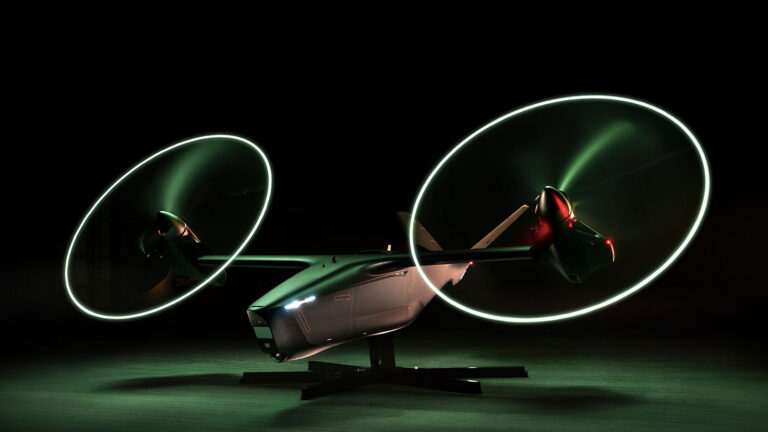
The defense technology landscape is witnessing a major shift with the unveiling of „Thunder,” a Group 5 drone designed to revolutionize aerial operations. Developed through a strategic partnership between tech firm Anduril and aviation manufacturer Archer, this new platform is engineered to serve as a „loyal wingman,” flying alongside attack helicopters such as the Apache and the future Cheyenne fleet.
Technological Fusion: Turning Air Taxi Expertise into a Tactical Weapon
Thunder is not merely a conceptual project but the result of three years of intensive development. This fully autonomous, armed reconnaissance tiltrotor aircraft was built on lessons learned from the „Fury” (YFQ-44A) fixed-wing drone. Interestingly, Thunder’s genesis lies in Archer’s „electric air taxi” technology, showcasing an unprecedented transition of innovation from the commercial sector to the military, specifically tailored for „maneuver warfare” in littoral environments.
Lethality Reimagined: Apache-Level Firepower in a Modular Frame
In terms of performance, Thunder is set to be a powerhouse of efficiency. With range and speed comparable to the Cheyenne helicopter, the drone boasts a payload capacity equivalent to an Apache, while operating at significantly higher altitudes. Its tactical deployment involves groups of three to six Thunder drones escorting manned aircraft, providing both protection and additional firepower.
The arsenal is formidable: the main payload bay can be configured to carry up to 10 Hellfire missiles, 16 air-launched effects, or 76 rockets. Furthermore, the aircraft’s nose is equipped with Counter-UAS capabilities, providing a defensive shield for the entire flight formation.
AI at the Helm: From Self-Driving Streets to High-Stakes Combat Maneuvers
Beyond armor and weaponry, Thunder’s true strength lies in its software. Anduril has integrated the Lattice platform, an AI-enabled system that collects and synthesizes data from all sensors to create a comprehensive tactical picture. To enable autonomous flight at low altitudes and high speeds, engineers leveraged and adapted technologies from the self-driving car industry, giving the drone the ability to navigate complex terrain while reacting instantaneously to enemy threats.
Strategic Deployment: Redefining Maneuver Warfare for the Next Decade
Thunder was designed to be „attritable,” allowing for the deployment of large quantities of sensors and weapons on the battlefield at a manageable cost. Its modular design allows it to be disassembled and stored in a standard 40-foot ISO container, making it easily transportable by land, sea, air, or rail. The first test flights are scheduled for next year, with the software already having undergone two years of testing on surrogate aircraft. If military demand remains steady, full-scale production is expected to begin between 2029 and 2030, marking a radical shift in the modernization of attack aviation.