A Strategic Leap for U.S. Loitering Munitions
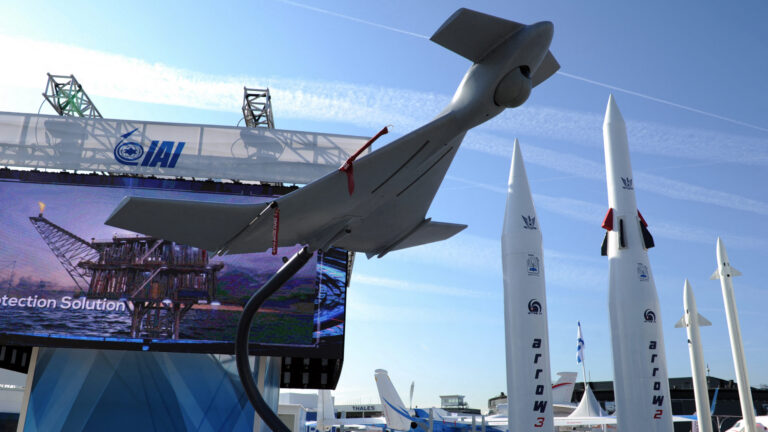
In a landmark move for the American defense industry, Israel Aerospace Industries (IAI) has granted mid-sized tech firm Palladyne AI the exclusive license to manufacture the Harpy, Harop, and Mini-Harpy attack drones within the United States. This strategic partnership is poised to take center stage at the U.S. Army’s Long Range Precision Munitions (LRPM) competition this fall, aiming to provide the Pentagon with a domestically produced version of some of the world’s most effective loitering munitions.
Autonomous Evolution: Infusing Hardware with Swarm Intelligence
The collaboration goes beyond mere manufacturing. Palladyne AI plans to „Americanize” the drones by integrating its proprietary SwarmOS software. According to CEO Ben Wolff, this AI upgrade will allow the drones to operate autonomously in swarms, sharing critical sensor data across a unified network that includes ground vehicles and other aircraft. This digital transformation is designed to run on existing IAI hardware, bypassing the need for extensive mechanical redesigns while significantly boosting battlefield connectivity.
The „Radar Hunter” Advantage: Exceeding Battlefield Requirements
The core of the Palladyne pitch lies in the Harpy’s specialized „anti-radiation” capabilities. While current U.S. requirements focus on striking integrated air defenses at ranges exceeding 100km, the Harpy family offers the unique ability to loiter for up to nine hours, waiting for enemy radars to emit a signal. In an environment where adversaries use „blink” tactics to avoid detection, these drones provide a persistent overhead threat that traditional high-speed missiles cannot match. It is a capability that Wolff believes offers more than what the Army currently asks for, potentially shifting the doctrine of anti-aircraft suppression.
Exquisite Engineering vs. Mass-Market Drones
As the global market sees an influx of low-cost, disposable drones, Palladyne is doubling down on quality and precision. „It’s not a Shahed,” Wolff emphasized, describing the systems as „exquisite machinery” capable of carrying substantial 30-pound-plus warheads and sophisticated sensor suites. With a potential prototype agreement worth up to $200 million on the horizon for 2026, Palladyne is positioning itself for a long-term presence in the U.S. defense budget, anticipating a wave of new funded programs as the military seeks more sophisticated long-range precision tools.