In a major strategic shift driven by the realities of modern conflict, defense industry leaders at the Farnborough Airshow have unveiled revolutionary solutions aimed at balancing the cost-efficiency ratio in aerial warfare. Lockheed Martin and MBDA presented new interceptor systems designed not only for precision but also for rapid mass production at a fraction of current costs.
PAC-3 ACE: Elite Performance at Half the Price
Lockheed Martin grabbed headlines with the launch of the PAC-3 Adapted Capability Effector (ACE), an air defense system designed to defeat cruise missiles and short-range ballistic missiles. The disruptive element? The unit price is estimated to be half that of the current PAC-3 MSE.
The ACE system is not envisioned as a replacement for existing technology, but as a vital supplement that enables the „critical mass” required on the battlefield. Cost reduction was achieved by optimizing components—such as „throttling back” the solid rocket motor in the seeker—and implementing advanced AI-assisted manufacturing techniques. Furthermore, Lockheed is aiming for a democratization of production, exploring international partnerships in Europe for critical components, which could theoretically facilitate future localized production in conflict zones like Ukraine.
The Counter Mass Interceptor: Europe’s Answer to the Drone Invasion
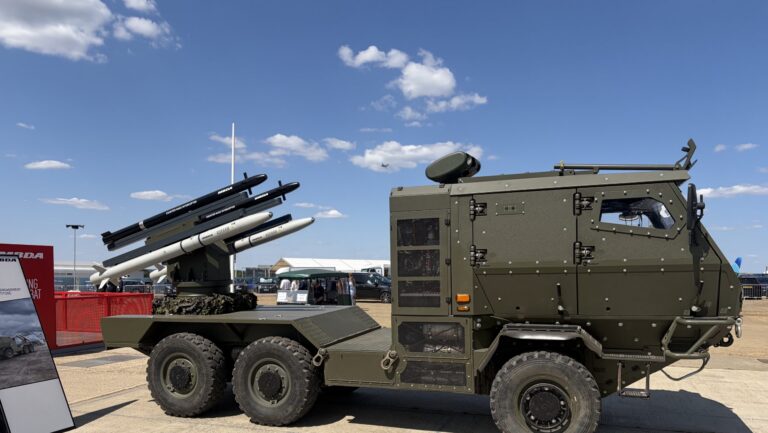
Simultaneously, the European consortium MBDA launched the „Counter Mass Interceptor,” a weapon specifically designed to face the new generation of threats: fast drones, helicopters, and cruise missiles. This new system represents an evolution of the ASRAAM missile, adapted to be „platform agnostic”—meaning it can be launched from a variety of land or sea vehicles, whether manned or autonomous.
What sets this system apart is its interception ceiling: while current counter-drone solutions are limited to low altitudes, the Counter Mass Interceptor promises to double that range, offering extended protection against targets attempting to overfly traditional defense zones. Live-fire tests are scheduled within the next 18 months, targeting a market segment where the need for affordable yet capable solutions is greater than ever.
The Logic of Volume: Lessons from Recent Conflicts
This race to lower the cost of military technology is a direct response to lessons learned in Ukraine and other recent theaters of operation. An adversary’s ability to launch massive waves of missiles and drones demands a defense that is not only technologically superior but also financially sustainable. The strategy is simple yet vital: armies need numbers to survive, and the new ACE and Counter Mass interceptors are the first pieces of a mass air defense puzzle where quantity becomes a quality of its own.