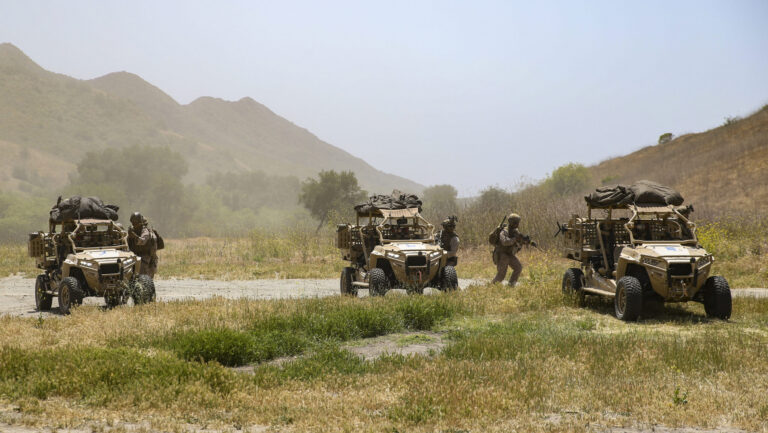
In a combat environment where the overhead threat of FPV drones is omnipresent, Ukrainian Special Operations Forces (SOF) are set to receive a critical survivability boost. Their agile 4×4 all-terrain vehicles, often vulnerable to vertical strikes, are being outfitted with a specialized ballistic protection kit designed to turn these nimble off-roaders into hardened platforms.
This defensive solution is a direct response to the lethal evolution of loitering munitions, which have effectively turned the skies above the front lines into a high-risk zone for light tactical vehicles.
Ultralight Protection: Defying the Blast from Above
The new protection suite features lightweight armor inserts tailored for the roof sections of Polaris MRZR vehicles. Providing up to 22 square feet of overhead coverage, the kit utilizes a „ballistic core” designed to disperse the energy of an explosion. Crucially, the system is significantly thinner and lighter than traditional solutions, ensuring that the vehicle’s payload and high-speed mobility remain uncompromised.
A standout feature of the kit is an armored „ceramic drape” that shields the rear of the vehicle. This component is specifically engineered to protect operators from one-way attack drones traveling at speeds of up to 200kph. Prototypes are currently undergoing operational evaluation in-theater, providing real-world data on how to best counter the drone-driven lethality of modern warfare.
Project Willful: The Global Quest for the Next-Gen 4×4
As Ukraine battle-tests these immediate upgrades, U.S. and UK Special Operations Forces are embarking on a long-term search for a revolutionary specialist vehicle. Under the banner of „Project Willful,” military planners are seeking a high-mobility 4×4 platform that can integrate cutting-edge capabilities.
The wishlist for this future vehicle includes „silent approach” powertrains, advanced signature management, and both hard and soft-kill counter-UAS (Unmanned Aerial Systems) suites. The goal is a modular powerhouse that can carry increased payloads, deploy uncrewed ground vehicles, and operate remote weapon stations—all while maintaining a low profile on the battlefield.
Tactical Adaptation: Learning from the Drone War
The conflict in Ukraine has served as a grim laboratory for the effectiveness of small, first-person-view drones. The ability of these cheap, mass-produced systems to hunt down high-value targets has triggered a global arms race in defensive technology. From learning to identify drones by their acoustic signature to the deployment of ceramic-based ballistic drapes, the evolution of vehicle protection is moving at breakneck speed to keep pace with the eyes in the sky.