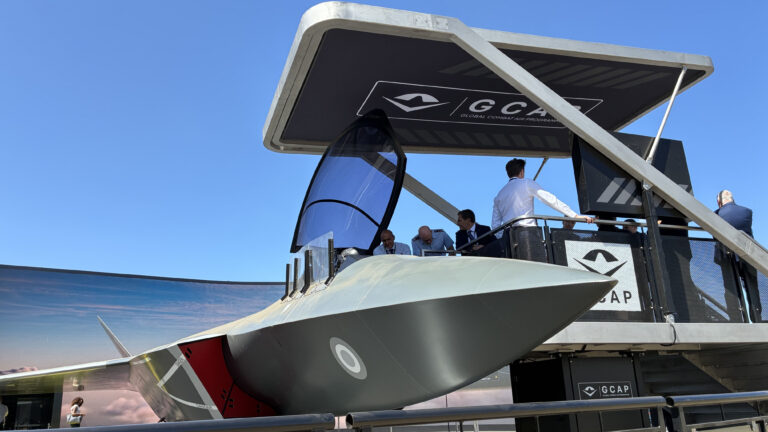
Canada has officially joined the Global Combat Air Programme (GCAP) as its first „observer,” gaining privileged access to capability development, industrial cooperation, and long-term delivery plans. The announcement was made by British Chief of Defense Wes Streeting, who highlighted the significance of this partnership for the future of global security.
Privileged access to sixth-generation technology and industrial framework
The observer status will provide Canada with the opportunity to deepen its understanding of next-generation combat air capabilities and contribute more closely to partnerships that will define the future of airpower. GCAP is currently the only remaining active international sixth-generation fighter jet program following the collapse of the rival French-German-Spanish project last month. The program envisions a stealthy sixth-generation fighter along with a host of interlinked systems, including autonomous drone wingmen.
Rising global threats and military maneuvers near allied waters
Canada’s involvement comes amid a tense geopolitical climate, marked by joint naval operations conducted by the Chinese and Russian navies as part of the „Joint Sea-2026” exercises. Japanese defense officials emphasized that the security landscapes of the Indo-Pacific and Euro-Atlantic regions are no longer separable. A notable incident occurred on the same day British Prime Minister Andy Burnham was sworn in, when a Russian warship fired live rounds off the coast of England—an event described by officials as „performative and irresponsible.”
Navigating economic friction with the United States and bolstering industrial resilience
For Canada, these new international ties emerge as tensions mount with the United States, the provider of its current most advanced fighter, the F-35. Recently, President Donald Trump imposed a 50 percent tariff on a wide range of Canadian imports. However, Canadian Defense Minister David McGuinty stated that joining GCAP was not a result of ongoing trade negotiations with Washington, but rather a strategic opportunity to strengthen Canada’s industrial base and aerospace supply chains, which are ready to meet the demands of future global challenges.