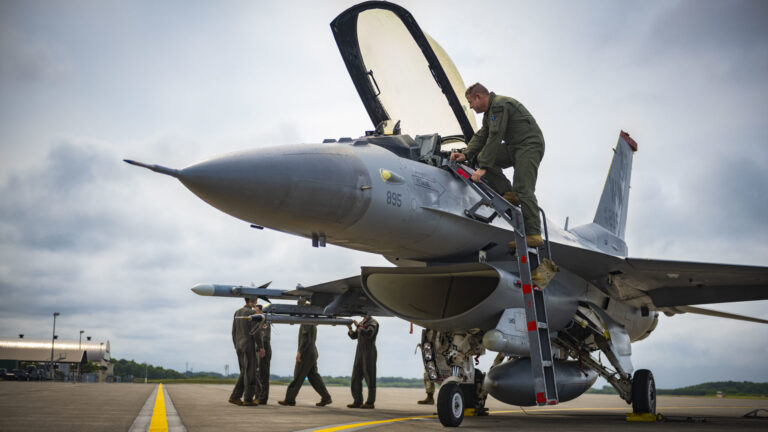
The United States Air Force has officially suspended the competition for new ejection seats for its F-16 Fighting Falcon fleet. This move comes nearly two years after the service announced it would reopen the bidding process for a deal previously awarded as a sole-source contract to Collins Aerospace, a subsidiary of RTX.
A strategic assessment: The future of pilot safety under review
The program was paused on June 5, triggering a „comprehensive assessment of operational requirements and acquisition alternatives.” While Collins Aerospace had originally secured the Next Generation Ejection Seat (NGES) contract with its ACES 5 model, integration delays prompted officials to reconsider the deal. Currently, there is no set timeline for resuming the modernization, as future integration plans will depend on recommendations following the conclusion of the ongoing assessment.
The clash of giants: Collins Aerospace and Martin-Baker vie for market dominance
The market for Western ejection seats is a virtual duopoly shared between the American firm Collins Aerospace and the British manufacturer Martin-Baker. The reopening of the competition had provided a significant opportunity for the British company to pitch its US18E seat for the F-16 fleet, and potentially for the F-22 and B-1 as well. While Collins defends its ACES 5 seat, highlighting its proven safety record and adherence to rigorous technical requirements, Martin-Baker representatives expressed surprise at the suspension, noting they have received little clarity regarding the reasons behind the pause.
Ripple effects: Modernization of F-22 and B-1 platforms hinges on the F-16 decision
This suspension affects more than just the F-16 fleet; it also stalls modernization strategies for the F-22 Raptor and the B-1 Lancer. Air Force officials confirmed that acquisition strategies for these platforms will only be determined after a final decision is reached regarding the F-16 ejection seat strategy. In the most drastic scenario, the NGES program could be terminated for these jets altogether, meaning they would retain their legacy ACES II seats instead of upgrading to the next generation of protection.