In a strategic move aimed at accelerating the integration of cutting-edge technologies, the United States Army has decided to abandon its internal software development strategy for autonomous vehicles. Instead of attempting to build a universal digital backbone, military officials have chosen to rely on private sector expertise to deliver mission-specific solutions tailored to distinct operational needs.
The end of internal monopoly: Private companies take the reins of autonomy
The original concept, known as the ARCS program (Army Robotic Software), aimed to create a military-developed technological core where private vendors could simply „plug in” their modules. This approach made sense at a time when industrial investment in autonomy was limited. Today, however, the technological landscape has radically shifted. Private companies have demonstrated superior capabilities, forcing the military service to admit that investing research funds into systems that compete with industry is no longer a viable strategy.
Strategic alliances for critical missions: From logistics to obstacle breaching
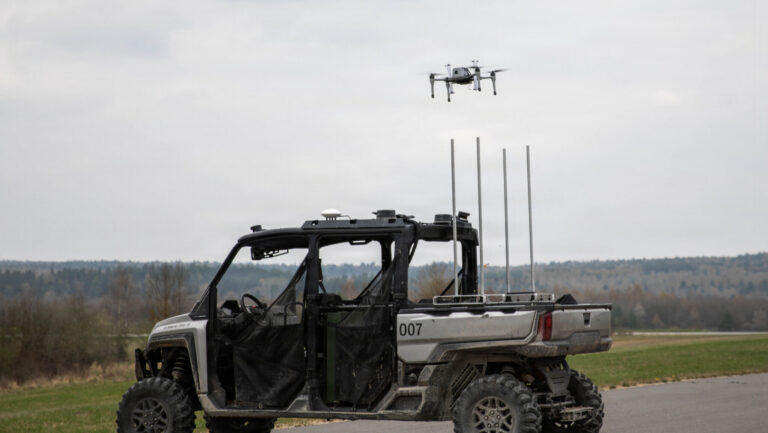
The new vision relies on the ability of vendors to „self-organize” into complex teams to deliver complete solutions. A concrete example is the program for autonomous breaching and minefield clearance (EABC), where giants like Caterpillar, Forterra, and Overland AI collaborate to pair their autonomy software with ground robotic platforms. This „team of teams” method allows the Army to acquire integrated combat capabilities rather than trying to assemble disparate puzzle pieces themselves.
An integrated vision: Autonomy becomes the backbone of all combat units
To support this transition, the Army has reorganized its command structure, moving the autonomy office into a division that allows for cross-functional integration. Since autonomy can no longer be confined to a single sector, this shift enables the technology to support a variety of scenarios, from logistics and maneuver to fires systems. Through this recalibration, the Army stops being a software developer and becomes a strategic integrator, leveraging the speed and innovation of the free market.