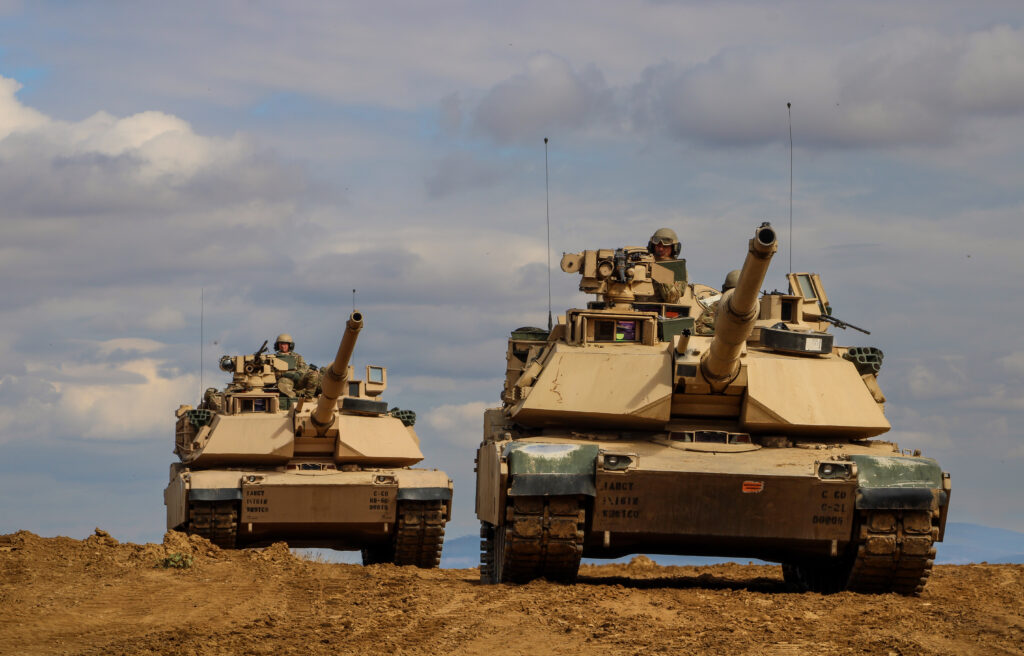
“Every Formation Is Underpowered”: Generals Sound The Alarm
The US Army is openly acknowledging a critical gap: its ground units do not have enough exportable power on their vehicles to sustain modern, energy-hungry systems such as drones, advanced communications and command posts.
“Every formation we have today is underpowered. Every single one of them, and more power requirements are coming,” Brig. Gen. Troy Denomy, program acquisition executive for maneuver, warned during a keynote speech at the GVSETS conference.
New capabilities — from counter-UAS systems to Next Generation C2 — are heading to the field, further increasing the strain on the Army’s tactical power infrastructure.
Noisy Generators, Blazing Signatures: “We Have To Get Past That”
Until now, the default answer has been more generators. But in a battlefield saturated with sensors, that solution is turning into a liability.
“Generators are loud. They create a lot of visual signature. They create a lot of thermal signature, and we have to get past that,” said Alex Miller, the Army’s chief technology officer, speaking alongside Denomy.
The message is clear: the Army cannot rely indefinitely on farms of generators that expose positions, complicate logistics and clutter the electromagnetic landscape.
Drones Grounded By Power Shortages: Missions Capped By Watts, Not Tactics
The power shortfall is already shaping how brigades use their drones.
“When I talk to sitting brigade commanders, their number one problem is how they plan for recharge cycles to keep their UASs in the air, and they don’t have enough ability to do it organically,” Denomy explained.
The result: units are forced to ration how many drones they can launch, not based on what the mission requires, but based on how much power is available. In a fight where whoever sees first can shoot first, that is a strategic handicap.
“Just Give Them Another Battery” Isn’t A Plan: The Burden On The Soldier
Another seemingly simple answer — issuing more batteries to troops — is being firmly rejected.
“Solutions that are presented to me are like, ‘Well, just give them another battery.’ You walk with five batteries in your pack for eight hours and tell me how your feet feel,” Denomy said. “And you got to fight when you get there, right? So just adding batteries is not the solution.”
In other words, offloading the power problem onto the infantryman means more weight, more fatigue and less combat effectiveness.
Legacy Platforms, Modern Loads: Abrams And Bradleys Weren’t Built For This
Today’s core combat vehicles — M1A2 Abrams tanks, Bradley Fighting Vehicles and the tactical wheeled fleet — were never designed to power:
- continuous drone and counter-drone operations,
- power-hungry electronic systems,
- data-heavy, networked command posts.
These platforms offer limited exportable power, constraining how far commanders can exploit the full potential of modern sensors, communications and autonomous systems.
New Vehicles Promise More Power: XM30, M1E3 And Heavy Infantry Squad Vehicles
The next generation of combat vehicles is being designed with exportable power as a core feature, not an afterthought:
- The XM30 infantry fighting vehicle, slated to replace the Bradley
- The M1E3 Abrams, successor to the M1A2
- The heavy variants of the Infantry Squad Vehicle, engineered to provide greater onboard power, as previously reported
Denomy argued that similar technology should be retrofitted to legacy platforms, turning existing fleets into mobile power hubs capable of feeding drones, sensors and C2 systems at the edge.
Fuel Cells And “Next-Gen Power Management”: Early Glimpses Of Change
While avoiding specific program names, Denomy noted that some emerging solutions are “really encouraging,” particularly in the field of fuel cells, which could offer:
- continuous power generation with a reduced signature,
- less reliance on traditional generators,
- modular options suitable for vehicles or stand-alone battlefield power units.
Miller added that the Army has already started fielding certain “next-gen” power management solutions, though he did not elaborate, suggesting that pilot efforts are already underway in select units.
Beyond Batteries And JP-8: Toward A New Battlefield Energy Ecosystem
Beyond cutting back on generators and rethinking batteries, Miller went a step further, challenging the Army’s dependence on liquid fuel:
“We have got to change the fact that liquid fuel is still the most power dense, efficient way to move energy across the battlefield. We’ve got to change that,” he said, appealing directly to industry.
His call to the defense sector was blunt:
you’ve been tackling these problems since World War II — now we need you to solve the next energy revolution on the battlefield.
For the US Army, the power fight is becoming as critical as the firepower fight. Without a new, resilient and stealthier energy ecosystem, the vast fleets of drones, sensors and command posts risk being constrained not by technology or tactics, but by the simple question: where do we plug in?