A new U.S. national security science and technology strategy establishes a four-tier priority system for the development of military capabilities. Artificial intelligence, space operations and undersea dominance occupy the highest level, while the document also calls for continued investment in expensive, highly sophisticated weapons programs designed to address strategic threats.
At the same time, the strategy supports combining advanced systems deployed in limited numbers with cheaper platforms that can be produced and used on a much larger scale.
Low-Cost Platforms and High-End Systems Must Work Together
U.S. military planners are seeking a balance between the new generation of fast, affordable systems — particularly expendable drones — and major weapons programs built around costly, advanced technologies.
The approach calls for large numbers of lower-cost platforms, including systems with reduced technological complexity or designs that allow them to be lost in combat, operating alongside a smaller number of highly capable platforms.
The concept resembles the “hi-lo” force structure adopted by the U.S. Air Force in the 1970s, when it pursued both expensive F-15 fighters and larger fleets of more affordable F-16s.
Today, however, the technological environment is fundamentally different. Autonomous drones, military software and networked systems have become central elements of modern combat power.
Artificial Intelligence Moves to the Top of the Agenda
Artificial intelligence and autonomy receive prominent attention in the strategy and are presented as decisive technologies for future military operations. Their applications could range from strategic planning and decision-support software to coordinated swarms of autonomous drones.
The strategy organizes military technologies into four broad levels:
- immediate priorities directly tied to operational requirements;
- critical technologies supporting essential military capabilities;
- key enabling technologies needed to develop higher-priority systems;
- potentially transformative emerging technologies whose strategic effects remain uncertain.
At the top of this structure are three areas described as essential to battlefield dominance and the projection of military power.
Three Domains for Battlefield Superiority
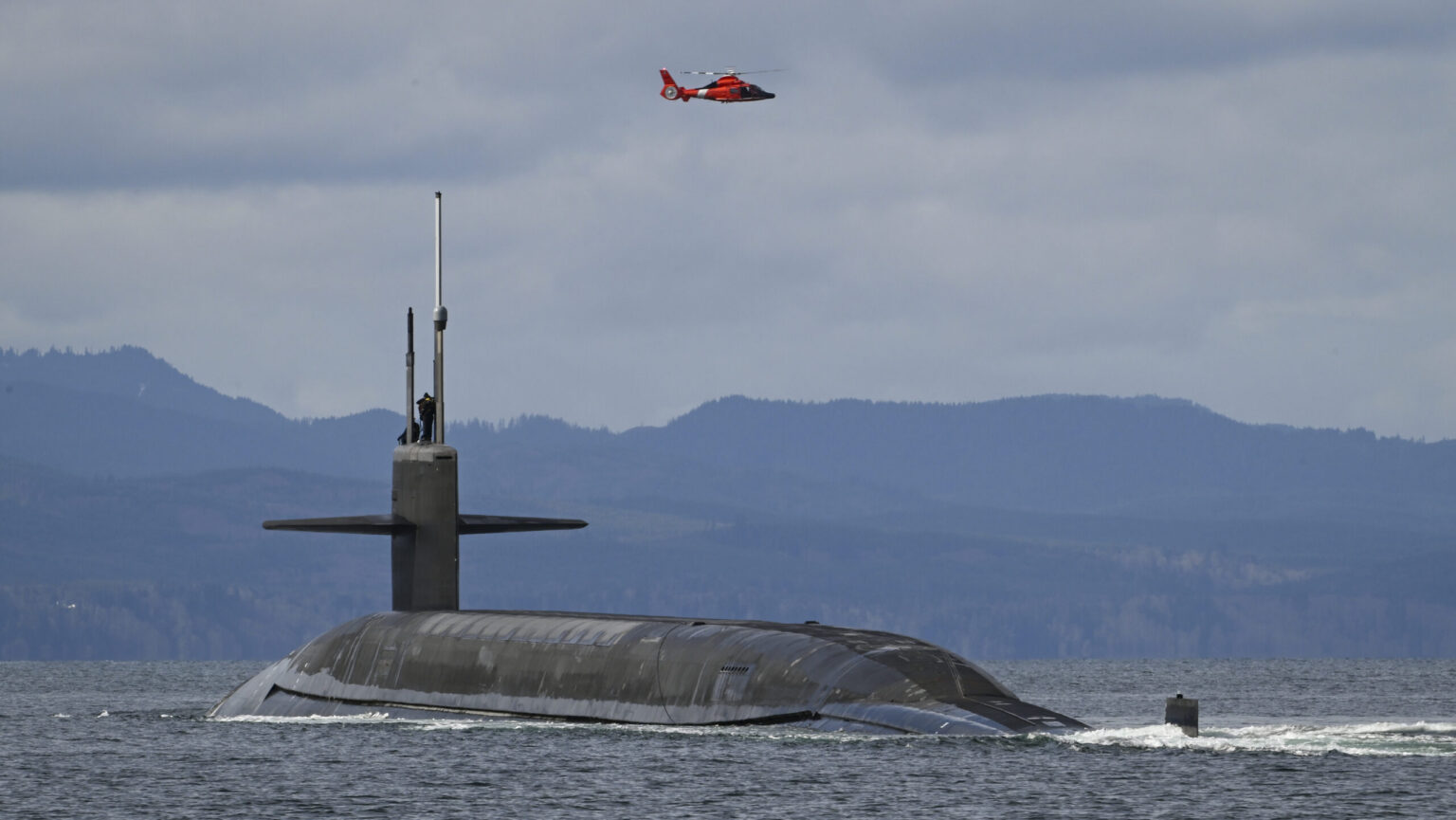
Undersea dominance
The first priority is undersea superiority. It includes the development of submarines as well as the ability to detect, track and defeat hostile underwater platforms.
Control of the undersea environment remains vital for strategic deterrence, the protection of maritime routes and the conduct of military operations with limited exposure.
Space operations from low orbit to the Moon
The second priority is space. The objective is no longer simply to identify threats, but also to counter them across an operational environment extending from low Earth orbit to the lunar region.
The strategy envisions capabilities able to detect, monitor and neutralize hostile systems operating in or through space.
Artificial intelligence and autonomy
The third priority is artificial intelligence and autonomous systems. Unlike space and undersea operations, where the strategy calls for clear technological superiority, the goal in AI and autonomy is described more cautiously as maintaining a competitive advantage.
That distinction reflects the speed of technological change and the intense competition between the United States and other major powers, particularly China.
Airpower, Long-Range Strike and the Military Information Network
The strategy also identifies three additional areas as critical to the broader defense architecture.
The first is airpower, supported by stealth, electronic warfare and air-defense technologies. The objective is to preserve the ability to penetrate contested airspace and operate against advanced detection and interception systems.
The second is long-range strike. This capability involves penetrating an adversary’s layered defenses through speed, precision and coordinated operations.
The third is C5ISR — command, control, communications, computers, cyber operations, intelligence, surveillance and reconnaissance. In practical terms, it represents the eyes, ears, brain and nervous system of a military force.
These areas are closely interconnected. Long-range strikes are often carried out by aircraft and depend on the information, targeting and command networks provided by C5ISR systems.
Enabling Technologies Form the Foundation
At the base of the priority structure is a broad range of technologies that support the higher-level capabilities.
They include:
- advanced manufacturing, including 3D printing;
- hypersonic systems;
- nuclear energy;
- semiconductors;
- advanced communications and computing;
- other critical technologies supporting defense and national security.
The main list contains roughly a dozen fields, while the broader inventory of critical and emerging technologies extends across several pages and is expected to evolve as new capabilities emerge.
Preparing for Technological Surprises
A separate section focuses on technological resilience and examines breakthroughs that could fundamentally alter the strategic balance.
These technologies are difficult to assess today, both in terms of their potential impact and the timeline for their arrival. The United States therefore aims to strengthen its long-term position by investing early and maintaining leadership in fields with potentially far-reaching security implications.
Biotechnology and the future of human performance
Biotechnology is identified as one of the areas with transformative potential. Research could involve enhancing human performance, while also developing defenses against biological weapons and hostile biological agents.
Quantum technology could rewrite the rules
Another major field is quantum technology, including quantum computers, advanced sensors and quantum communications.
Breakthroughs in this area could reshape encryption, detection, navigation and information processing, giving a decisive military advantage to the countries that successfully translate quantum research into operational systems.
Artificial General Intelligence: the most unpredictable scenario
The third emerging technology highlighted is artificial general intelligence. Unlike today’s specialized systems, AGI could potentially solve a broad range of problems and outperform humans across multiple domains.
The prospect of an artificial system becoming more capable than human beings makes AGI one of the most difficult strategic risks to predict — and potentially one of the most significant sources of military advantage.
The strategy ultimately outlines a technology doctrine built on three pillars: maintaining superiority in essential military domains, combining sophisticated systems with large numbers of affordable platforms and investing early in technologies capable of redefining the balance of power.