Agreement aims to expand the U.S. defense industrial base
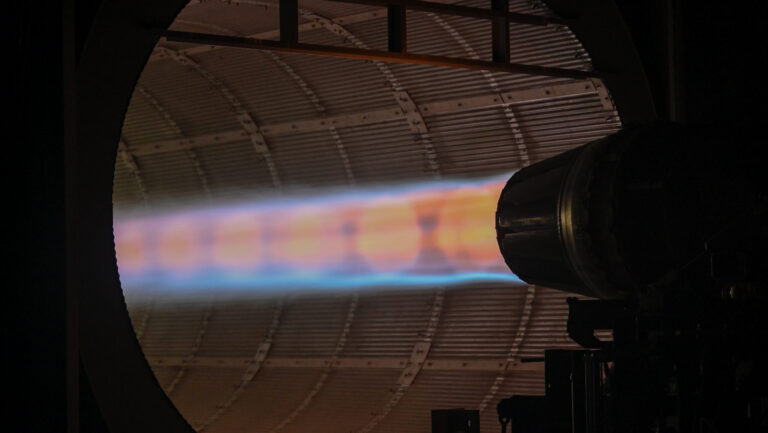
Pratt & Whitney has licensed aerospace startup Hermeus to manufacture the F100-PW-229 turbofan engine, the companies told Breaking Defense. It is the first such agreement between Pratt & Whitney and another U.S. company.
Jill Albertelli, president of Pratt & Whitney’s military engines business, said the partnership represents a natural opportunity to strengthen the U.S. defense industrial base as demand grows for engines supporting both aircraft already in service and programs still under development.
“The defense industrial base needs to be bigger than it is today, and this is a great opportunity together,” Albertelli said.
F100 engine powers F-15 and F-16 variants
The agreement covers production of the F100-PW-229, which entered service in 1992. The engine powers several versions of the F-15 and F-16 fighter aircraft.
The license could also support future customers of the U.S. Air Force’s Collaborative Combat Aircraft (CCA) program. It follows an Air Force request for information seeking greater industrial competition, manufacturing innovation and stronger supply-chain resilience.
According to the August notice, annual engine demand could exceed 180 units by fiscal year 2034. Demand is expected to include engines for aircraft such as the F-15EX and F-16s operated by both U.S. and foreign customers.
Hermeus to become a second production source
Hermeus CEO Zach Shore said initial production work would be carried out within the company’s existing manufacturing footprint.
“We see ourselves as just an extension of Pratt here to support engine manufacturing,” Shore said, describing Hermeus as a secondary source for F100 production.
The company plans to make capital investments at scale as customer demand becomes clearer. Shore emphasized that the question is not whether production will happen, but when it will become necessary.
However, he also said Hermeus’ primary expansion path remains focused on aircraft rather than clean-sheet engine development.
“We’re not in the business of being a clean-sheet engine manufacturer,” Shore said. “So for us, to just do this work is plenty.”
F100 powers Hermeus’ Quarterhorse drone
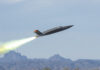
Hermeus has a direct interest in the F100 because the engine powers its high-speed Quarterhorse drone.
The company is developing the aircraft iteratively and plans to fly it at speeds of up to Mach 3 under a $219 million contract awarded by the Pentagon’s Defense Innovation Unit.
Air Force Maj. Gen. Joseph Kunkel, the DIU’s military deputy, has previously voiced strong support for the program, saying that mass production of the drone could create a potentially game-changing military capability with a wide range of operational uses.
Hermeus is also developing a hypersonic engine
Separately, Hermeus is developing its own turbine-based combined-cycle (TBCC) engine based on the F100 architecture.
A TBCC engine combines a jet turbine with a ramjet in an integrated propulsion system intended for aircraft capable of reaching hypersonic speeds above Mach 5.
Hermeus’ concept, known as Chimera, is expected to form the propulsion core of a planned hypersonic aircraft called Darkhorse.
Hermeus expands its industry partnerships
The Pratt & Whitney agreement adds another major industry partner to Hermeus’ growing network of collaborators.
Earlier this month, Hermeus and Anduril announced a partnership to integrate Anduril’s mission-autonomy suite with the Quarterhorse aircraft for upcoming flight tests.
Zach Shore also suggested that Hermeus’ involvement in F100 production could help identify ways to reduce manufacturing costs.
“There’s an opportunity for us to pull some cost out of the engine” and make it more competitive, Shore said, adding that Hermeus is excited to become part of the Pratt & Whitney family.