Pentagon accelerates production as military training struggles to keep pace
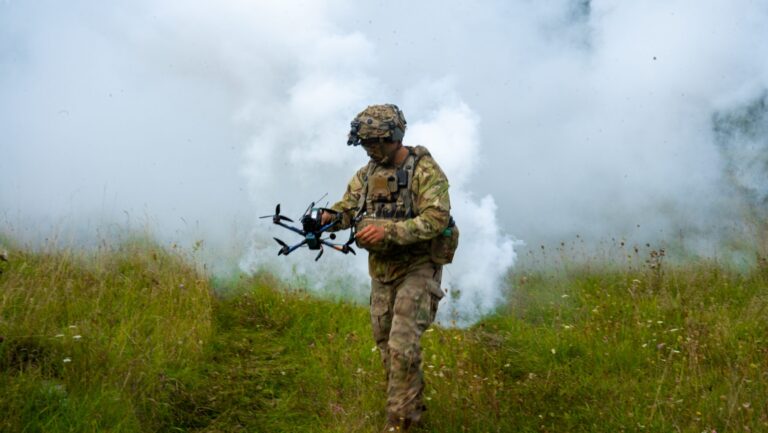
The US Army now has enough small, one-way attack drones to equip every infantry squad, but it faces a new challenge: a shortage of properly trained personnel to operate them.
Col. Gregory Merkl, the Army’s lead for the Drone Dominance program, said the service has largely achieved the required volume of aircraft. The next priority is expanding operator training, particularly for missions conducted in a contested electromagnetic spectrum.
“We do have the volume to do that,” Merkl said, crediting the Pentagon’s program with helping accelerate drone production and fielding.
Qualified pilots must reach the squad level
The Army has already distributed drone capability throughout its formations, including at the platoon level. However, the service still needs more qualified pilots capable of operating the systems at the squad level.
The issue is especially important because drones are vulnerable to jamming and other forms of electronic interference. In a contested electromagnetic environment, adversaries may attempt to disrupt communications, sever control links or interfere with sensors and navigation systems.
Deadline for squad-level drone deployment approaches
Defense Secretary Pete Hegseth launched the Drone Dominance program in 2025 to cut bureaucratic delays and accelerate the production and fielding of unmanned systems.
The initiative requires every Army squad to receive small, one-way attack drones by the end of fiscal year 2026. As that deadline approaches, the Army’s focus is shifting from acquiring platforms to ensuring that soldiers can use them effectively under combat conditions.
The service is conducting a series of working groups at Army headquarters and with agencies such as the Federal Aviation Administration. The effort is intended to help soldiers operate safely in the electromagnetic spectrum and use drones in increasingly congested air and operational environments.
International exercises provide critical lessons
The Army is also conducting training during overseas exercises. At the recent Saber Junction exercise in Germany, soldiers from the 504th Parachute Infantry Regiment worked with Ukrainian and NATO counterparts to improve their ability to operate in a contested electromagnetic environment.
The regiment has specialized in drone operations but is expected to return to a more traditional infantry structure. The exercise allowed its troops to test methods for operating and protecting communications in conditions closer to those of an actual conflict.
The most important lesson, according to Merkl, was that soldiers must learn to navigate the electromagnetic spectrum as confidently as they navigate physical terrain. The troops made progress, but further gains will depend on continued training.
Larger drones remain a significant capability gap
Despite progress in fielding small attack drones, the Army still lacks some of the larger unmanned systems needed to support combined-arms operations at the battalion and brigade levels.
Those platforms can provide surveillance, reconnaissance, target identification and operational support for ground maneuver units.
Merkl acknowledged that the Army is still missing part of its required inventory of larger drones and said the service is working to close that gap.
More than 12,000 drones delivered through first competition
Program data show that Army units have so far accepted 12,080 drones through the first Drone Dominance “Gauntlet” competition.
During that initial round, 11 companies received contracts to provide a total of 24,320 small drones. The competitive model is intended to speed up platform testing and selection while reducing the time between product development and operational fielding.
Second round could deliver tens of thousands of systems
The second competition focused on long-range strike missions and tactical assault operations in confined environments. The strongest performers could receive a share of an expected order for 60,000 platforms.
Nine companies were selected as winners from an initial field of 19 participants. The outcome represents another step in the Pentagon’s effort to expand drone use and make unmanned systems a standard capability for tactical military units.