



















From open desert to crowded streets
After nearly a month of training in a sparsely populated desert area along the U.S.-Mexico border, U.S. forces are preparing to hold their next large-scale counter-drone exercise in a dramatically different setting: a busy city filled with people and buildings.
The shift will test whether authorities can counter aerial threats without putting the public at risk. Brig. Gen. Jason Rueschhoff, operations director for U.S. Northern Command, said homeland defense must address threats both outside and within the country. One of the main concerns in the next exercise, he said, will be limiting collateral damage.
Falcon Peak puts interagency cooperation to the test
Falcon Peak is run by U.S. Northern Command. The September exercise in Yuma, Arizona, brought together officials from the command, the Defense Innovation Unit, the Army-led Joint Interagency Task Force 401, and the Department of Homeland Security for the first time.
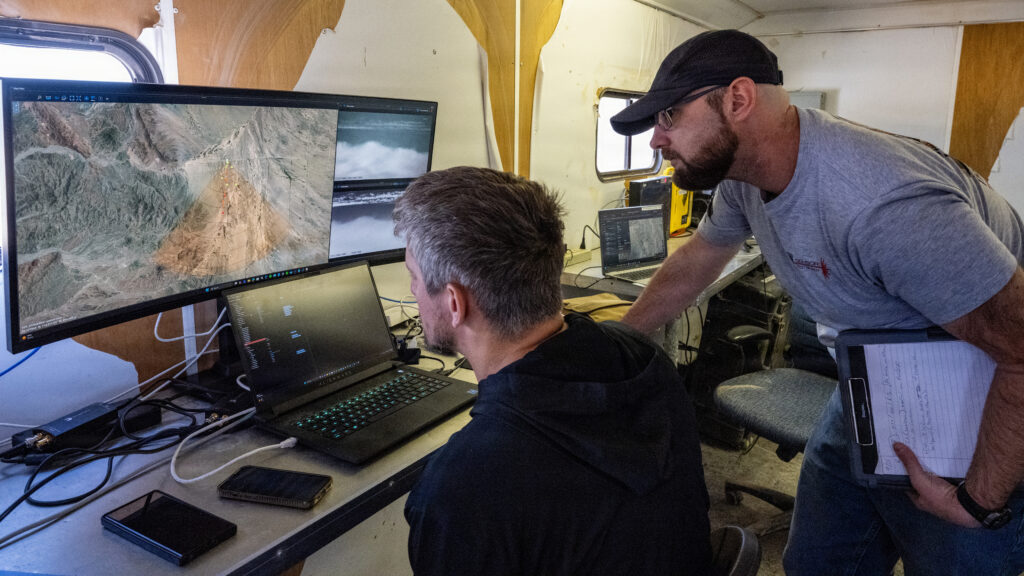
Participants tested ways to neutralize drones in the desert, including electronic countermeasures and shooting them down. They also assessed how heat, wind and sand can affect different systems.
The next iteration, planned for about a year from now, will add the challenges of an urban environment. Dense buildings, physical obstacles and crowded electronic signals can disrupt communications and block the line of sight required by conventional radars and cameras, said Marine Col. Scott Humr, JIATF 401’s deputy director for science and technology.
Strict rules and overlapping jurisdictions
Operating in populated areas also brings legal and administrative challenges. Officials must navigate strict domestic policies, overlapping agency responsibilities and the need to minimize risks to civilians—concerns that are less pressing at an isolated test range.
Humr identified a closely coordinated interagency approach as a priority, particularly through cooperation with the Department of Homeland Security and the Federal Aviation Administration.
The need for close coordination was highlighted in February, when the FAA abruptly closed the airspace around El Paso International Airport in Texas. It was later determined that the incident stemmed from miscommunication between federal agencies over the use of an Army-loaned counter-drone laser by Customs and Border Protection.
Since then, military officials have emphasized coordination with the FAA. The agencies reached a joint agreement on a laser system to help protect the southern border, and military representatives say they continue to work with the FAA on testing.
Countering drones without endangering the public
The most difficult challenge in the urban exercise will be protecting civilians from collateral harm. In the desert, a small drone can be brought down with a firearm without the same level of risk to bystanders. In a city, that approach could endanger people and property on the ground.
For that reason, the Pentagon and JIATF 401 will prioritize low-collateral and non-kinetic methods, aiming to counter threats in crowded areas while keeping risks to the public as low as possible.


