




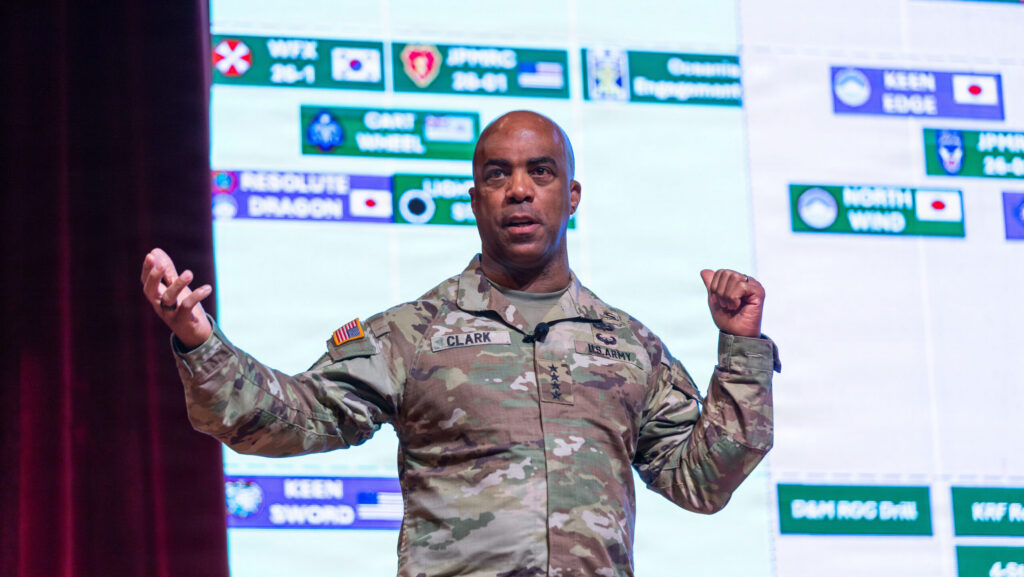
The Pacific has become the arena of intense military preparation, as the US Army’s regional command adjusts its posture to address a potential conflict in Taiwan. American officials maintain warnings regarding a possible attempt by Beijing to seize control of the island, a scenario for which the window of opportunity could open as early as 2027.
„The Davidson Window”: A Ticking Clock
This operational timeline, known in planning circles as the „Davidson window,” marks the period in which China could develop the military capability required to successfully launch an invasion. This 2027 date has become the cornerstone for the deterrence strategies of US forces and regional allies, amid a context in which Beijing claims Taiwan as its sovereign territory.
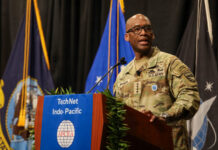
General Ronald Clark, leading US Army Pacific, emphasized that this date should not be interpreted as a certain prediction of conflict outbreak, but rather as a strict deadline to reach an optimal state of readiness. „It is a period of time for which we are drawing a line and saying we need to be ready,” the American official explained.
„Army Ready Forward”: Unwavering Presence
To counter any potential aggression, the US Army has launched an expansive strategic initiative dubbed „Army Ready Forward.” The objective is clear: the strategic positioning of equipment, materiel, and personnel on a rotational basis across the first and second island chains, west of the international date line.
These preparations, however, do not end at the 2027 horizon. The modernization of forces and the strengthening of the deterrence posture represent an ongoing process, designed to ensure regional security well into the future, regardless of immediate developments.
Technology and Critical Mass: The New Paradigm of Military Equipment
A major challenge identified for the coming months concerns adapting the industrial base to support operational requirements. Recent decades have been characterized by reliance on bespoke, sophisticated equipment that is extremely costly and difficult to produce rapidly in large quantities.
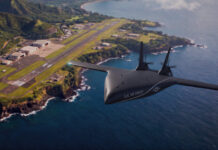
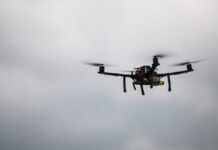
Currently, the Defense Department is adopting an approach oriented toward efficient, commercial solutions capable of immediate implementation. The emphasis is shifting toward balancing advanced systems with affordable, mass-producible alternatives—such as low-cost drones—that can numerically overwhelm an adversary. This paradigm shift is imperative to develop resilient capabilities, essential for sustaining forces in conditions where traditional infrastructure might be compromised.