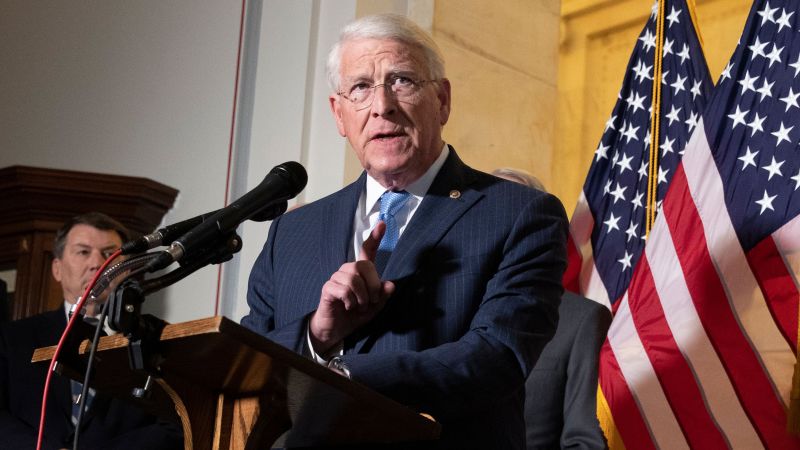
The Senate has officially approved the fiscal year 2026 defense authorization bill, charting a course for unprecedented changes in the nation’s defense acquisition landscape. With a decisive bipartisan vote of 77-20, the legislation now heads to President Donald Trump’s desk, who has indicated his readiness to sign it into law. The National Defense Authorization Act (NDAA), which cleared the House on December 10, allocates an impressive $900.6 billion for defense, surpassing the White House’s initial request by approximately $8 billion.
A New Era for Defense Procurement
This legislation marks a significant turning point for the military’s business practices. Senate Armed Services Committee Chairman Roger Wicker hailed it as „the most sweeping upgrades to these business practices in 60 years,” emphasizing its „monumental achievement” in equipping the nation to confront 21st-century threats by harnessing innovation. At its core, the bill aims to dramatically speed up acquisition processes and lower barriers for new entrants to conduct business with the Pentagon.
The White House affirmed that the NDAA will empower the Department of Defense to make critical investments in the defense industrial base, particularly in areas like critical minerals and refining projects. Notably, Section 804 authorizes multiyear procurement contracts for vital munitions, providing the long-term certainty needed to expand industrial capacity and deliver substantial cost savings for taxpayers. The revamped procurement system will prioritize speed of delivery, production capacity, and innovation, promising a „revolutionizing of the culture” within the department’s acquisition activities.
Catalyzing Innovation and Streamlining Pathways
To attract fresh talent and commercial companies to partner with the Pentagon, the bill mandates a closer look at off-the-shelf solutions and eases compliance burdens for small commercial firms. Furthermore, it initiates a new Defense Innovation Unit effort called the Bridging Operational Objectives & Support for Transition (BOOST) Program, designed to help companies with operationally viable technology transition into full-scale production.
Acquisition reform stood as the cornerstone of this year’s NDAA, with both congressional committees developing plans focused on efficiency and accessibility. The final language harmoniously blended elements from both proposals, including the Senate’s push to centralize weapons program management under broader “portfolio acquisition executives” – a departure from the existing program executive officer model – and the House’s drive to reform the requirements process.
Billions Earmarked for National Security and Global Support
Despite widespread agreement on many fronts, some provisions did not make the final cut. Notably, „right to repair” clauses, advocated in both House and Senate versions, were ultimately stripped from the bill, a move that left some lawmakers expressing disappointment.
In terms of financial allocations, the NDAA’s procurement plan includes $26 billion for shipbuilding, $38 billion for aircraft, $4 billion for ground vehicles, and $25 billion for munitions. On the international stage, the bill authorizes $400 million for Ukraine and $175 million for the newly established Baltic Security Initiative. It’s crucial to note that these figures represent authorizations; congressional appropriators will ultimately determine the final defense topline and how funds are expended.
Beyond its major acquisition reforms, the NDAA contains several other significant policy provisions backed by the force of law. For instance, 25 percent of Defense Secretary Pete Hegseth’s travel budget will be withheld until the Pentagon provides unedited video footage of boat strikes in US Southern Command to congressional armed services committees. Additionally, the legislation subtly pushes back against proposed changes to the US relationship with Europe, prohibiting the department from reducing US force structure in the region below 76,000 servicemembers until a comprehensive assessment of potential security impacts is provided.