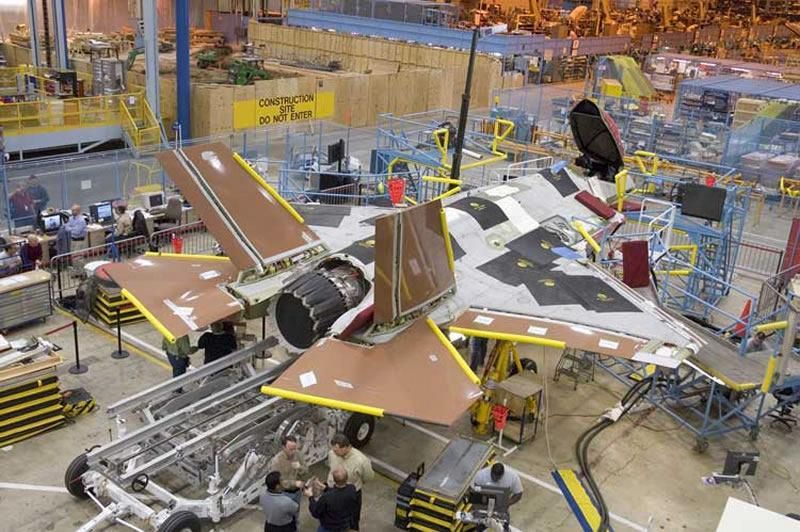
Lockheed Martin F-35 production line
WASHINGTON: In a stormy two-hour hearing, members of the House Oversight Committee lambasted Lockheed Martin and Pentagon officials for putting pilots at risk of accidents by failing to fix the F-35’s troubled maintenance system.
“Fix this now, before you have blood on your hands,” said Rep. Rashida Talib.
Criticism and concern came from both sides of the aisle, although Democrats were particularly harsh — especially regarding Lockheed Martin’s performance and what they allege is an unwillingness on the part of the defense giant to pay back the government for problematic F-35 parts.
“We cannot simply hope that these accidents never occur. These problems must be addressed,” said the committee chair, Rep. Carolyn Maloney. “The US government is a major client of Lockheed Martin. In 2019 alone, Lockheed expected to earn $41 billion in revenue from the US government, business paid for by the American taxpayers. For that much money, we can expect Lockheed to deliver products that work and that keep our service members safe. Anything else is unacceptable.”
“I also plan to look at whether legislation is needed to ensure that F-35 is meeting performance expectations,” she added.
Rep. Jackie Spear took Lockheed Martin VP for the F-35 Lightening II program Greg Ulmer to task for what she characterized as foot-dragging on the firm’s part regarding negotiations to pay back unwarranted performance incentives for parts deliveries over the past six years.
“I would like to say Mr. Ulmer, you are not a good actor in this. This is just one component. We already know that there are nine flaws on the F-35 that are identified as critical, as Priority Ones, that to my knowledge have still not been addressed,” she said. “For you not to come to the table and negotiate this $183 million really aggravates me, and should aggravate every taxpayer in this country.”
Republicans also expressed concerns about the ongoing issues with parts and the long-troubled ALIS maintenance software. But some GOP lawmakers — including the committee’s ranking Republican, James Comer — tried to lower the temperature of the rhetoric, stressing that DoD and Lockheed Martin were working hard to resolve the myriad problems.
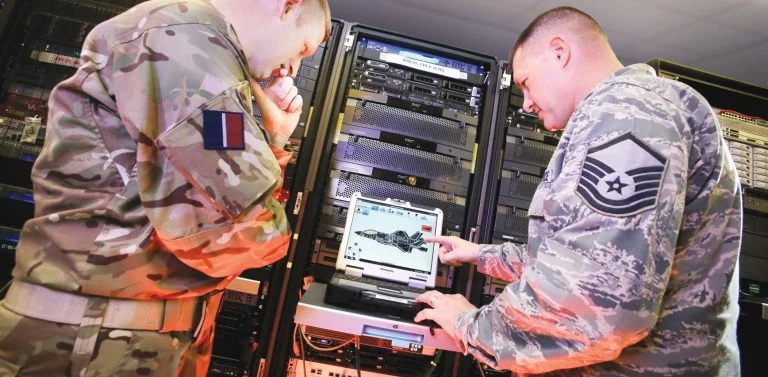
ALIS box
“I am pleased to hear that progress is being made,” Comer said. “We must work together to ensure we get the best products quickly and at the least expense to the taxpayer. Increasing commercial item acquisition, competition, transparency and end-user input may all help with that.”
For their part, DoD officials testifying rushed to reassure committee members that no unsafe F-35 Joint Strike Fighters are being flown, because service maintenance personnel are certifying that all parts are air worthy before allowing planes take off.
“I have faith in our maintenance unit leaders who look at each part and determine whether the aircraft is fit to fly,’ said DoD acquisition chief Ellen Lord. “They are well versed in safety and would never make any safety compromises,”
Lord is leading the Pentagon’s effort to fix not only ALIS but the wider sustainment issues that have resulted in the F-35’s exorbitant operations and maintenance costs — estimated by the watchdog Government Accountability Office (GAO) in a May 20 report to total some $1.2 trillion (yes, trillion with a t) over the fleet’s 66-year life time. That would dwarf the up-front cost of R&D and procurement, bringing total life-cycle costs for the program to $1.6 trillion.
Gen. Eric Fick, head of the F-35 Joint Program Office (JPO), likewise said he had “full faith” in maintenance personnel. (D.N.).