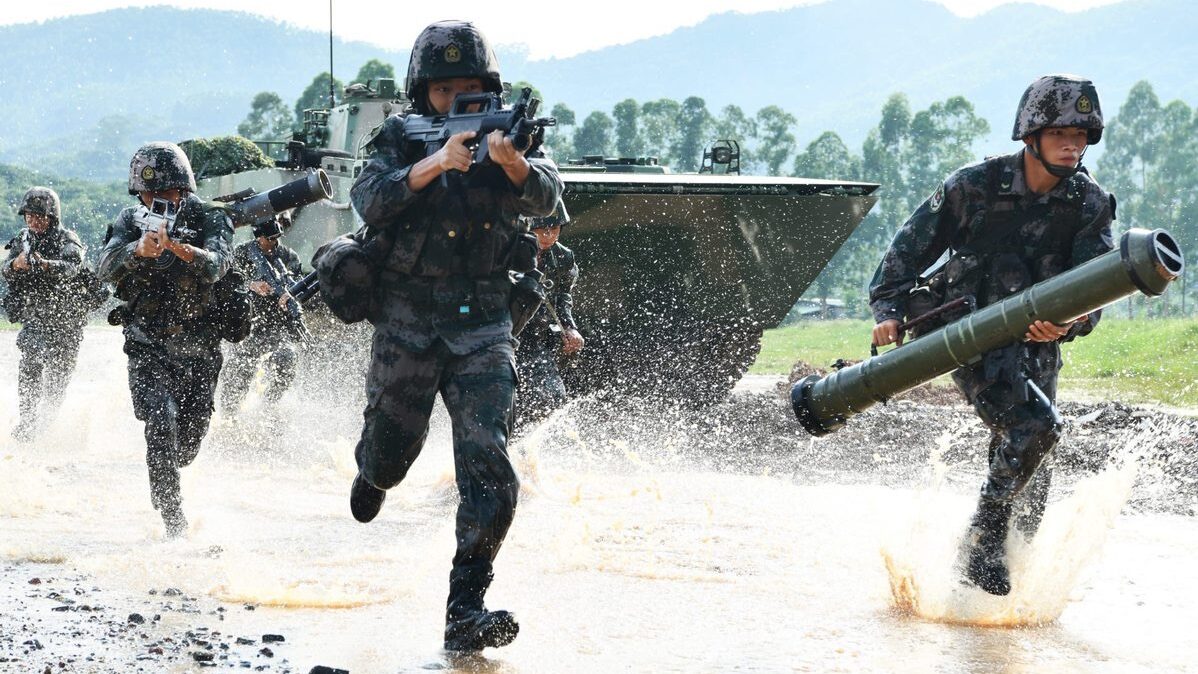
As leaders from the Quad nations gathered over the weekend to celebrate their partnership in the Indo-Pacific, a new report from the Lowy Institute raises concerns about the shifting military balance in Asia. The findings indicate that the United States is no longer the unequivocal dominant military power in the region, as China has significantly narrowed the gap in capabilities.
The report reveals that the People’s Republic of China has reduced the United States’ lead by more than a quarter since 2018, and for the first time, experts surveyed for the Asia Power Index believe that China is better able to deploy its military resources swiftly and sustain them during an interstate conflict in the region.
Despite these alarming trends, the report offers some reasons for cautious optimism, noting that China’s overall influence appears to be plateauing. Factors contributing to this flattening include a declining population, economic struggles exacerbated by significant debt levels, and challenges in its real estate market. The Lowy Institute’s annual “Asia Power Index” reinforces this assessment.
The analysis from Susannah Patton, Jack Sato, and Herve Lemahieu states, “China’s power is neither surging nor collapsing. It is plateauing at a level below that of the United States, but still well above any Asian competitors.” Slower economic growth and enduring structural issues mean that while China’s economic clout remains formidable, it is no longer on an upward trajectory.
In response to Chinese assertions that the U.S. is a fading power in the western Pacific, the authors of the report point to the United States’ resilience and dynamism in Asia, stating, “The United States leads China on six out of eight measures in the Asia Power Index.”
U.S. President Joe Biden, during the Quad meetings in Delaware, addressed this competitive dynamic, acknowledging China’s aggressive actions across multiple regions, including the South China Sea and the Taiwan Straits. His remarks, unintentionally caught on a live mic, underscored the geopolitical rivalry persisting in the area.
The report also highlights a significant decline in Russia’s influence within the Indo-Pacific, attributed largely to its ongoing invasion of Ukraine. Russia, once touted as China’s “no limits” partner, has now been surpassed by Australia in the Asia Power Index rankings. For the second consecutive year, Russia has been identified as one of the countries with the steepest declines in power. The report suggests that President Vladimir Putin’s recent visits to Asian nations were more about salvaging influence than showcasing relevance.
In contrast, Japan’s military and diplomatic presence is on the rise, partially as a result of strengthened ties with the United States and allied nations in response to China’s aggressive actions. The report notes, “Japan’s transformation from an economic and cultural powerhouse to one that also engages in defense and security cooperation with its neighbors is a key trend identified in the 2024 Asia Power Index.” The signing of a Reciprocal Access Agreement with the Philippines exemplifies Japan’s role as a regional security provider.
India, ranked third overall below China, has improved its regional status, but still lacks the capability to project power significantly beyond the Malacca Strait. Nevertheless, its vast resources and economic potential suggest room for future growth.
Additionally, among other key players in the Indo-Pacific, Indonesia has shown remarkable growth in power since the inception of the Asia Power Index. Meanwhile, the Philippines has risen in rank, eclipsing Pakistan, as a result of increased diplomatic influence through closer ties with the United States and other like-minded partners.
Overall, the Lowy Institute report paints a complex picture of shifting power dynamics in the Indo-Pacific, where traditional military dominance is being challenged and redefined as regional influences evolve.