Opening a New Front in Electronic Warfare The United States Air Force is paving the way for a new era in electronic warfare, actively seeking new vendors capable of developing and producing air defense suppression missiles. The move comes as a strategic initiative to diversify and expand existing capabilities, even as the Air Force already has an ongoing contract with Northrop Grumman for the Stand-in Attack Weapon (SiAW).
Profile of the Sought-After „Radar-Killer” Missile: Essential Capabilities According to a recent sources sought notice, the Air Force is looking for a missile offering „similar or improved capabilities” compared to the SiAW. The emphasis is on an „All-Up-Round” (AUR) solution, which must include hardware and software, unique logistics elements, trainers, a SiAW flyout model, and all system verification components. The development period could begin this year, with the goal for production units to be delivered by 2030.
Key features listed include extended range, advanced targeting, effective counter-countermeasures against enemy systems, and seamless integration with existing and future launch platforms. Mandatory compatibility with the launch infrastructure already supporting the SiAW, such as F-35 fighters and potentially the in-development B-21 Raider stealth bombers, is highlighted. These new weapons must be capable of hitting targets from „significant standoff distances” and ultimately be exportable.
Strategic Stakes: Why is the USAF Seeking Alternatives? While the reason for this search for „SiAW equivalent missile systems” is not explicitly stated, the initiative suggests a strategy to foster market competition or to secure multiple sources of supply for a critical capability. This market survey does not necessarily guarantee a contract award, but the potential to identify additional vendors could impact the existing program with Northrop Grumman.
The SiAW is an air-to-ground munition, known as an anti-radiation missile, designed to home in on enemy radar emissions. Beyond its role in striking mobile targets, the Air Force anticipates using the SiAW against a wider range of threats, such as missile launchers, GPS jammers, and integrated air defense systems.
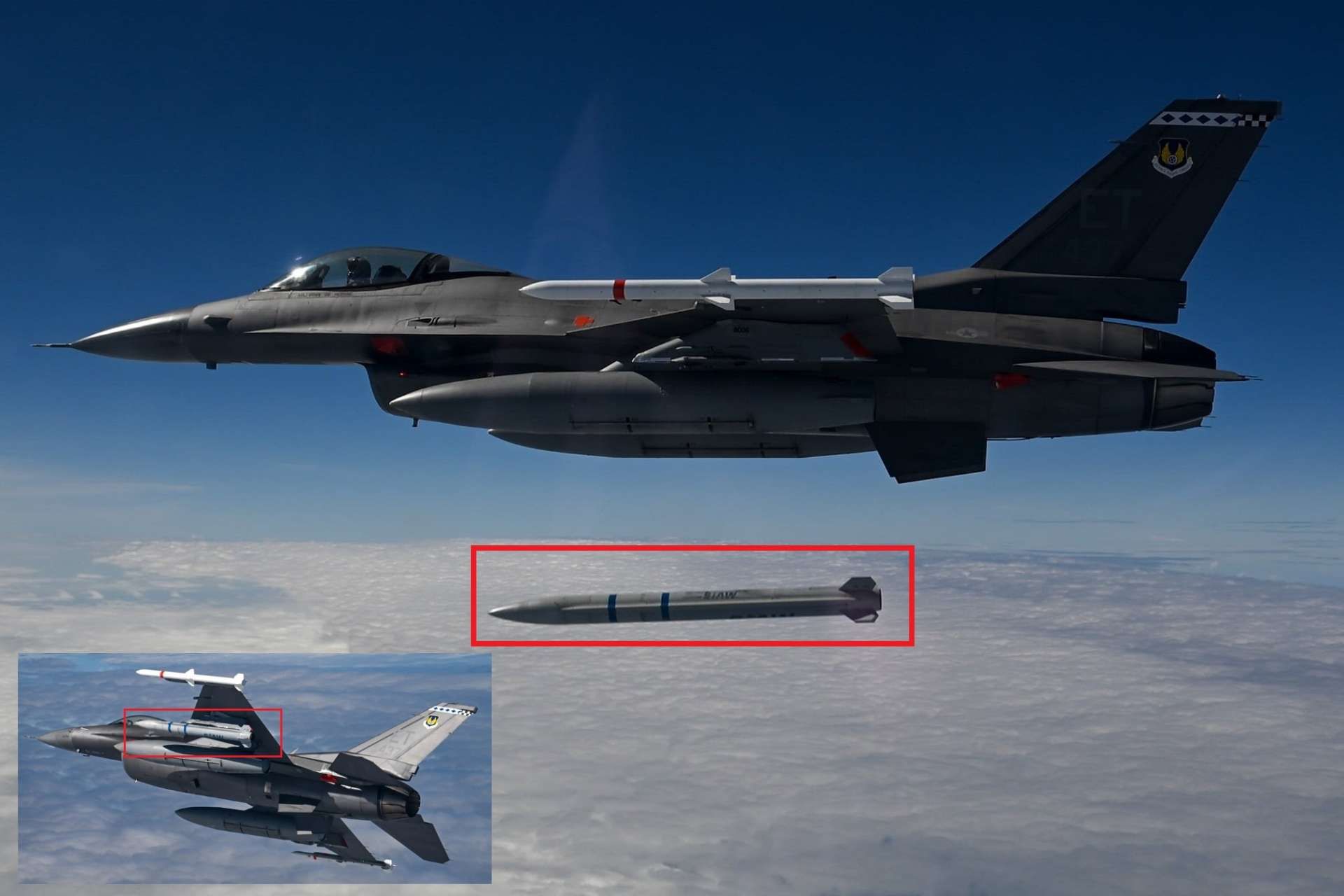
The Future of SiAW and the Context of Naval Acquisitions Northrop Grumman was awarded the contract for the SiAW in 2023, after other major contractors like Lockheed Martin and L3Harris decided to withdraw from the competition. At the time of the award, Northrop aimed to field the SiAW this year, but fiscal year 2026 budget documents indicate that „prototype development” is slated to continue through the first quarter of FY27. In November 2024, Northrop announced the delivery of the first SiAW test missile, followed in December by a weapon separation test from an F-16.
Until the operationalization of SiAW or an equivalent system, the Air Force is acquiring the Navy’s AARGM-ER (Advanced Anti-Radiation Guided Missile – Extended Range), also manufactured by Northrop Grumman, as a stopgap solution. For FY26, the Air Force requested 99 AARGM-ER units.
Interestingly, the U.S. Navy also recently embarked on its own search for a new anti-radiation missile, but is seeking options capable of hitting both air and ground targets.
Race Against Time: Deadlines and Production Capacity Suppliers interested in the Air Force’s initiative must demonstrate the capability to produce up to 600 copies of this new weapon annually. The deadline for submitting responses to the request for proposals is March 19, signaling the urgency with which the Air Force wishes to explore all available options to consolidate its superiority in the electronic spectrum.