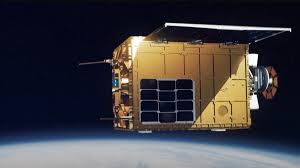
Startup Starfish Space has clinched a $54.5 million contract to provide the US Space Force with a second „Otter” satellite-servicing craft. This new space tug is set to bolster „dynamic space operations” in the critical geosynchronous Earth orbit (GEO), a vital region for global communications and surveillance.
The New Space Race: Prioritizing On-Orbit Agility
The contract, announced by the company on February 7, is funded through the Defense Department’s Accelerate the Procurement and Fielding of Innovative Technologies (APFIT) program – an initiative designed to rapidly integrate innovative technologies into operational use. It stands as one of the largest contracts awarded by APFIT to date and, notably, the sole contract from this funding cycle granted to a space firm. Launched in 2022, the APFIT program targets projects that have completed development and are ready for transition into operational use, underscoring an increasing urgency in adopting cutting-edge solutions.
Michael Madrid, Starfish’s chief growth officer, stated that the new contract reflects the Otter’s evolution from a promising concept to an established product, even as it awaits validation in complex, real-world operations.
Otter’s Role: An Engine for Dynamic Space Operations
Otters essentially act as an additional engine, docking with a satellite to provide supplemental power or, as needed, to propel it. This power can keep the spacecraft in position or strategically reposition it, offering unprecedented operational flexibility. Starfish co-founder Austin Link emphasized that through dynamic space operations and autonomous augmented maneuver, the company enables the Space Force to sustain critical space assets, increase resilience, and maintain operational agility across evolving mission demands.
In May 2024, Starfish had already secured a $37 million Space Systems Command (SSC) Strategic Funding Increase contract to build, launch, and operate the Space Force’s first Otter vehicle for two years. This spacecraft „will be ready for launch this year,” Madrid noted, although an exact date for its National Security Space Launch mission has not yet been set. Under the new contract, the second Otter is slated for delivery in 2028. Madrid added that while the Space Force has identified which satellites both Otters will service, the information remains classified.
The Strategic Imperative: Space Force’s Maneuver-Based Future
The company also previously secured a first-of-its-kind $52.5 million Space Development Agency contract on January 21 to dispose of defunct Proliferated Warfighter Space Architecture (PWSA) satellites stationed in low Earth orbit. These multiple contracts demonstrate growing confidence in Starfish’s capabilities.
This new award arrives in the context of US Space Command head Gen. Stephen Whiting’s January 28 call for a strategic pivot by the Space Force towards maneuver-based space operations. This pivot includes increased investment in enabling technologies such as refueling, repair, and on-orbit logistics, as well as scaled-up exercises, reflecting a vision for a more agile and resilient space domain. While SPACECOM leaders have been lobbying hard for such new capabilities to allow satellites more agility on orbit, the Space Force remains fundamentally undecided about the wisdom of full-scale investment. Nevertheless, the series of substantial contracts with Starfish Space signals a clear trend towards increased mobility and resilience in space, shaping the future of military operations in Earth’s orbit.