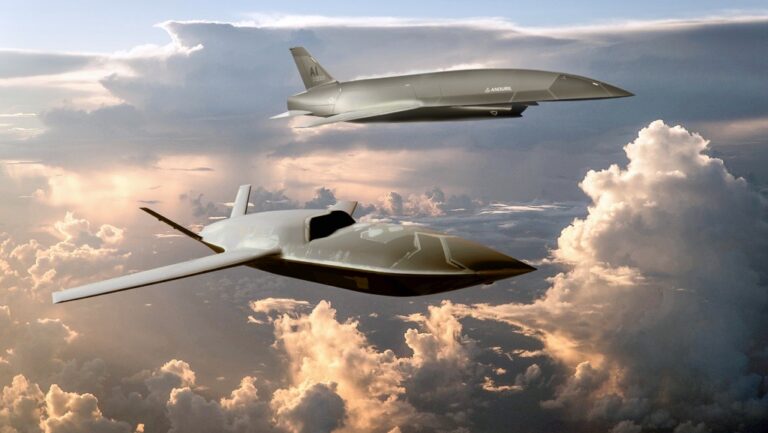
The United States Air Force is preparing for a decisive phase in its drone wingman program, planning to winnow the current pool of nine vendors down to as many as six next year. This selection is part of the second round of the Collaborative Combat Aircraft (CCA) program, an ambitious initiative aimed at integrating unmanned systems into modern combat formations.
The ongoing “concept refinement” stage is slated to last approximately ten more months, during which specialists will evaluate a wide range of designs, from cheaper, more attritable drones to highly sophisticated models. The ultimate goal is to secure six closed conceptual designs that will subsequently move through prototyping and, eventually, production contracts.
Strategic power plays: Investing in new propulsion segments
To support these new platforms, the military is strategically investing in segments of the propulsion market that have recently been dormant. Officials have announced contracts for developing two classes of engines: one providing 1,400 to 1,600 pounds of thrust and a second “medium” class aimed at 5,000 to 6,000 pounds. These engines will not be simple off-the-shelf products, but systems optimized to meet the demanding requirements of next-generation combat drones.
The strategy aims to provide maximum flexibility for aircraft designers. As a result, future “robotic wingmen” will not be constrained by existing technology but will have access to propulsion systems capable of ensuring both persistence and the speed required in contested operational theaters.
Beyond the Reaper: The MMA project seeks drones under 30 million dollars
In parallel with the CCA program, the Air Force is partnering with the Defense Innovation Unit (DIU) to find a successor for the MQ-9A Reaper fleet. The new program, dubbed Mass Modular Aircraft (MMA), seeks a cheaper and more loss-tolerant aircraft, considering the vulnerabilities shown by the Reaper in recent conflicts.
The cost standard is rigorous: new drones must cost less than 30 million dollars per unit, a significant decrease compared to the price of current “exquisite” models. Industry response has already been described as very robust, with initial contracts for the concept refinement phase expected in the first quarter of fiscal 2027. The goal is clear: a large, modular fleet capable of executing complex missions without jeopardizing massive budgets in the event of an aircraft loss.