- Urgent Need for Efficiency
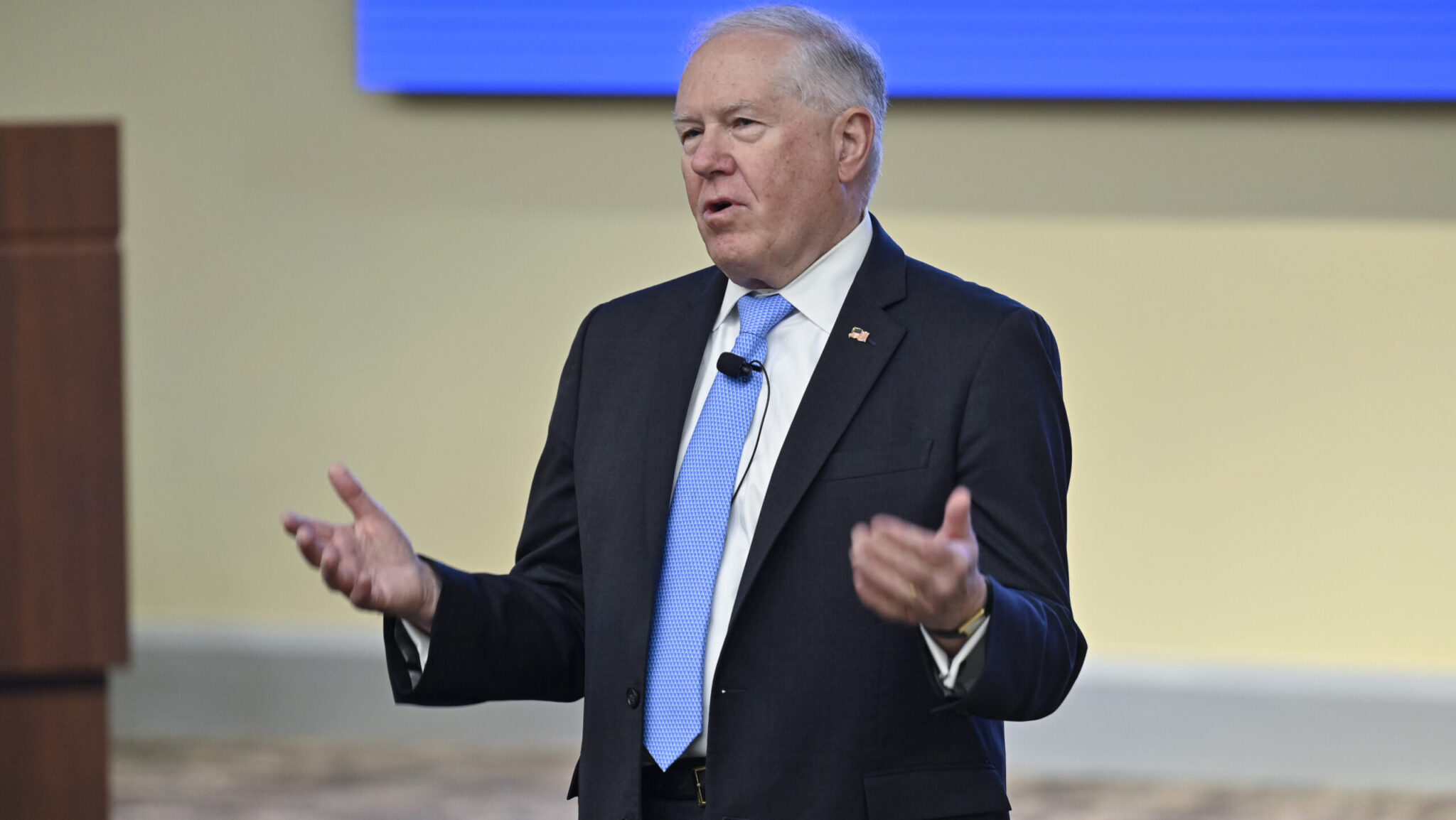
If the Trump administration aims for the Pentagon to save money and operate more efficiently, it must be prepared to confront Congress over force structure decisions that may prove unpopular, stated Air Force Secretary Frank Kendall during a fireside chat at the Center for Strategic and International Studies. - Challenges in Cutting Spending
“Every single thing you want to cut is something somebody cares about a lot and is going to fight you in Congress to keep you from cutting it,” Kendall remarked, highlighting the difficult landscape of defense budget cuts. He specifically pointed to programs like the C-130, suggesting the Air Force already has sufficient aircraft. - Kendall’s Vision for the Future
Ahead of his departure from the service, Kendall released a report outlining a vision for the Air and Space Force in 2050, emphasizing the need for “a lot more resources” to address threats from China and Russia. - Tensions with Government Efficiency Initiatives
This vision may collide with the goals of the Department of Government Efficiency, a project led by Elon Musk and Vivek Ramaswamy aimed at eliminating $1 trillion in wasteful government spending. Kendall acknowledged the difficulty in achieving significant cost reductions, noting that understanding government operations is crucial for implementing efficiencies. - Need for Strategic Tradeoffs
Kendall asserted that if the next administration is serious about cutting down on waste, the Air Force must reevaluate its reliance on increasingly obsolete legacy structures and be ready to make “major strategic tradeoffs.” - Questions of Global Positioning
While he didn’t propose downsizing overseas presence, Kendall hinted at the need to reassess whether the Air Force is optimally positioned to confront contemporary threats, particularly with China being identified as a pacing challenge. - Barriers to Change
Despite recognizing the need for reform, Kendall indicated that fundamental changes to the Air Force’s posture cannot happen without legislative backing. Efforts to reduce bureaucratic overhead are complex and require congressional cooperation to modify long-standing statutes. - Challenges with IT Infrastructure
The Air Force also faces challenges with outdated IT systems, which hinder its ability to keep pace with advancements in automation and productivity seen in the commercial sector. Kendall stressed the need for modern IT investments, which are often sacrificed in favor of higher priority expenses like aircraft and training. - The Call for a More Powerful Space Force
Over the past six months, Kendall has strongly advocated for a significantly enhanced Space Force. He highlighted the necessity for the service to transition from a support role to a full-fledged armed force capable of countering adversaries’ space capabilities, including the development of “orbital weapons.” - Expanding Counterspace Capabilities
Emphasizing the importance of expanding counterspace capabilities, Kendall stated, “We need a cost-effective mix of terrestrial and orbital weapons,” indicating an urgent need to improve the Air Force’s strategic operations against competitor nations in space.
Kendall’s comments reflect an ongoing dialogue within the military about balancing efficient resource use while adapting to new global threats, marking a critical phase in the evolution of the U.S. Air Force and Space Force.