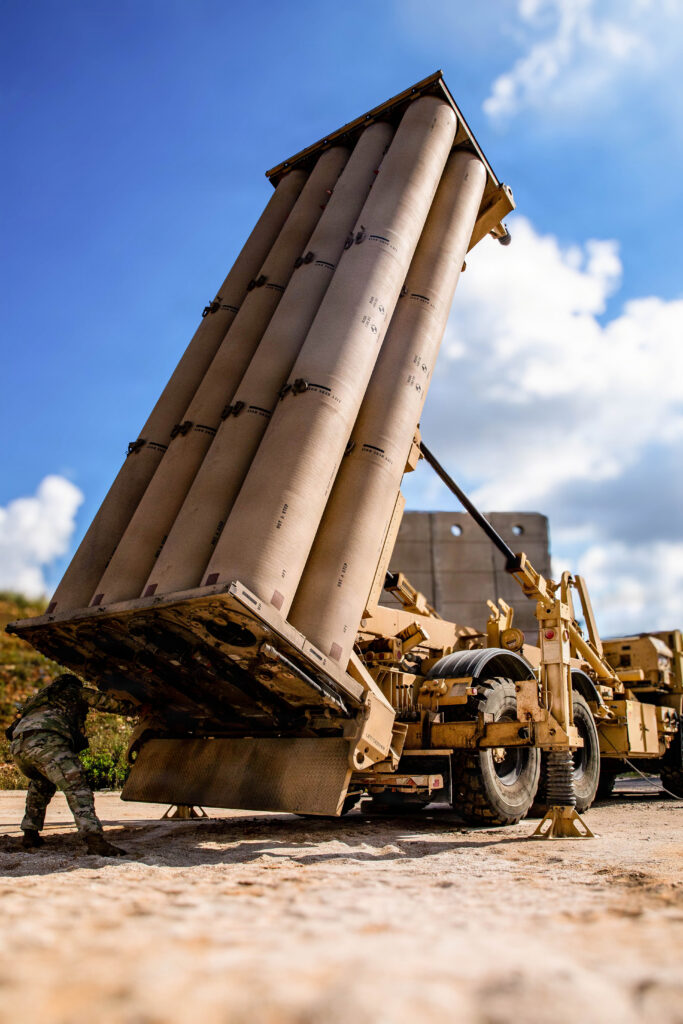
The effectiveness of air defense systems in the Iran conflict is overshadowed by an alarming reality: munitions stockpiles are depleting, and radar infrastructure is becoming a scarce resource that is difficult to replace.
Strategic assets in jeopardy: The transfer of THAAD radars from the Indo-Pacific weakens global defense
The success of recent interceptions has demonstrated the precision of American technology, but the strategic price is immense. The destruction or damage of several AN/TPY-2 radar units—the core of the THAAD system—has forced the Pentagon into desperate maneuvers. Relocating this equipment from critical regions like the Indo-Pacific to the Middle East weakens the deterrence posture against other major powers.
Experts warn that a THAAD battery is useless without its specific radar, and the fact that the USA is „borrowing” resources from one theater to cover another does not go unnoticed by adversaries. This vulnerability is further exacerbated by the limited number of interceptors and the massive pressure on the remaining operational radars.
The SRM motor bottleneck: How the US defense industrial base reached a critical tipping point under demand pressure
Beyond radars, the crisis extends to essential components: Solid Rocket Motors (SRM). Manufacturing each interceptor requires such a motor, and the production process is extremely slow and complex. Following the decision to end the Space Shuttle program in 2011, propellant demand dropped drastically, leading to the degradation of the industrial infrastructure needed today.
Currently, the supply chain is strangled by conflicting regulations between the DoD and the ATF, as well as a government strategy that prioritized cost efficiency over production capacity. The result is a chronic inability to accelerate the manufacturing of SRM motors during crises, when stockpiles are consumed faster than they can be replenished.
Innovation as the remedy: Ursa Major and 3D printing for the future of Pentagon munitions
In this somber landscape, new players in the defense industry, such as Ursa Major, are proposing cutting-edge technological solutions. The use of Additive Manufacturing (3D printing) and the development of the Draper engine based on storable liquid fuel promise to revolutionize how hypersonic missiles and interceptors are produced.
This approach allows for the use of materials from outside the traditional defense supply chain, tapping into suppliers from the automotive industry to avoid bottlenecks. However, long-term success depends on a joint effort: the Pentagon must provide consistent demand signals, and manufacturers must prove they can deliver high-end technology at a massive industrial scale, ensuring that troops in the field have the tools necessary to maintain aerial supremacy.