In an effort to develop innovative logistical solutions for the future of military operations, the U.S. Army plans to incorporate cargo aerial drones and autonomous boats in next year’s Project Convergence capstone exercise, according to Brig. Gen. Shane Upton, director of the Contested Logistics Cross Functional Team.
Addressing the logistical challenges posed by dispersed formations in remote areas, Upton emphasized the need for alternative resupply strategies, particularly in the Pacific theater. “There’s no other option if you’re deploying a Multi-Domain Task Force lethal firing asset to a remote island chain,” he noted. Traditional airlift options, such as C-17 or C-130 aircraft, may not be viable, particularly if enemy action compromises supply routes.
To explore heavy-lift drone capabilities, the Army issued a request for information to industry, which drew responses from 24 companies. The Army has selected two heavy-lift drones for participation in the upcoming Project Convergence Capstone 5 event, although the specific companies involved have not yet been disclosed.
Upton shared that these heavy-lift drones are capable of transporting approximately 1,000 pounds over a distance of 300 to 400 nautical miles. The objective is to integrate these drones with autonomous boats for logistics assessments in the Pacific and other operational theaters, as Upton noted, “None of the solutions are going to be exclusively for the Pacific; they must also work in Europe.”
He underscored the importance of adaptability, stating that current military engagements are ongoing in CENTCOM and EUCOM, not just PACOM, making it essential for solutions developed to be applicable across diverse operational environments.
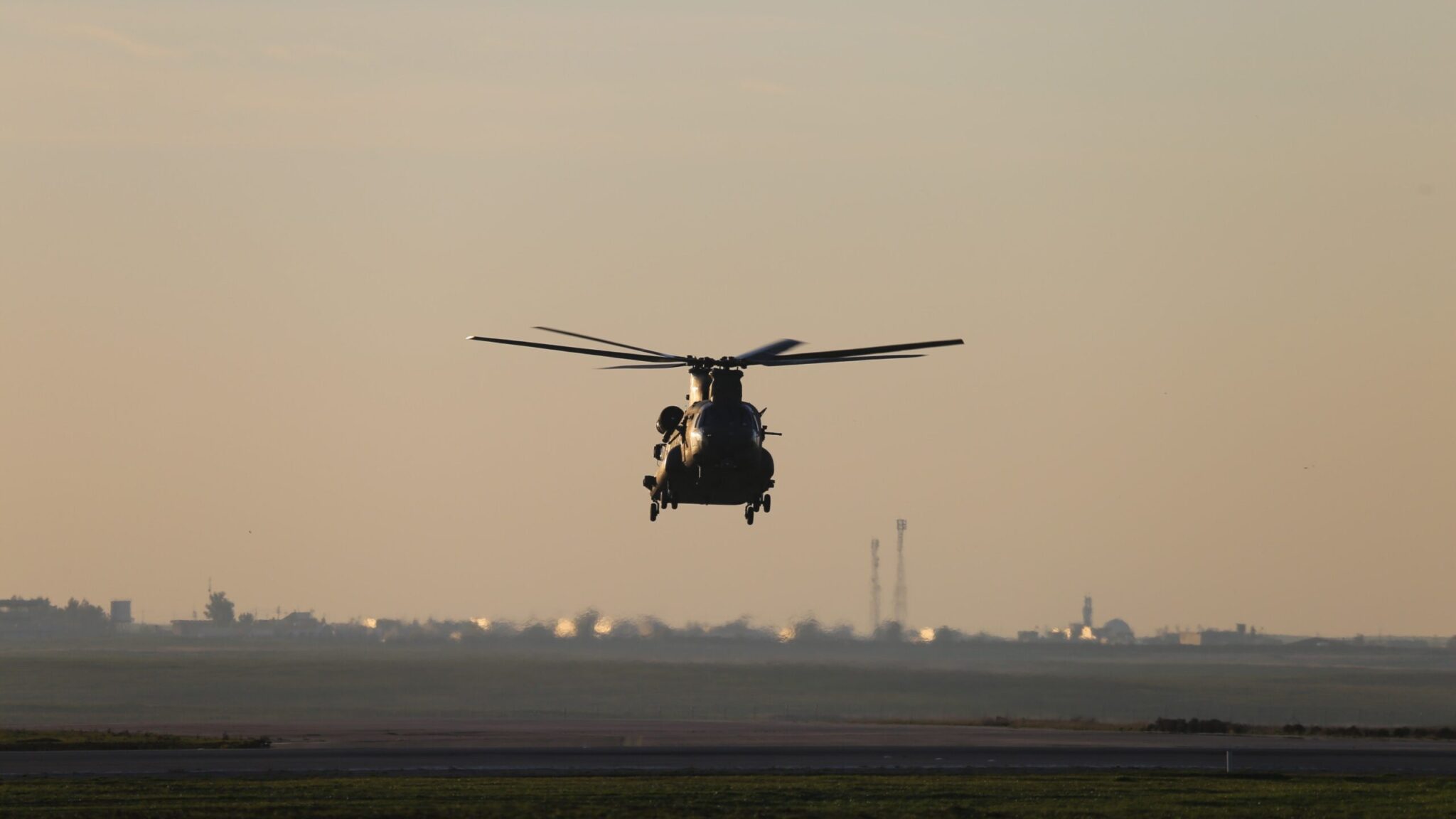
As the Army analyzes the capabilities of aerial cargo drone technology during Project Convergence, it will compare these insights with options for integrating autonomous systems on existing platforms like CH-47 Chinook helicopters. Upton acknowledged that while the integration is a goal, it presents significant challenges.
Cost considerations play a critical role in this evaluation. Upton explained, “Some of these autonomous aircraft are significantly cheaper than a Chinook,” emphasizing the need for scalable solutions for logistics over the shore. He pointed out the necessity for smaller, more mobile boats and cost-effective drones to facilitate cargo movement. “You can’t spend $50 million, $60 million, or $70 million per drone to achieve this objective,” he added, indicating the importance of financial viability in the Army’s logistics strategy moving forward.