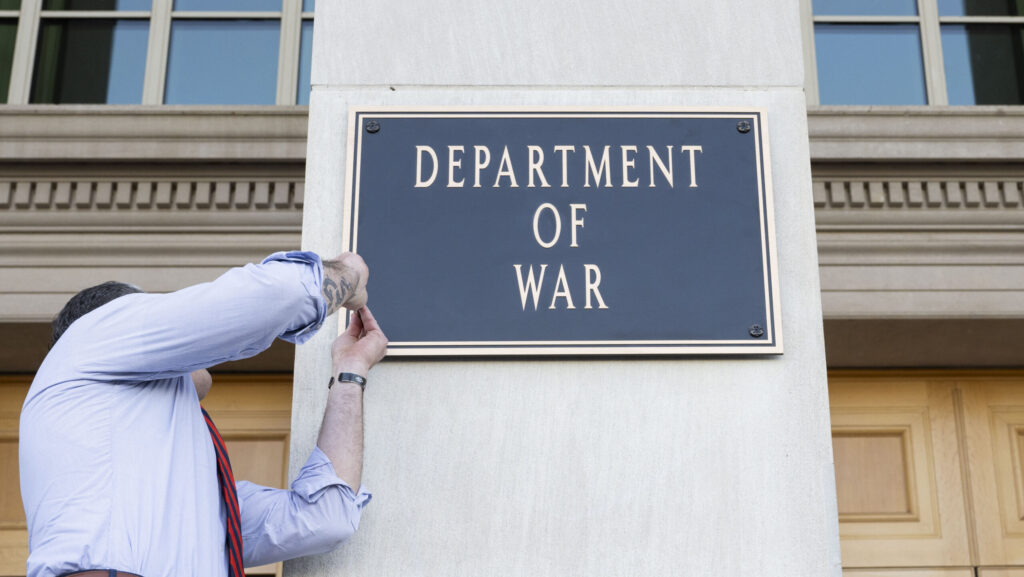
In a bold move that signals a shift toward a more assertive military posture, the Pentagon has formally requested that Congress rename the Department of Defense to the „Department of War.” This legislative proposal is expected to spark intense debate among lawmakers as they begin deliberations on the Fiscal Year 2027 defense policy bill.
Strategic Rebranding: Realigning with the Core Mission
The rationale for the name change is rooted in a desire for mission clarity. According to the proposal, reverting to the title „Department of War”—a designation the U.S. military held until 1947—acts as a fundamental reminder of the institution’s primary duty: to fight and win the nation’s wars.
Military officials argue that the nomenclature will serve as a „strategic objective,” providing a clear metric by which all activities, investments, and priorities are measured. By shedding the „Defense” label, the department aims to instill a renewed sense of reverence and focus on the lethality and readiness required in an increasingly volatile global landscape.
The Price of a Name: Balancing Symbolism and Expenditure
While the Pentagon asserts that the change will not significantly impact the FY27 budget, internal estimates reveal a substantial implementation cost. The department expects to spend approximately $51.5 million during the 2026 transition period alone, with $44.6 million allocated to updating internal agencies and field activities.
Planners insist the transition will be handled through „cost-effective and non-invasive” methods, such as depleting current stationery stocks before reprinting with the new letterhead and phasing in signage updates. However, the true cost of rebranding the world’s largest bureaucracy remains a moving target, with finalized figures for the nomenclature shift still being tallied.
Political Friction: Budgetary Concerns and Ideological Divides
The proposal has already met with resistance from Democratic lawmakers, who are questioning the necessity of the shift amidst other pressing military priorities. Budgetary watchdogs have weighed in with even more cautious estimates; while a limited transition might cost as little as $10 million, a rapid, department-wide implementation could see costs soar to hundreds of millions of dollars.
As the FY27 defense bill takes shape, the „Department of War” proposal is likely to become a lightning rod for political friction. Critics view the move as an expensive and potentially provocative distraction, while proponents see it as an essential psychological and strategic pivot toward a more realistic assessment of global security challenges.