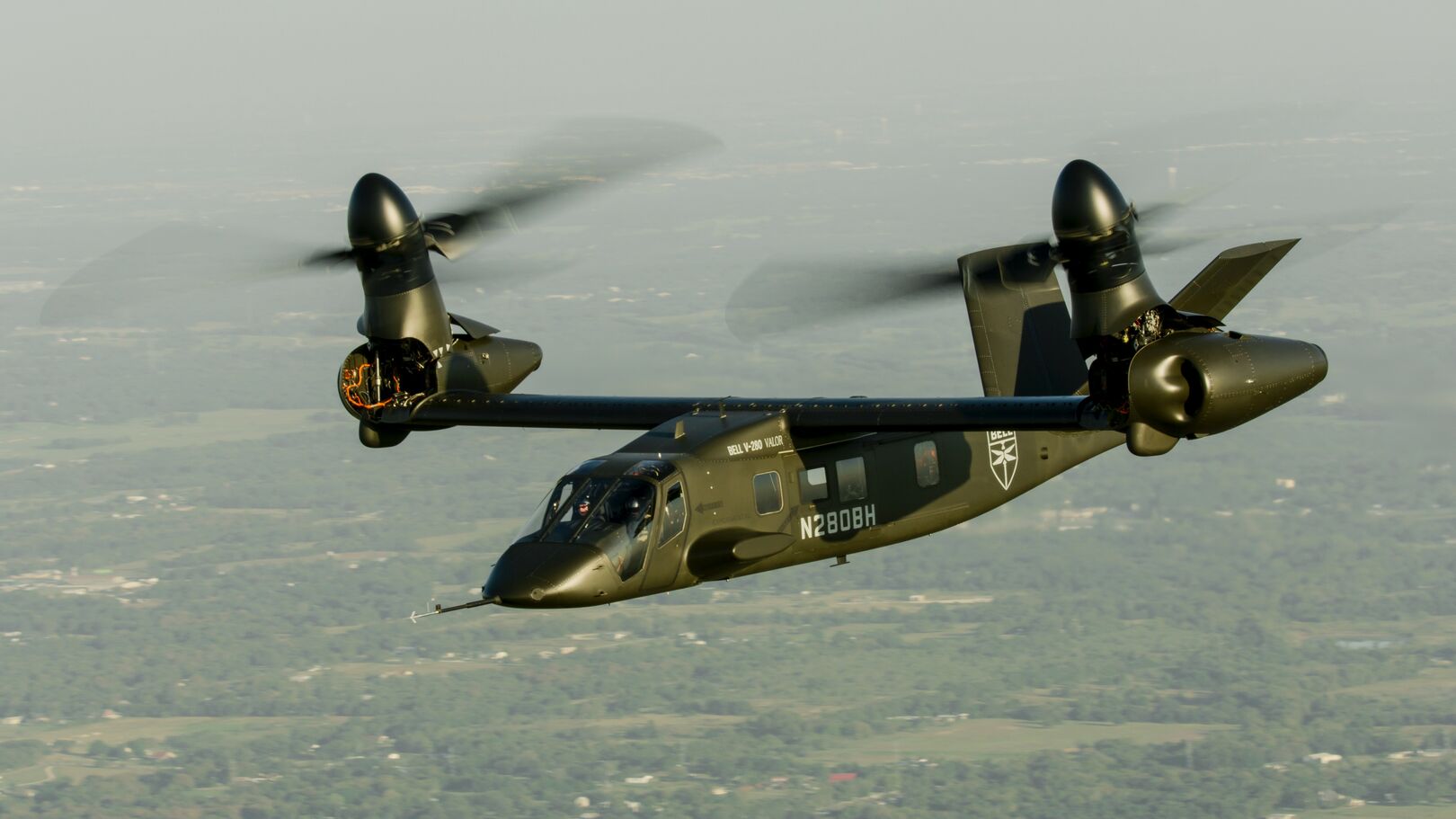
In a significant development for the Wichita aerospace workforce, Bell Textron has announced plans to continue the fuselage production for the US Army’s Future Long Range Assault Aircraft (FLRAA) in the city, despite transitioning some work in-house. This decision reflects Bell’s commitment to advancing manufacturing capabilities while supporting local employment.
Bell President and CEO Lisa Atherton emphasized the company’s dedication to investing in advanced manufacturing to deliver high-performance, cost-effective solutions to the Army. „Textron has a rich history with the state of Kansas as well as the city of Wichita, and we are proud to deepen that relationship as we establish this new facility,” she stated in a brief announcement.
Kansas lawmakers, including Sen. Jerry Moran and Rep. Ron Estes, lauded the decision, with Moran declaring it a “historic day” for the region.
While a portion of the fuselage work will remain in Wichita, additional production will take place in Texas, with final assembly occurring in Amarillo.
In late 2022, Bell secured the FLRAA contract, valued initially at $1.3 billion, outpacing a team comprising Boeing and Lockheed Martin’s Sikorsky. Army officials indicated the potential total value could soar to around $70 billion, factoring in contract options and export possibilities.
The FLRAA program envisions a rotorcraft that is faster and possesses greater range than current Army helicopters, enhancing battlefield capabilities and allowing air assault missions from safer distances. This capability is designed to support decentralized operations and extend the reach of ground forces.
Bell initially planned for Spirit AeroSystems to manufacture the aircraft’s composite-skinned aluminum fuselage in Wichita. However, that plan changed when Boeing announced its acquisition of Spirit for $8.3 billion. Subsequently, Bell decided to bring fuselage production in-house, without initially disclosing the new production location.
The Army has continued to progress the FLRAA program, recently granting approval to move into the engineering and manufacturing development (EMD) phase. Bell Textron aims to have the first FLRAA prototype airborne by 2026, enter low-rate initial production in 2028, and achieve first fielding by 2030.
Despite the adjustments in fuselage production, Army officials have indicated that the program remains on track. Doug Bush, head of Army acquisition, expressed confidence, stating, “We’re ahead of that problem. It’s already been worked out.”
Brig. Gen. David Phillips, Program Executive Officer for Aviation, noted that discussions with Bell Textron have been transparent, indicating that the fuselage is not a critical path item for the project. He mentioned that Bell’s experience with composite fuselages might lead to a modular design, facilitating earlier production of parts as they become ready, rather than waiting for the entire fuselage completion.
This development indicates not only a commitment to the Wichita community but also the Army’s determination to advance its aviation capabilities through innovative partnerships and effective planning.