American aerospace giant Boeing is partnering with Indian company Sagar Defence Engineering to co-develop and co-produce new unmanned surface vehicles (USVs) as both Washington and New Delhi aim to strengthen their defense industrial ties.
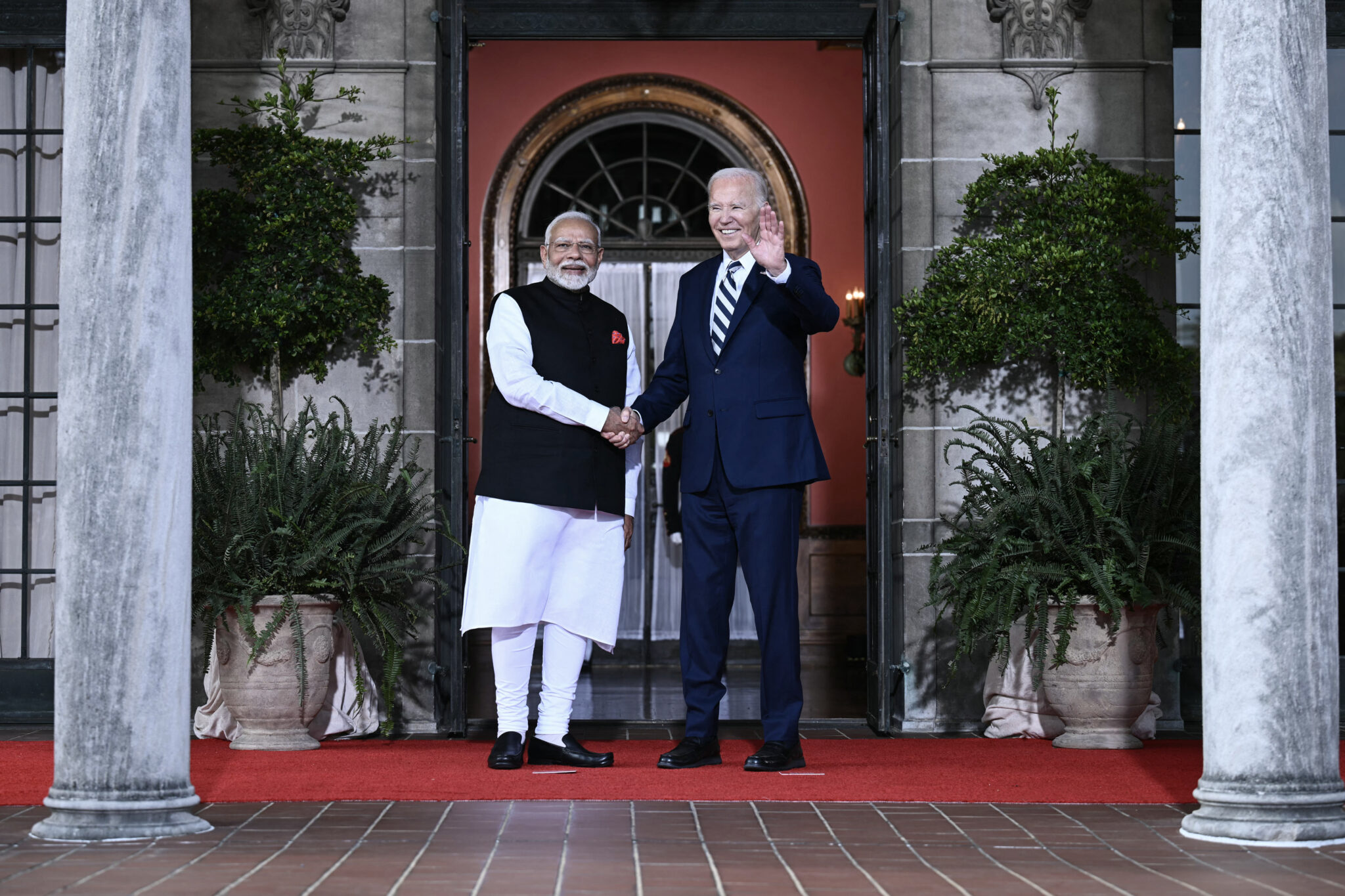
This announcement, made through statements from the White House and involved companies, coincides with Indian Prime Minister Narendra Modi’s visit to the United States for the Quad meeting and the UN General Assembly.
The collaboration centers around the Wave Glider, a USV produced by Boeing subsidiary Liquid Robotics, which is powered by waves and solar energy. According to Boeing, these vehicles are utilized for various applications, including ocean research, weather and climate modeling, tsunami and seismic monitoring, and supporting offshore energy projects.
“The Wave Glider is an ideal system for fostering collaboration between the U.S. and Indian governments and enhancing tactical readiness in the Indo-Pacific,” stated Shane Goodenough, CEO of Liquid Robotics. “Partnering with Sagar Defence marks a new chapter in our bilateral defense cooperation and allows us to expand our existing Wave Glider operations in India. We are excited to collaborate with the skilled team at Sagar, who have a proven track record in successfully integrating uncrewed systems into active defense missions.”
In a statement released on September 21, the White House also highlighted several other defense and technology cooperation initiatives between the United States and India, including a partnership agreement between Lockheed Martin and Tata Advanced Systems to set up a new maintenance facility in India for the C-130J Super Hercules fleet.
“This represents a significant advance in U.S.-India defense and aerospace cooperation and illustrates the deepening strategic and technological partnership between the two nations,” the White House statement noted.
For over ten years, India and the U.S. have committed to enhancing their defense industrial cooperation. The relationship was revitalized with the 2012 launch of the Defense Technology and Trade Initiative (DTTI), a specially designed program initiated by Ash Carter, who was the U.S. Deputy Secretary of Defense at the time. When he became Secretary of Defense, Carter prioritized enhancing relations with India, including collaboration on engine and carrier technology. In 2019, during the Trump administration, Ellen Lord, then-head of Pentagon acquisitions, announced that the U.S. and India would co-develop small aerial unmanned systems.
However, partly due to India’s complex acquisition system, there has been limited progress from these agreements. This prompted the Biden administration to initiate new efforts in 2023 through the India-U.S. Defense Acceleration Ecosystem and various defense-oriented projects. Additionally, a memorandum of understanding was signed between the Pentagon’s Defense Innovation Unit and a similar organization in the Indian Ministry of Defence.
“The efforts by the INDUSWERX consortium to create pathways for defense and dual-use companies in the INDUS-X network to access premier testing ranges in both countries were noted with appreciation,” the statement added.