Canberra bolsters its undersea defenses with a massive investment designed to keep its current fleet combat-ready until the arrival of the nuclear-powered era.
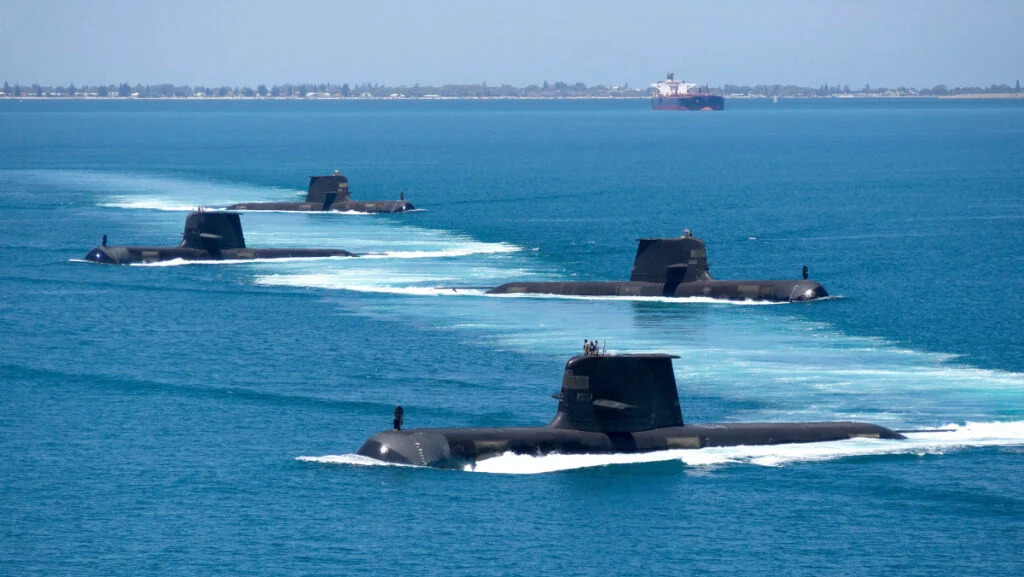
Australia is moving forward with an aggressive plan to extend the operational life of its Collins-class diesel-electric submarines. This strategic pivot serves as a vital interim solution as the nation navigates a complex transition toward nuclear-powered capabilities under the landmark AUKUS pact.
Legacy Fleet, Future Mission: The $11 Billion Overhaul
The Department of Defence has greenlit the „Life Of Type Extension” (LOTE) program, a high-stakes initiative valued at $11 billion AUD ($7.8 billion USD). Managed by the government-owned ASC, the program ensures that Australia’s six Collins-class boats remain frontline assets until the 2040s—effectively stretching their service life by 20 years beyond original projections.
This extension is described by defense leadership as a non-negotiable requirement for maintaining a competitive edge. The program will follow a „conditions-based sustainment” model, where core structures are meticulously restored while critical weapons systems receive state-of-the-art enhancements to meet modern threats.
The Nuclear Horizon: A Strategic Transition
Under the first pillar of the AUKUS agreement, Australia’s naval evolution will occur in phases. The 2030s will see the induction of three U.S. Navy Virginia-class submarines, providing a crucial training ground for nuclear operations. By the 2040s, the Navy expects to field five purpose-built AUKUS-class vessels. Until this transformation is complete, the Collins-class fleet—originally commissioned between 1996 and 2003—remains the backbone of national security, showing remarkable resilience and high availability rates in recent deployments across Southeast Asia.
Precision Engineering: A Case-by-Case Resurrection
The LOTE program is set to commence with HMAS Farncomb, the fleet’s most seasoned veteran in terms of sea days. The process will be surgical: each boat will undergo an exhaustive engineering assessment to determine which components, such as propulsion systems, must be replaced and which can be retained. This tailored approach aims to optimize the performance of each vessel, ensuring that Australia’s conventional fleet remains a potent deterrent during the long countdown to its nuclear future.