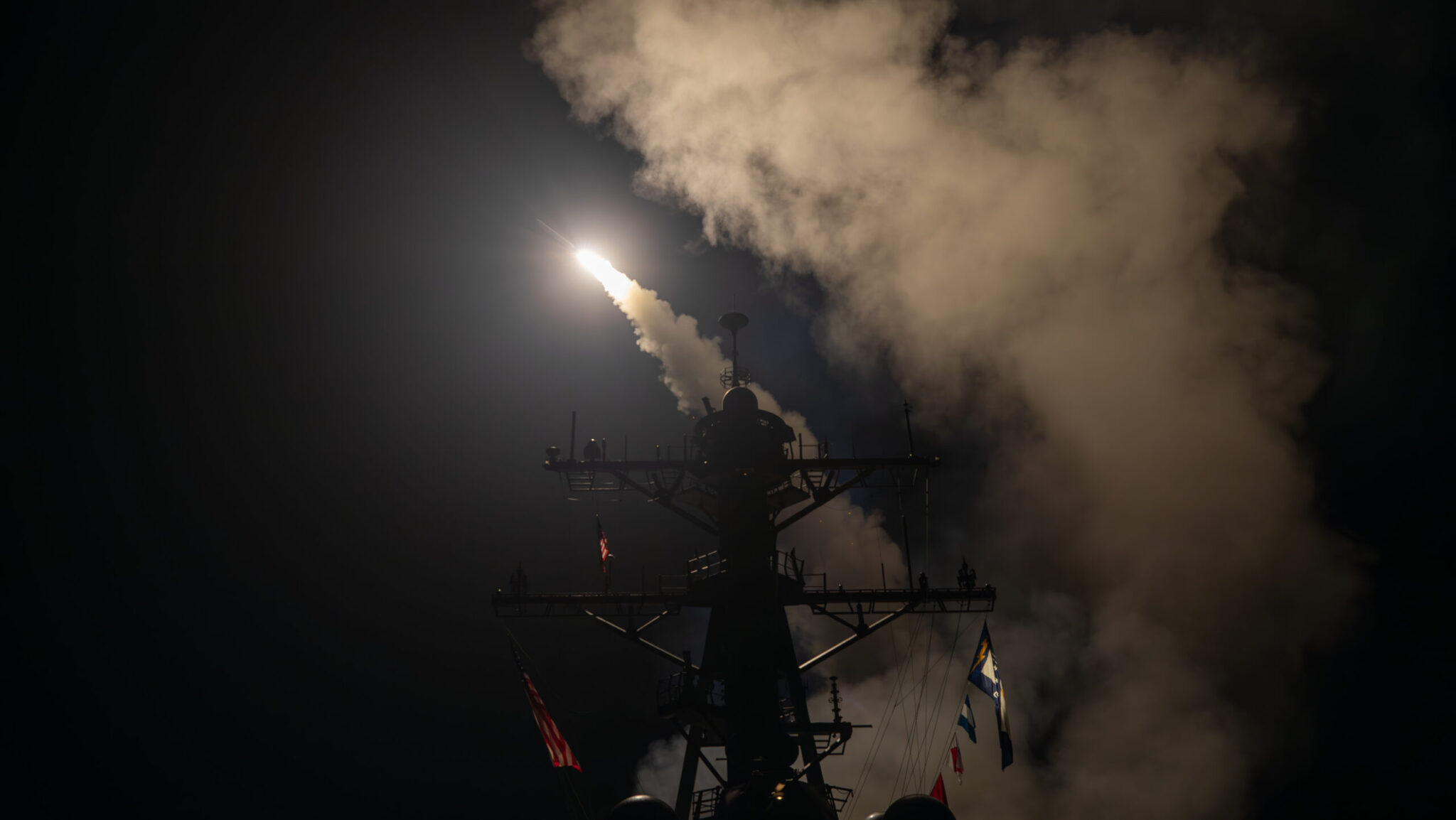
As President-elect Donald Trump prepares to return to the White House, the ambitious Sea-Launched Cruise Missile – Nuclear (SLCM-N) program launched during his first term faces significant industrial challenges, according to Vice Admiral Johnny Wolfe, director of the Navy’s Strategic Systems Program (SSP). The SLCM-N is intended as a low-yield, submarine-launched weapon to counter Russian and Chinese tactical nuclear capabilities, but its tight timeline is raising concerns.
Wolfe highlighted the aggressive timeline for achieving an „initial capability” by 2034, as mandated by Congress, stating, „This is truly a capability we have to build from the ground up.” He emphasized the complexity of establishing a new industrial base and workforce to support the program. The Navy has created a dedicated program office for SLCM-N and is currently assessing the necessary trade-offs for its development.
Former Trump administration official Robert Soofer, a key architect of the SLCM-N initiative, criticized the Navy’s claims about the program’s difficulties, suggesting that modifying existing non-nuclear weapons could expedite the process. Soofer pointed out that the Navy previously had no objections about the feasibility of the program. He proposed using the upgraded Block V version of the Tomahawk missile as a basis for the nuclear variant, arguing it could reduce the time and resources needed for development.
While the SLCM-N originally aimed to resurrect a nuclear-tipped variant of the Tomahawk missile, Wolfe asserted that reconstituting the Cold War-era weapon is not straightforward. The Navy clarified that Wolfe’s concerns are not related to the availability of nuclear warheads—managed by the Department of Energy—but rather the capacity of the industrial base to produce the necessary missile systems alongside existing demand for precision munitions.
The Navy’s priorities are further complicated by its involvement in other critical programs, including the development of a new non-nuclear hypersonic missile, Conventional Prompt Strike (CPS), and upgrades to the Trident II D5 ballistic missile, essential for the Columbia-class submarines. Wolfe confirmed that the Navy will not compromise the strategic deterrent capabilities of the Trident system to pursue the SLCM-N initiative.
As the program progresses, the Navy plans to conduct trade studies and maintain ongoing discussions with the Office of the Secretary of Defense and Congress to clarify what the SLCM-N program will entail moving forward.