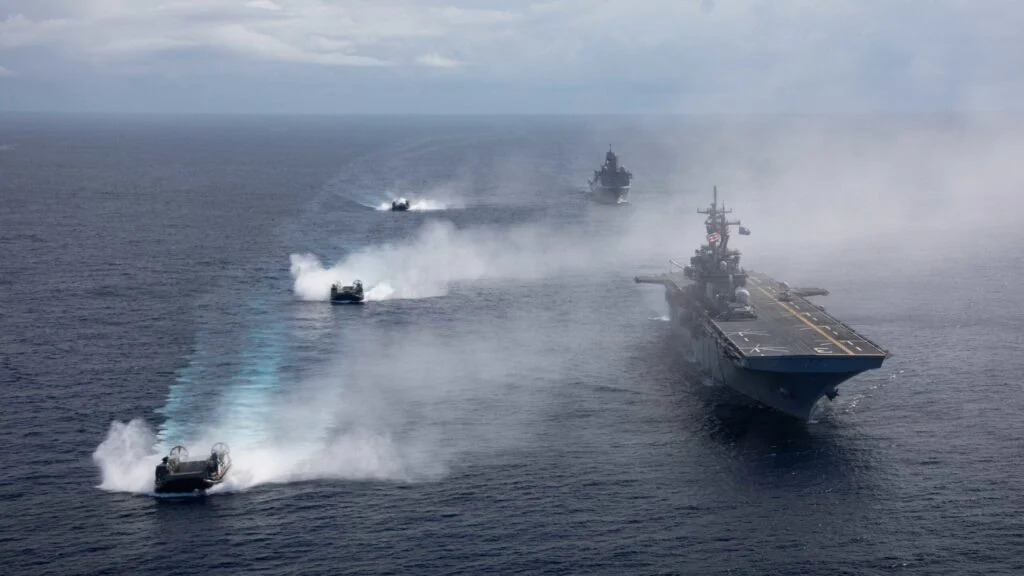
The U.S. Navy and Marine Corps are eyeing a radical transformation of their force generation model for amphibious vessels. As global volatility spikes, military leadership is moving to dismantle traditional deployment cycles in favor of a leaner, high-output strategy designed to keep more boots on the ground and more hulls in the water.
Shattering the 36-Month Cycle: A Push for Double Deployments
The long-standing 36-month Optimized Fleet Response Plan—a cycle often stretched to 40 months by maintenance and training hurdles—is facing its sunset. Admiral Daryl Caudle, Chief of Naval Operations, has proposed a bold restructuring aimed at „killing the overhead” of phases that fail to contribute to mission readiness.
The goal is to shift toward a 50 to 52-month cycle that would allow a single ship to complete two full deployments. By cutting administrative and logistical bloat, the Navy hopes to extract maximum efficiency from its current fleet. Lieutenant General Jay Bargeron confirmed that several models, including a 56-month rotation, are currently under evaluation to ensure the Navy meets its statutory requirement of 31 amphibious ships while satisfying escalating operational needs.
Global Commanders Cry Out for ARG-MEU Versatility
The urgency behind these changes is fueled by a simple reality: the Amphibious Ready Group and Marine Expeditionary Unit (ARG-MEU) pairing has become the most sought-after asset in the Department of Defense inventory. From humanitarian crisis response in SOUTHCOM to high-stakes deterrence in EUCOM and CENTCOM, regional commanders are clamoring for the unique flexibility these units provide.
Marine Corps Commandant General Eric Smith emphasized that while the Corps aims for a global presence of three ARG-MEUs, demand is currently outstripping supply. „Every combatant commander is calling for an ARG-MEU because it is the most flexible tool we have,” Smith stated. As the world becomes increasingly unpredictable, the ability of these units to pivot from non-combatant evacuations to lethal strike operations makes them indispensable.
Life Support for the Fleet: Beyond 2030
With new ship procurement being a time-intensive endeavor, the services are turning to maintenance optimization and service life extensions to bridge the gap. The newly formed Amphibious Force Readiness Board (AFRB) is now tasked with diagnosing readiness issues and determining the exact naval architecture required for future conflicts.
A cornerstone of this „bridge” strategy was recently highlighted by the announcement that the USS Wasp will have its service life extended by five years, keeping it operational until 2034. This is not an isolated case; military leaders are now looking at every class of amphibious ship through a clinical lens, seeking modernization and maintenance pathways to keep aging vessels in the fight longer. This multi-pronged approach—optimizing cycles, building new, and extending the old—represents a desperate but calculated effort to maintain American maritime dominance.