A Partial Embrace: The Discrepancy Between Request and Agreement
House and Senate appropriators have struck a bipartisan deal on an $838.7 billion defense topline for fiscal year 2026. While this figure boosts defense funds by $8.4 billion over the Pentagon’s initial request, it conspicuously omits tens of billions of dollars in additional funding needs identified by the Department of Defense in recent months. This decision signals a more stringent congressional approach to military spending, emphasizing fiscal responsibility and strategic prioritization.
Unjustified Demands and Partially Forgiven Accounting Errors
Since submitting its budget request last June, the Pentagon identified over $50 billion in „additional funding needs.” These included $26.5 billion for „funding discrepancies” between its initial FY26 request and the reconciliation bill – essentially a laundry list of accounting errors that resulted in shortfalls for key programs like the Virginia-class submarine. Added to this were $2.3 billion for „emergent requirements” and a whopping $28.8 billion for multiyear munitions procurement contracts.
While Congress expressed openness to working with the Pentagon to address these shortfalls, „the agreement was unable to fully fund most of these unfunded requirements and priorities,” according to the joint explanatory statement. Lawmakers underscored that while they welcome the Department’s focus on strengthening the military, modernizing capabilities, and expanding industrial capacity, „solving these real challenges will be difficult without sustained funding through a predictable, annual appropriations process.”
The Munitions Battle: Modest Support for Multiyear Procurement
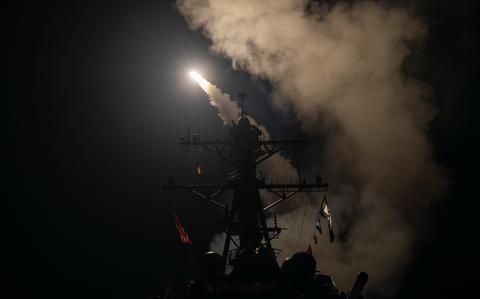
A major point of contention was the request for over $28 billion in multiyear funding for 13 critical munitions. This proposal was largely rebuffed, with Congress instead opting for a mere $1.8 billion boost for munitions and approving multiyear procurement for only eight programs: PAC-3 missiles, Standard Missile 6 (SM-6), Terminal High Altitude Area Defense (THAAD), Advanced Medium Range Air to Air Missiles (AMRAAM), Tomahawk cruise missiles, Long Range Anti-Ship Missile (LRASM), Joint Air-to-Surface Standoff Missile Extended Range (JASSM-ER), and Standard Missile 3 Block IB (SM-3 IB).
Strong criticism emerged from influential lawmakers, including Senators Mitch McConnell and Chris Coons, who questioned the lack of necessary documentation and an official budget request.
Crucial Industrial Base Investments: Solid Rocket Motors a Priority
Beyond munitions adjustments, lawmakers made significant headway in addressing a key weapons supply chain challenge: solid rocket motors. The bill provides $500 million for solid rocket motor makers to modernize or expand their facilities, with $150 million of that sum specifically aimed at qualifying second sources of supply. Additionally, detailed reports were mandated on expended munitions, maximum industrial production capacity, and potential sources of low-cost munitions.
„Golden Dome” Under Scrutiny: A Program Lacking Transparency
The „Golden Dome” program, a key priority of the Trump administration, also came under fire. Lawmakers complained that the Pentagon failed to provide sufficient budgetary details and justification for the $23 billion allotted to the program in last year’s reconciliation bill. In response, the Pentagon is directed to submit a comprehensive spending plan for „Golden Dome” within 60 days and to compile a separate budget justification book for the program starting in FY28.
Despite some cuts, the budget agreement diverges from the Trump administration’s request on Ukraine, adding $400 million to the Ukraine Security Assistance Initiative account.
The Army: Contradictory Ambitions and Unexpected Cuts
After months of pleading, the Army faced disappointment: its request for „agile funding” was rejected. Appropriators argued that „sufficient authorities already exist to restructure internal programming and budgeting processes” and that such flexibility is „unlikely to improve program execution.” This decision contradicts Army Secretary Dan Driscoll’s complaints about the lack of flexibility in reallocating funds for drone or electronic warfare programs.
Significant cuts were also recorded: the Armored Multi-Purpose Vehicle (AMPV) was reduced from $554 million to $415 million, and Stryker vehicle upgrades plummeted from over $135 million to just $28 million, citing „support ahead of need” or „early to need.” Curiously, the Joint Light Tactical Vehicle (JLTV) program received an unexpected $345 million boost, despite the Army having effectively canceled the program and only requested $45 million. On the positive side, the Army secured an additional $500 million for PAC-3 missiles and over $100 million for the Precision Strike Missile (PRSM) program.
Navy and Air Force: Refocused Priorities and Rescued Programs
The Navy received a significant lifeline for the development of its sixth-generation F/A-XX fighter, with an $897 million boost above the President’s request. Congress appears to be forcing the Pentagon’s hand, directing funding towards a single engineering and development contract to accelerate initial operational capability. The bill also allocates $27.2 billion for 17 ships, including Columbia and Virginia-class submarines, and nearly $1.5 billion for the maritime industrial base.
The Air Force also saw major shifts. The E-7 Wedgetail, the radar plane the Pentagon sought to kill, was saved with $1.1 billion to continue prototyping and development. Procurement received a significant boost, with roughly $20 billion, including funding for six C-130J, two EA-37B electronic warfare jets, and an additional F-15EX. The B-21 Raider bomber’s procurement was cut by $620 million, but its development funds increased by $409 million. The F-35 program received a $401.6 million increase, hinting at a potential price jump, and an additional $440 million for spare parts to boost sustainment.
Space Force: Budget Reorganization Amidst Scrutiny
The Space Force’s budget underwent complex reorganization, with a $642 million increase for procurement, totaling over $4 billion, and a $569 million reduction for research, development, test, and evaluation (RDT&E). Lawmakers significantly shifted funds, from programs like Long Range Kill Chains to the procurement of „auxiliary payloads” for GMTI sensors. Growing congressional concerns revolve around the Space Force’s reliance on collaboration with the NRO through sole-source, non-competitive contracts, in contrast to competitive acquisition models. Commercial ISR satellite operators scored a major win, with $169 million allocated to the Space Force for purchasing products and services from the private sector, a substantial increase from the initial request.