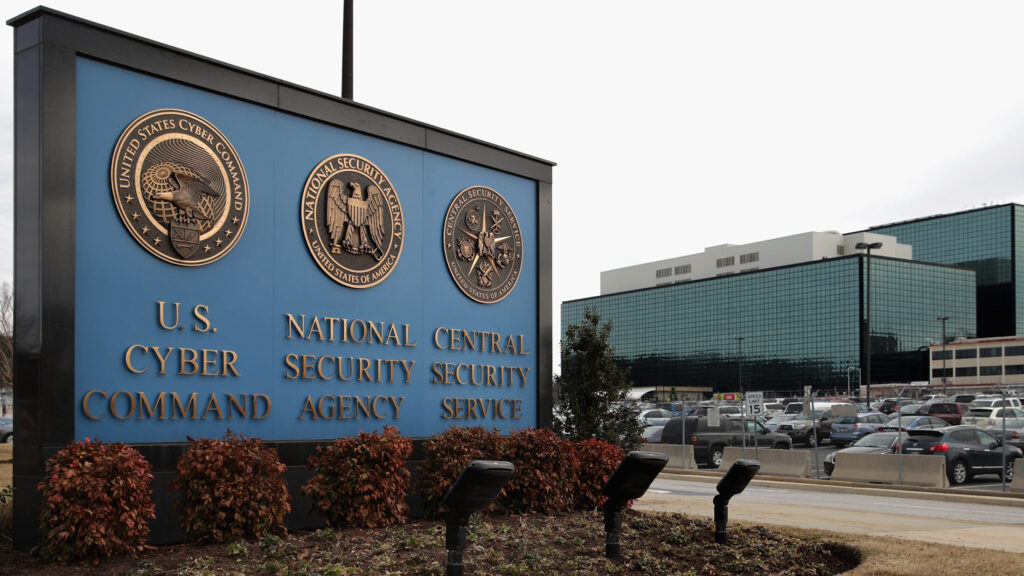
The year 2025 marked a significant milestone for US Cyber Command (CYBERCOM), celebrating its 15th anniversary in May. Yet, it was also a period defined by unprecedented leadership uncertainty, as the organization experienced its longest stretch without a permanent commander in its history. This turbulent year saw unexpected personnel changes, crucial organizational elevations, and intensified debate over the future structure of military cyberspace operations.
Leadership Vacuum: The Firing of General Haugh and a Protracted Search
In early April, the Trump administration abruptly dismissed Gen. Timothy Haugh, who served concurrently as CYBERCOM commander and director of the National Security Agency. No official reason was provided for the surprise firing, leaving many to speculate about the motivations behind such a high-profile removal.
The top leadership position has remained vacant for an extended period, stretching into its ninth month. This prolonged absence has drawn criticism from experts and lawmakers alike, who have described it as „heartbreaking” and a significant impediment to the overall readiness and effectiveness of the command and its forces. However, a potential resolution appears on the horizon with indications that Lt. Gen. Joshua Rudd is in line for the post, raising hopes that the critical leadership gap will finally be filled in the new year.
Historically, the transition of CYBERCOM command involves the incumbent leader retiring as the new commander assumes duties. During this interim, the command’s deputy commander, Lt. Gen. William Hartman, has served as acting commander. While initially considered a frontrunner for the permanent role, other candidates were reportedly floated before Rudd emerged as the likely choice.
Concerns have been raised regarding Rudd’s qualifications for the demanding cyber role. His Department of Defense biography reveals no prior experience in cybersecurity or any digital network portfolio, instead highlighting an extensive background in special operations. However, Republican Senator Mike Rounds of South Dakota, a prominent member of both the Senate Armed Services and Intelligence committees, addressed these concerns at a recent cyber summit, stating that extensive history in cyber warfare was not an absolute prerequisite for the position.
DoD’s Network Defense Evolves: From JFHQ-DoDIN to DCDC
Beyond the leadership challenges, CYBERCOM celebrated another major anniversary in 2025: its network defense arm turned 10. Established in 2015, the Joint Force Headquarters-Department of Defense Information Networks (JFHQ-DoDIN) operated as a subordinate headquarters under CYBERCOM, tasked with the global protection and defense of Pentagon networks.
At its 10-year anniversary in January, its commander, Lt. Gen. Paul Stanton, expressed ambitions to evolve and mature the organization by enhancing its defensive capabilities and actively imposing costs on adversaries. Further solidifying its role, in June, JFHQ-DoDIN was elevated to a sub-unified command within CYBERCOM, following congressional directives, and was subsequently renamed the DoD Cyber Defense Command (DCDC).
Strengthening the Cyber Workforce: New Metrics and CYBERCOM 2.0
In addition to these organizational milestones, the department actively sought to refine its approach to the cyber workforce. In November, the Pentagon unveiled its much-anticipated plan aimed at improving how the command and the broader department develop and train cyber talent. This comprehensive strategy emerged from an initiative dubbed CYBERCOM 2.0, signaling a renewed commitment to cultivating a skilled and resilient cyber force.
The Looming Question: Will a Standalone Cyber Force Emerge?
For several years, a significant question has loomed over the entire cyber enterprise: the potential creation of a standalone Cyber Force, envisioned as a seventh branch of the armed forces dedicated exclusively to cyberspace operations.
In 2025, the Center for Strategic and International Studies (CSIS) launched a commission specifically tasked with outlining the practical design and implications of such a Cyber Force. This effort is distinct from previous studies, as the commission is not evaluating the pros and cons or viability of the concept. Instead, it operates under the explicit assumption that the creation of a Cyber Force has already been ordered, aiming to provide the DoD with a crucial head start should the President mandate its establishment. The commission comprises a distinguished group of former generals and admirals with extensive experience in various cyber roles, including former Chief of Naval Operations, Adm. Michael Gilday, underscoring the gravity and strategic importance of this ongoing deliberation.