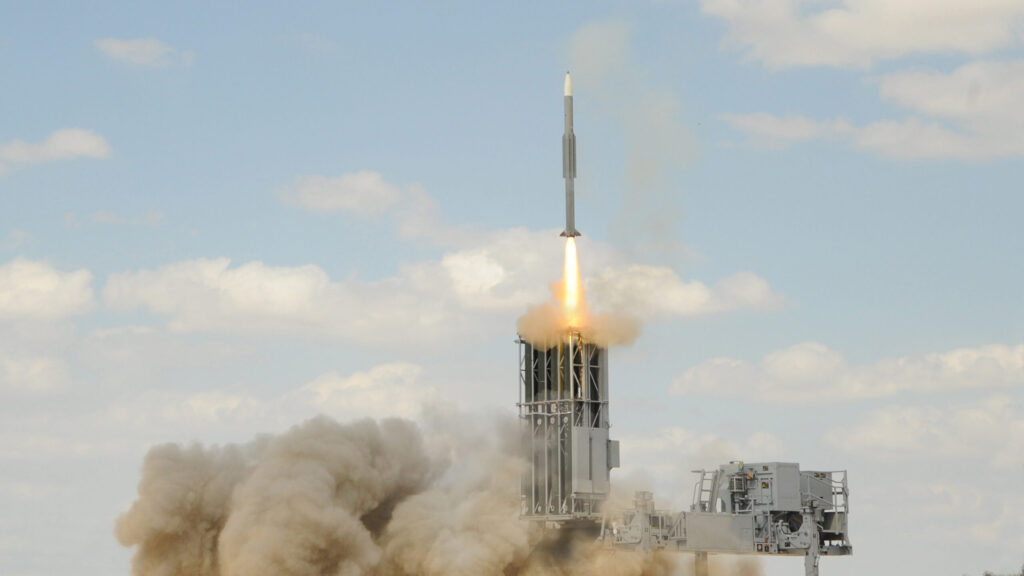
The Danish Ministry of Defence announced today that it will not proceed with the acquisition of the Israeli-made Barak MX Integrated Air and Missile Defense (IAMD) system. This decision follows a recommendation from the Defence Command to explore „other initiatives with greater immediate combat power.”
Prioritizing Immediate Capabilities
According to a translated statement from Denmark’s Minister of Defence Troels Lund Poulsen, the Defence Command presented a „clear military-technical position regarding the development of ground-based air defense.” The Conciliation Circle agreed to follow the Defence Command’s recommendations to „purchase the most appropriate capabilities and ensure a rapid and capable development.”
The Command specifically suggested that „resources for the possible implementation of Barak MX should be used on other initiatives with greater immediate combat power, including the fastest possible preparation of the ground-based air defence.”
Alternative System Unclear
The decision to forego the Barak order comes after reports suggested that Israel’s offer included a „soft kill solution against drones,” a capability currently lacking in existing Danish systems.
It remains unclear which alternative system to Barak MX, manufactured by Israel Aerospace Industries (IAI), Copenhagen plans on acquiring. Neither the Danish Ministry of Defense, the Israeli Ministry of Defense, nor IAI have responded to requests for comment.
Barak MX Capabilities
According to the Israeli MoD, the Barak MX is capable of incorporating various interceptors with a range of up to 150km (93.2 miles) and can counter threats such as drones, fighter jets, helicopters, cruise missiles, surface-to-air, and tactical ballistic missiles.
In December 2024, Slovakia placed an order for the air defense weapon system with Israel, valued at €560 million ($583 million).
Urgency Driven by Drone Threats
Denmark’s need for a system with short-range, counter-drone capabilities has become increasingly pressing due to a recent surge in drone sightings over local airports and an uptick in Russian drone incursions across Europe.
Following a September drone incident that forced the closure of Copenhagen airport, Danish Prime Minister Mette Frederiksen stated that she „could not rule out” Russian involvement.
Air Defense Modernization
In addition to focusing on counter-drone capabilities, Copenhagen is in the early stages of a significant air defense modernization effort. In September, the country committed approximately 58 billion krone ($9.1 billion) to acquire eight long- and medium-range systems, including the French-Italian SAMP/T platform.