Ukrainian drones have opened a new front, targeting key Russian oil and gas facilities and ports in the Leningrad Oblast on the Gulf of Finland almost every night over the past week. These attacks, which have ignited fires and disrupted Russia’s vital Baltic Sea energy infrastructure, are seen by a top European Union official as „painful” for Moscow, directly hitting its war funding.
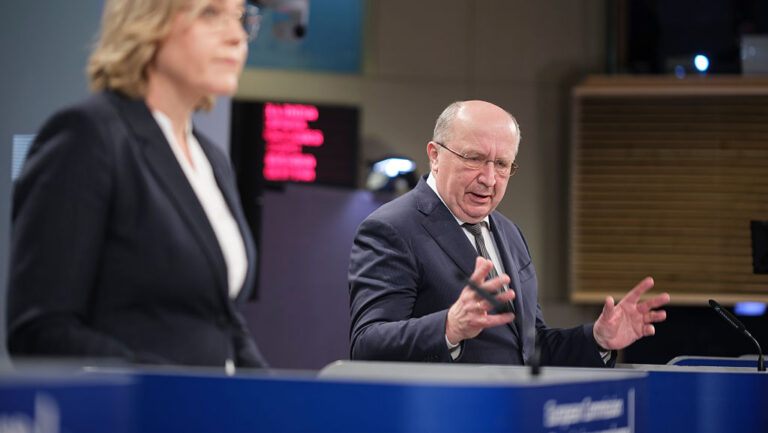
A „Painful” Blow to the Russian Economy Oil export terminals at Ust-Luga and Primorsk, along with the Kirishi refinery, have been hot spots for these strikes, with plumes of smoke visible even from neighboring Baltic countries and in satellite images. Andrius Kubilius, EU Defense and Space Commissioner, emphasized the significant impact: „That’s painful for [the] Russian economy, because those ports… have a big part of Russian oil export. So, now Russia is facing problems which can diminish their possibilities to wage the war.” The comments were made during the European official’s visit to Sweden, part of a „missile tour” aimed at boosting European arms production.
Sovereignty and Threats in the Baltic Sea Swedish Defense Minister Pål Jonson, who joined Kubilius, reaffirmed Ukraine’s right to defend itself „inside and outside its territory,” with Russia being „the aggressor” in this conflict. Sweden is closely monitoring rising security challenges in the Gulf of Finland as the war in Ukraine spreads to „Scandinavia’s eastern doorstep.” While Jonson refrained from calling the Baltic Sea a „war zone,” he stressed Russia-related threats such as attacks on critical seabed infrastructure, GNSS disturbances, the „shadow fleet,” and „a more assertive behavior by the Russian Baltic Fleet,” which are „changing security demands in the Baltic Sea.” A concerning development was the appearance of stray drones in all three Baltic countries last week, with Kubilius suggesting they could be Ukrainian systems forced off course by Russian electronic warfare.
The „Missile Tour” and the Need for European Autonomy The European Commissioner’s „missile tour” primarily aims to accelerate European production of missiles and air-defense systems. Kubilius stressed that Europe can no longer rely solely on the United States for key systems. „Stockpiles are very empty for all different weapons, including missiles and ammunition,” he declared. The visit to Sweden is part of a broader EU initiative, targeting a planned €60 billion loan to Ukraine—potentially rising to €90 billion—to bolster Ukrainian defense capabilities over the next two years. Kyiv has identified three priorities: producing over seven million drones this year, extended-range ammunition (especially 155mm), and missiles, which Kubilius called „the biggest challenge.”
Defense Production Challenges: From Missiles to Surveillance Systems During the visit to Saab facilities, Kubilius lauded Sweden’s key role in missiles and early-warning platforms such as GlobalEye, but warned that demand is outstripping current production capacity. „As the numbers are increasing what Saab is producing, that is very good, but the demand, in my view, is still very high. So we need to look at how we can even additionally increase production,” he stated. The Commissioner’s call follows NATO chief Mark Rutte’s demand for a 400 percent increase in NATO’s missile and air defense capabilities.
Saab, in partnership with European (MBDA) and American (Boeing) companies, produces a wide range of missiles. However, smaller suppliers in the defense supply chain are struggling to scale up without long-term contracts and fresh financing. Kubilius highlighted that annual US production of Patriot missiles stands at approximately 750 units, while about 800 were fired in just the first five days of the recent conflict with Iran by Gulf countries and US forces.
„Americans are producing good weapons, no doubt. But we need to ramp up our production simply because there is not enough production in the world, both for Ukraine and for us,” he concluded.
Jonson took the opportunity to promote Saab’s GlobalEye airborne surveillance platform, suggesting it could become a key NATO asset as the alliance retires its AWACS fleet. These advanced surveillance systems are crucial for detecting drones entering European territory, especially as NATO’s multinational AWACS replacement program was halted last year, with partners now seeking alternative solutions for a new fleet operational by 2035.