The Army Space and Missile Defense Command (SMDC) is actively working to reduce the classification levels of its space capabilities, aiming to strengthen collaboration with allies and partners. Senior officials from the command emphasized this initiative during a recent discussion.
Col. Donald Brooks, commandant of the Space and Missile Defense Center of Excellence (SMDCOE), stated at the Association of the U.S. Army conference, “We’re currently revising our security classification guide to broaden our reach.” The SMDCOE is tasked with overseeing changes in the Army’s doctrine, organization, training, materials, leadership, education, personnel, facilities, and policy.
He further argued for a more accurate evaluation of the capabilities being developed. “We need to discern between what is state-of-the-art and what is state-of-the-world. Many advancements we are creating are state-of-the-world, yet we impose overly strict security classifications that limit our collaboration with partners.” He emphasized the importance of recognizing that space operations are inherently joint, multinational, and commercial, necessitating more effective integration with all partners to address various challenges.
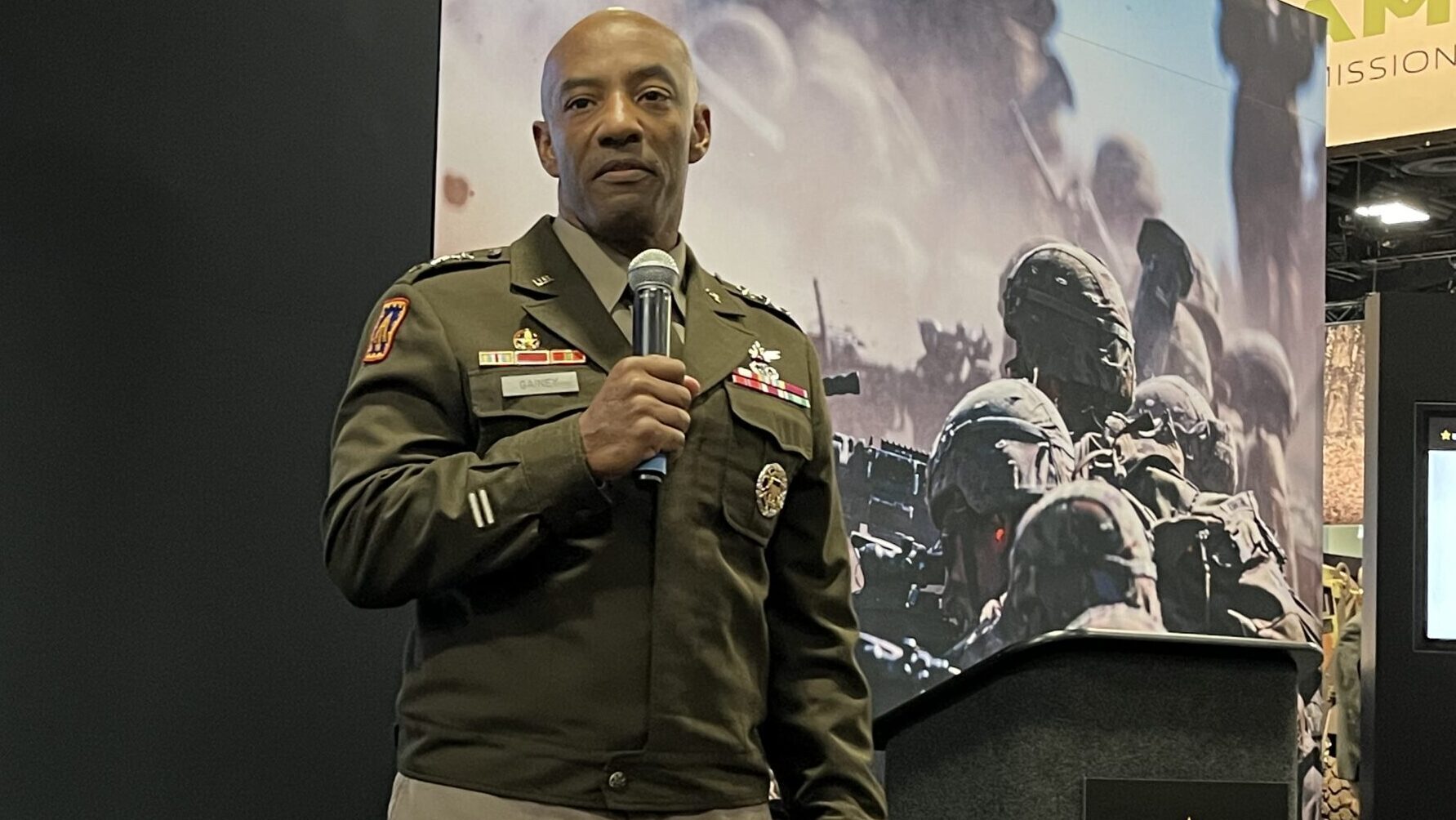
Although Lt. Gen. Sean Gainey, SMDC commander, did not provide a specific timeline for these changes, he acknowledged the urgency of integrating allied and partner space capabilities into military operations.
Army officials view space capabilities as vital for executing both their multi-domain task force concept and the Pentagon’s ambitious Combined Joint All Domain Command and Control (CJADC2) strategy. Lowering classification levels for space is essential for sharing information with allied nations and for coordinated operations in combat scenarios.
Col. Mark Cobos, head of SMDC’s 1st Space Brigade, shared that progress is already being made in establishing partnerships, particularly with the United Kingdom. “Our partnership with the UK and UK Space Command has flourished due to shared interests and philosophies regarding operational conduct,” Cobos noted.
He praised the collaboration between Army space and UK counterparts, highlighting the significant security cooperation and unity within the alliance.
Command Master Sergeant Maurice Tucker mentioned that the 1st Space Brigade has been engaging in discussions with the UK about tactics, techniques, and procedures, as well as operational employment processes to align their systems more closely with U.S. practices.
Additionally, the SMDCOE is planning an exchange program that will allow a UK Space Command instructor to participate in the center’s space education program, and vice versa. Brooks also noted ongoing discussions with Australia and New Zealand to establish similar exchanges.