The Army is poised to significantly enhance its space operations capabilities, more than doubling the number of soldiers trained in this critical area, pending approval from senior leadership on a proposal from the Army Space and Missile Defense Command (SMDC). This initiative aims to establish a new military occupational specialty (MOS) known as “40D Space MOS,” which will be the first to include non-commissioned officers, a strategic move highlighted by Col. Mark Cobos, head of SMDC’s 1st Space Brigade.
Currently, approximately 500 commissioned officers possess space-related specialties, complemented by around 874 enlisted soldiers who are temporarily assigned from other units such as intelligence or air defense for limited durations. The introduction of the new MOS is projected to create around 1,800 positions for enlisted personnel by fiscal year 2030 and increase the officer cadre to approximately 800 by fiscal year 2032. Col. Cobos expressed hope for Army leadership’s decision by the end of October, although he acknowledged that SMDC does not control the timeline.
Objectives of the New Strategy
The Army’s operational vision for space, articulated in the “Army Space Vision Supporting Multidomain Operations” document, focuses on integrating U.S. space capabilities into its operations while simultaneously interdicting adversary space activities. With the Army being the largest military user of space capabilities, this initiative is crucial for two primary objectives:
- Enhancing Satellite Operations: There is a pressing need for operators who can ensure the availability of essential satellite communications (SATCOM) and positioning, timing, and navigation (PNT) capabilities during conflicts. This includes the acquisition of commercial SATCOM services to supplement limited military satellite access.
- Conducting Offensive Operations: There is an increasing requirement for trained soldiers capable of conducting offensive operations against adversary satellite systems, even within hostile territories. This could involve deploying specialized teams equipped with mobile jamming technology or similar capabilities.
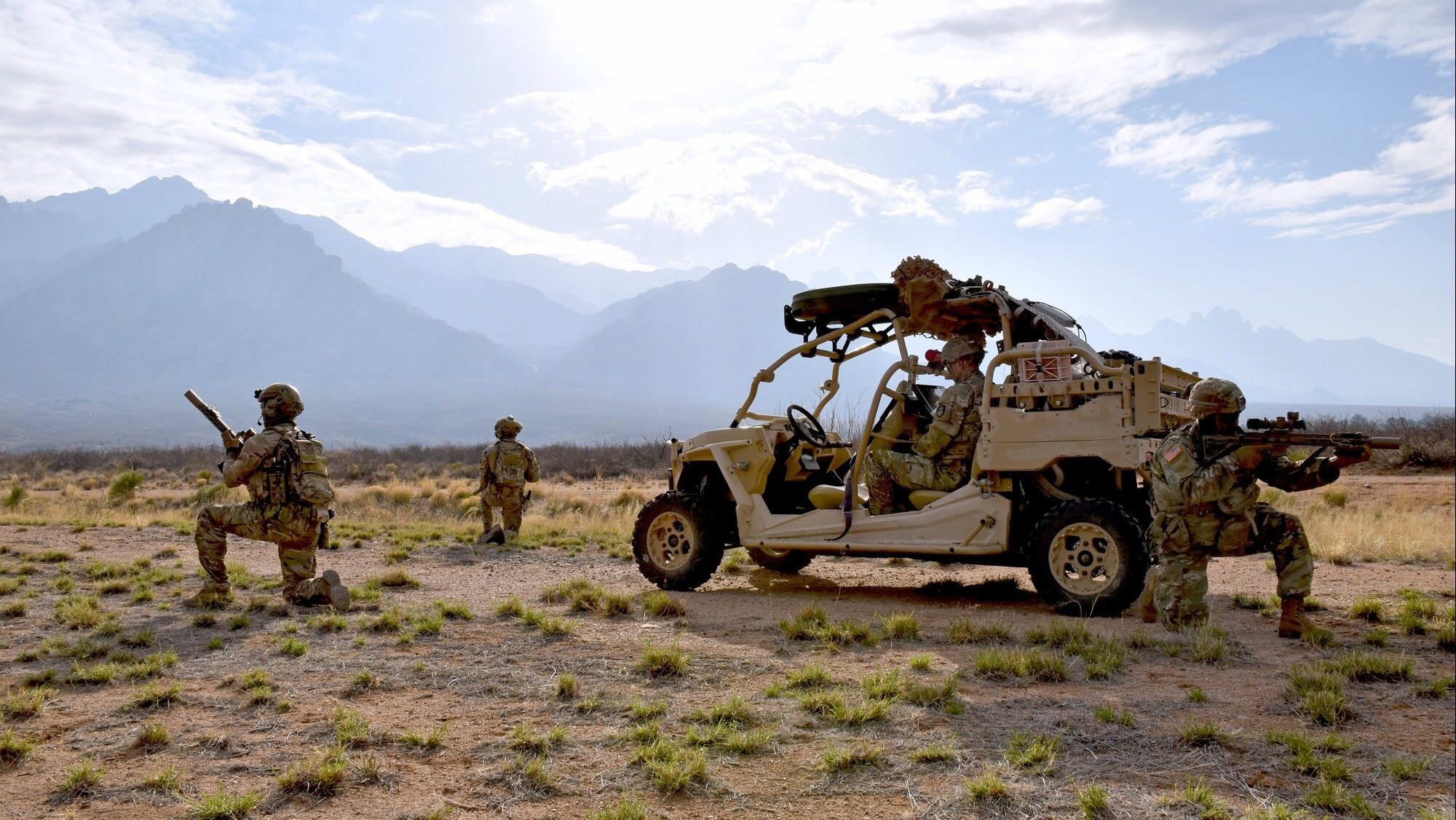
Col. Cobos noted that soldiers from the 1st Space Brigade are already training in environments where space operations occur in close proximity to enemy forces. Recent exercises have included joint operations with Special Forces, emphasizing the necessity for the Army to penetrate enemy lines for counterspace activities.
The Role of Space Operations in Military Strategy
The Army aims to incorporate space operations into its core competencies, allowing it to conduct joint forcible entry operations effectively. According to Col. Donald Brooks, commandant of the Space and Missile Defense Center of Excellence, operations must facilitate the Army’s capability to project combat power deep into enemy territory, isolating and disintegrating adversary forces to ensure the success of follow-on operations.
“Disintegration,” a term from the Army’s doctrine, refers to disrupting an enemy’s ability to coordinate and execute its operations, thereby degrading its overall effectiveness. This concept has gained renewed focus through the lens of space operations, highlighting the tactical importance of targeting enemy use of space.
Collaboration with U.S. Space Force and Other Branches
The personnel in the new 40D MOS will collaborate with a variety of Army units to fulfill their roles. They will integrate into existing structures such as the seven space control planning teams within the 1st Space Brigade, which coordinate with regional combatant commands and Space Force components to offer operational planning and targeting solutions.
As Col. Cobos pointed out, space operations can deploy “surgical” tactical capabilities that might not be feasible for larger, conventional systems. The Army intends to leverage non-kinetic methods—such as electromagnetic warfare and cyber operations—to disrupt enemy space systems effectively.
Additionally, the specialists will contribute to a new theater strike effects group (TSEG) being piloted at Indo-Pacific Command. Initial operations for this TSEG, designed to conduct interdiction missions, are set to commence on October 1, 2027, with a focus on electronic warfare capabilities.
Looking Ahead
The SMDC hopes to replicate this pilot initiative for U.S. European Command, following the success of recent exercises that validated the unit’s operational value. The Army’s Multi-Domain Task Forces, which are expanding, will also benefit from the inclusion of space control companies, further integrating space capabilities into military operations.
As Col. Brooks concluded, the Army recognizes that space is a critical component in setting the theater for future operations long before any direct engagement begins. The enhancements proposed by the SMDC represent a significant step toward establishing a more robust and agile U.S. military posture in the space domain.