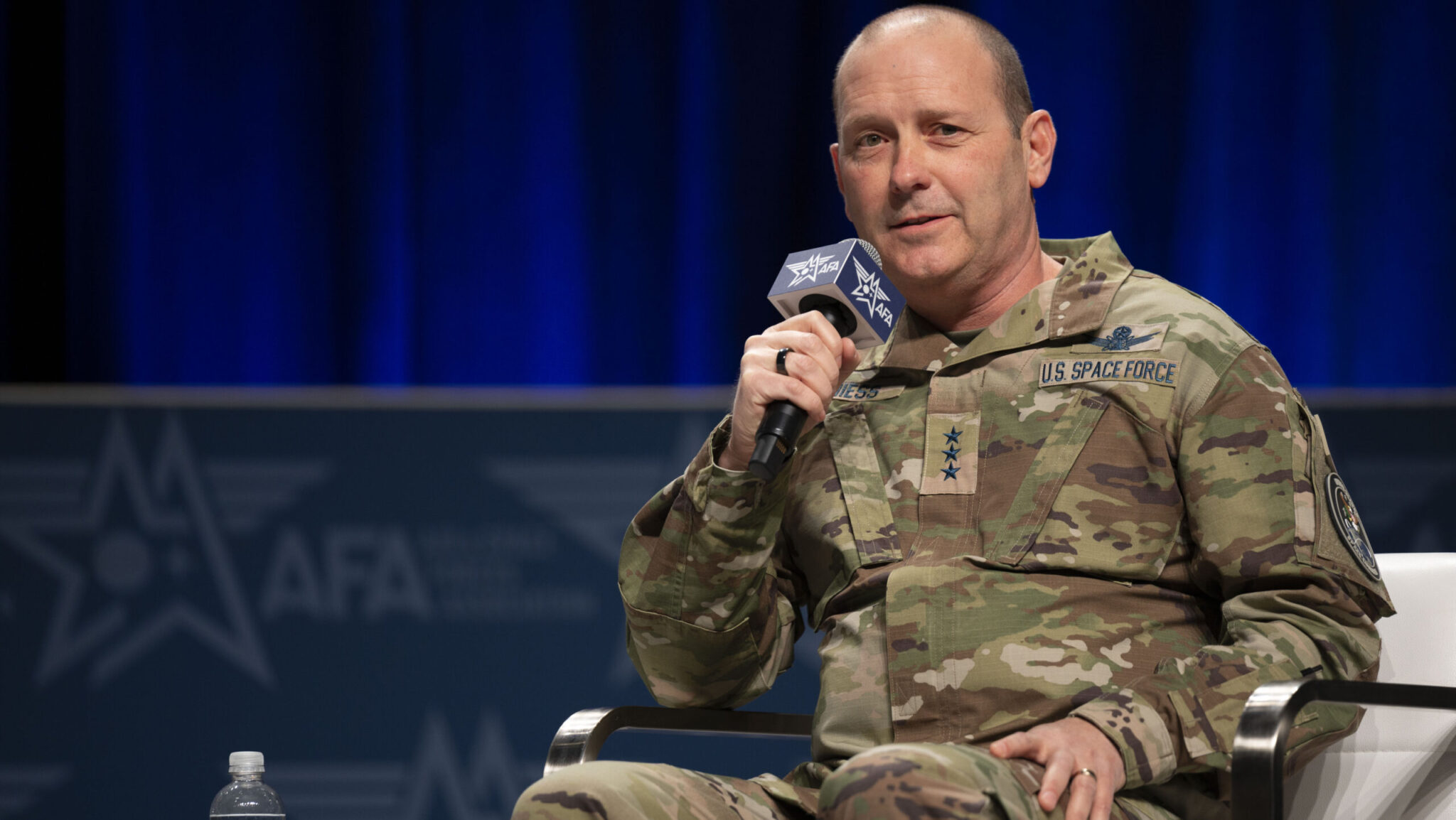
The US Space Force is broadening its primary forum for collaboration with commercial space operators, according to Lt. Gen. Doug Schiess, who leads both Space Forces-Space (S4S) and the Combined Joint Force Space Component. During a recent address at the Mitchell Institute, Schiess announced that the Commercial Integration Cell (CIC) now includes five new members, with two more companies set to join by early next year.
“We are continually striving to strengthen our engagement with the commercial sector,” Schiess emphasized.
The S4S serves as the Space Force’s command for providing forces to US Space Command (SPACECOM). Established as a service field command in 2023, S4S is responsible for exercising operational control over USSF forces undertaking various missions, including protection, defense, and delivery of capabilities.
The Combined Joint Force Component Command, located at Vandenberg Space Force Base in California, was set up last December to centralize authority over all space forces tasked to SPACECOM.
As of October 2024, the CIC boasts 15 commercial mission partners, comprising 10 legacy partners—such as Hughes, SpaceX, and Intelsat—and five newer additions, including BlackSky, Kratos, and Telesat. Hawkeye 360 and Exoanalytic are expected to join the CIC soon.
The CIC facilitates operational and technological exchanges between SPACECOM and its commercial partners, enhancing the flow of real-time and near real-time information, which is critical for responding swiftly to space-related events and improving Space Domain Awareness.
Historically, CIC partners have focused on providing satellite communications and imagery. However, the introduction of new members will expand the mission areas to encompass Space Domain Awareness, Intelligence, Surveillance, and Reconnaissance (ISR).
Notably, companies like BlackSky, ICEYE, and Hawkeye 360 specialize in remote sensing and have contracts with the National Reconnaissance Office for imagery services. Kratos and Telesat contribute satellite communications capabilities, while Leolabs and Exoanalytic monitor space environments.
In a related development, SPACECOM has also broadened the scope of its Joint Commercial Operations (JCO) cell, initially created to enhance space domain awareness using unclassified commercial data. The JCO, which now includes 14 countries and NATO, has expanded its mission to incorporate tactical surveillance, reconnaissance, and tracking (Tac-SRT).
The JCO, previously known as the Joint Task Force-Space Defense Commercial Operations, leverages commercial data and analytical products available through the Unified Data Library. Contracts with commercial firms facilitate the acquisition of valuable data for use by US and allied military operators, strengthening collaborative defense initiatives in space.