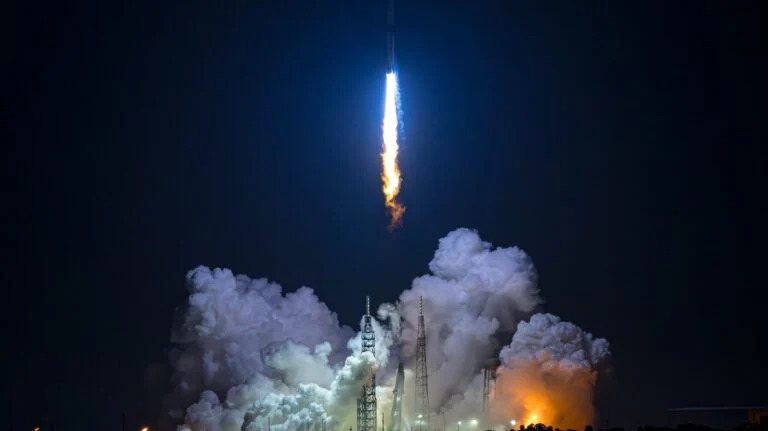
The recent explosion of Blue Origin’s New Glenn heavy lifter during a May 28 test at Cape Canaveral sent shockwaves through the aerospace industry, but experts suggest the fallout won’t reach the Pentagon’s immediate plans. Despite the dramatic nature of the incident, the U.S. Space Force’s national security launch schedule appears shielded from the blast radius.
Timeline Buffers Protect the Mission
Even if the damage necessitates a year-long hiatus for the New Glenn program, the Space Force’s strategic roadmap remains stable. The current manifestation of the rocket under the National Security Space Launch (NSSL) Phase 3 program isn’t slated until 2028 at the earliest. This four-year buffer provides Blue Origin with a significant window to diagnose the anomaly and restore flight operations without compromising defense timelines.
SpaceX: The Indispensable Backstop
The Pentagon’s resilience is bolstered by its reliance on a diversified fleet. Should New Glenn face further delays, the Space Force maintains the flexibility to pivot to SpaceX’s proven Falcon 9 „workhorse.” Industry analysts note that while the explosion impacts Amazon’s Kuiper constellation and NASA’s lunar lander testing, the NSSL program remains insulated by its existing launch partnerships.
Unwavering Federal Commitment
In a significant gesture of institutional trust, the Space Force proceeded with a major task order for Blue Origin just hours before the accident. The contract, part of the NSSL Lane 1 pool, involves launching a critical satellite for the National Reconnaissance Office (NRO) between 2027 and 2028. Following the incident, the Space Force and the NRO reaffirmed their commitment, signaling that the partnership remains a long-term priority.
The Road to Certification
While Blue Origin is already integrated into Lane 1 for lower-risk missions, the path to the high-stakes Lane 2 certification continues. This category involves high-value payloads requiring complex orbital maneuvers. To date, Blue Origin has completed three of the four required successful missions for its tailored accreditation. With 54 missions expected to be tasked through 2029, the Space Force is taking a collaborative approach, working closely with the company to implement corrective actions and ensure New Glenn is ready for its 2028 debut.