French Defense Bolsters Its Unmanned Arsenal with Innovative Systems from KNDS and Partners
In a strategic move reflecting the evolving nature of modern warfare, France has significantly ramped up its production and testing of loitering munitions, commonly known as „kamikaze drones,” to bolster its military capabilities. This initiative comes in response to the ongoing Ukraine conflict and the international demand for advanced unmanned aerial systems (UAS).
KNDS Unveils the Mataris Family and Secures French Military Orders
During this week’s Paris Air Show at Le Bourget, defense heavyweight KNDS (formerly Nexter) showcased its latest loitering munitions lineup—the Mataris family—highlighting France’s proactive approach to domestic weapon development. The French government has procured 17 units of the MV-100 Veloce 330, a high-speed drone designed for military testing and operator training across the Air & Space Force, Navy, and Army.
Developed in partnership with French drone specialist EOS Technologie, the MV-100 Veloce 330 aims to meet ambitious national defense objectives. According to Olivier Travert, KNDS’s chief sales officer, the system exceeds the initial requirements set by France’s “Larinae” project—an initiative launched in May 2022 by the French Defense Innovation Agency (AID) and procurement officials to develop loitering munitions with a 50 km range and at least 1-hour autonomy.
Advanced Capabilities and Features: Beyond Expectations
The Veloce’s specifications are notable: powered by a jet turbine engine weighing between 12-18 kg, it boasts a range of up to 100 km, cruising at 200 km/h, with a top speed of 400 km/h. Its wingspan measures 3.3 meters, and the drone can be assembled by two operators in under ten minutes. Crucially, it offers electronic warfare resilience by providing alternatives to GPS navigation, ensuring operational continuity in contested environments.
Equipped with a 2.5 kg derivative of KNDS’s Bonus warhead—originally designed for Caesar artillery shells—the Veloce is capable of destroying various targets, including vehicles, with its armor-piercing charge that detonates at a short distance from the target, minimizing the risk to nearby friendly forces.
Operator-Centric Development and Future Tactical Use
Jean-Marie Zuliani, president of EOS Technologie, clarified that the current units are used primarily for training, lacking warheads to prevent accidental damage. These drones operate with parachutes for recovery and feature remote arming and disarming capabilities, maintaining a human in the loop for final target engagement decisions based on real-time video feeds.
The French armed forces’ doctrine surrounding loitering munitions is still evolving, Zuliani notes. Nonetheless, initial operational deployment involves cautious tactics, with potential adaptations anticipated once real-world use cases are established.
Sensitive Deployment and International Reach
While France prefers to remain discreet about potential production in Ukraine, it’s public knowledge that another member of the Mataris series—the MV-25 Oskar—has already been deployed there. Developed through a partnership with French firm Delair, the Oskar was produced under the AID’s Colibri project aimed at creating affordable loitering drones for beyond-5 km missions.
The Oskar features a 25 km range, 45-minute flight endurance, and has demonstrated capabilities to nearly double its estimated range. It’s based on the Delair UX11, a ruggedized drone equipped with a low-radar signature, jam-resistant data links, and GNSS-denied navigation abilities, all providing real-time footage until impact. Its modular design allows attack aborts, making it a versatile asset on the battlefield.
Next-Generation Systems and Large-Scale Procurement
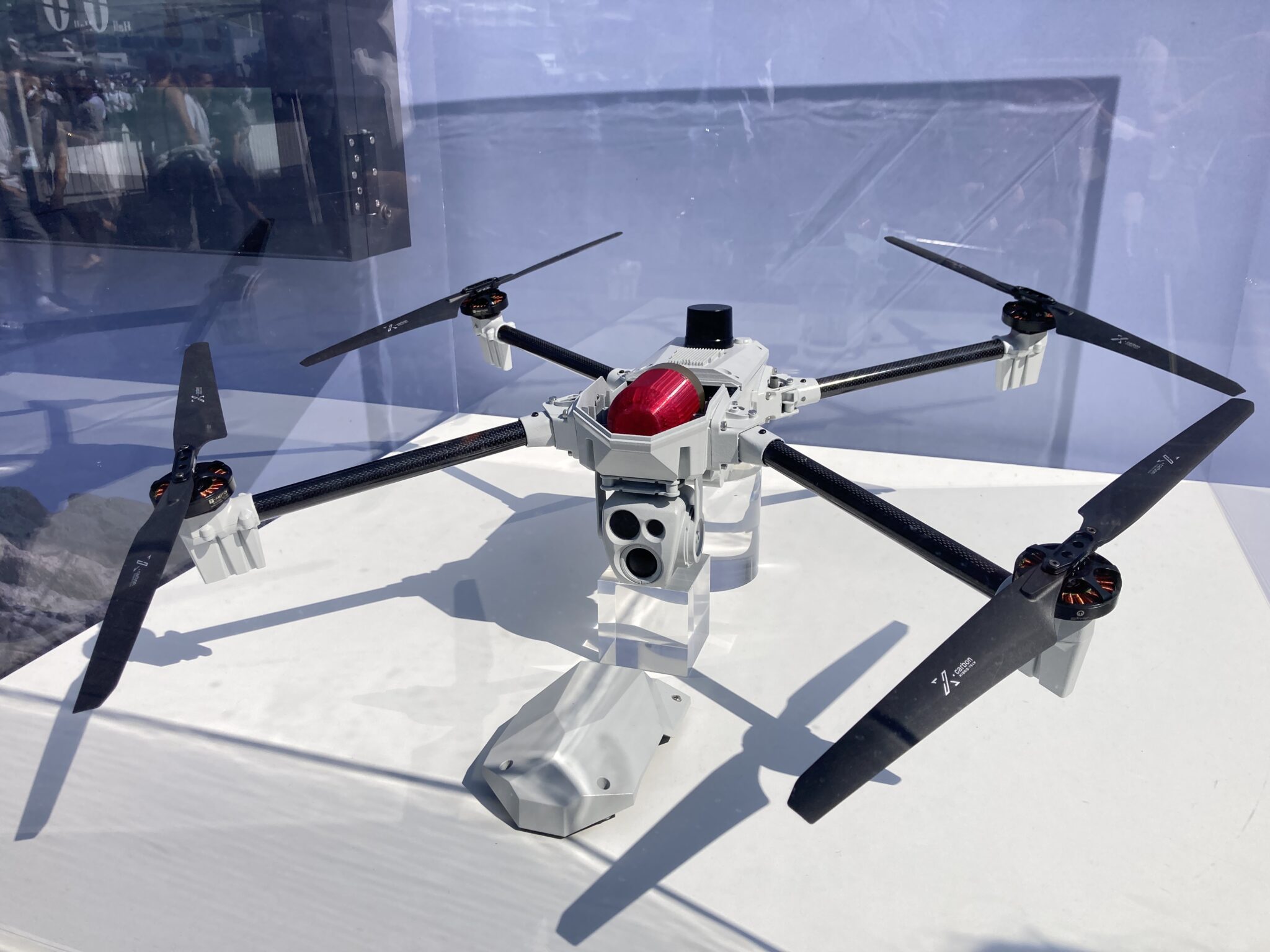
Further expanding the Mataris arsenal, KNDS is actively developing the MX-10 Damocles, a quadcopter designed for neutralizing infantry and light vehicles at ranges up to 10 km. Armed with a 550 g explosive warhead, it promises 40 minutes of flight time, with a significant contract from the French Office of Defense Procurement (DGA) for 2,270 units over seven years. The initial tranche of 460 units includes a delivery scheduled for next month, with plans to ramp production to 2,000 units annually.
The latest addition, the MT-10, is still under development. This system features a cylindrical launcher that deploys counter-rotative wings, enabling it to reach 10 km over 30 minutes and operate in urban or open terrains. Compact enough to be carried in backpacks or vehicle-mounted, it exemplifies France’s commitment to versatile, tactical loitering systems.
A Paradox in Defense Development: Armor Meets Attack
This contradiction highlights a core reality of modern military technology: weapon developers, like KNDS—primarily known for manufacturing armored vehicles—are simultaneously innovating in the field of precision munitions designed to counter their own product lines. As one KNDS staffer quipped at the Paris Air Show, “That’s the advantage of developing these munitions: in parallel, we learn how to better protect our armored vehicles from them.”
Strategic Implications and Future Outlook
France’s investment in domestically produced loitering munitions signifies a strategic shift toward autonomous, versatile, and resilient battlefield systems. The proactive development and deployment of such platforms seek to provide operational advantages in complex scenarios, especially in contested environments where electronic warfare and GPS jamming are prevalent.
The ongoing enhancements, rapid iteration cycles, and large-scale procurement plans indicate that loitering munitions will play a central role in France’s future military doctrine. As the systems evolve from training tools into operational assets, they will likely influence tactics, force structure, and even international arms exports in the coming years.