A covert electronic weapon, methodically tested since 2019, demonstrates that Moscow can paralyze navigation systems globally, leaving the United States in a position of unprecedented strategic risk.
Moscow’s electronic weapon: Interference with GPS and BeiDou across Northern Europe and Canada
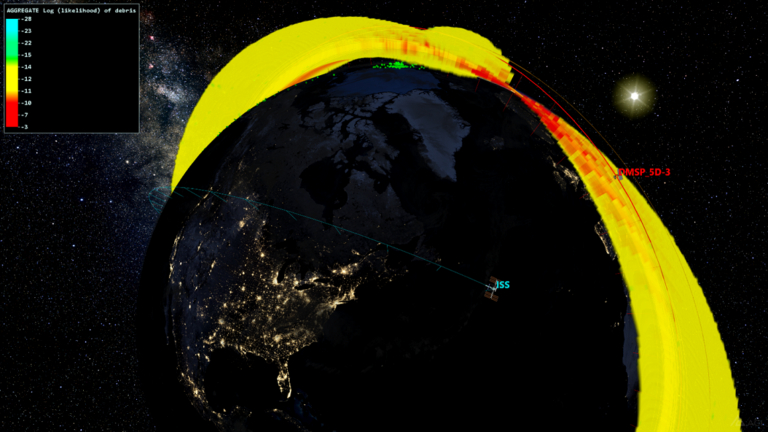
Recent research reveals a grim reality: Russian satellites are deliberately interfering with GPS signals across a broad swath of Northern Europe, Greenland, and Canada. These events, first detected in 2019, are not simple technical glitches but masked exercises of a sophisticated electronic weapon. The interference is sporadic, short-lived, and extremely difficult to detect, having been applied in an almost identical manner to the Chinese Bei Dou system since 2020.
Moscow’s ability to project these disruptions anywhere on the globe turns any point on the map into a potential target. Although the United States territory has not yet reported similar incidents, the November 2021 precedent—when Russia destroyed its own satellite with a ground-based missile to send a warning to NATO—proves that the security of foreign space systems is an illusion. The threat that all 32 units of the GPS constellation could be neutralized is no longer just rhetoric, but a technical possibility of signal denial.
The strategic asymmetry of NAVWAR: Why the United States lacks a terrestrial backup like China or Russia
While Russia and China have secured their infrastructure through complementary terrestrial navigation and timing systems, the United States remains dangerously dependent on space-based signals. This „NAVWAR asymmetry” represents a critical vulnerability for national security. In the event of a major disruption, economic and social chaos would be inevitable, given that GPS technology underpins almost every vital infrastructure, from power grids to financial systems.
Allies such as the United Kingdom, France, South Korea, and Saudi Arabia have already understood the risk and are building their own terrestrial Positioning, Navigation, and Timing (PNT) systems. The existence of these backups makes attacking the satellite signal an unattractive option for adversaries, in line with classic deterrence theory. Unfortunately, in America, responsibility is scattered among multiple agencies without a centralized leader to enforce a concrete solution.
Time for action at the White House: The Department of Defense and the Department of Transportation must secure national navigation
Protecting America is not a matter of technology, but one of leadership and governance. Mature solutions already exist that combine space signals with terrestrial broadcasts and fiber optics, creating an architecture that is nearly impossible to disrupt. Their implementation could be achieved quickly through commercial contracts, yet the executive authority to prioritize funding and execution is missing.
It is imperative that the Administration in Washington designates either the Department of Defense or the Department of Transportation as the sole leader for this national project. With a consistent funding line and an aggressive timeline, the United States can close this window of vulnerability. In the absence of immediate action from the White House, the nation remains in a state of passive waiting until the day an adversary decisively exploits this breach in national defense.