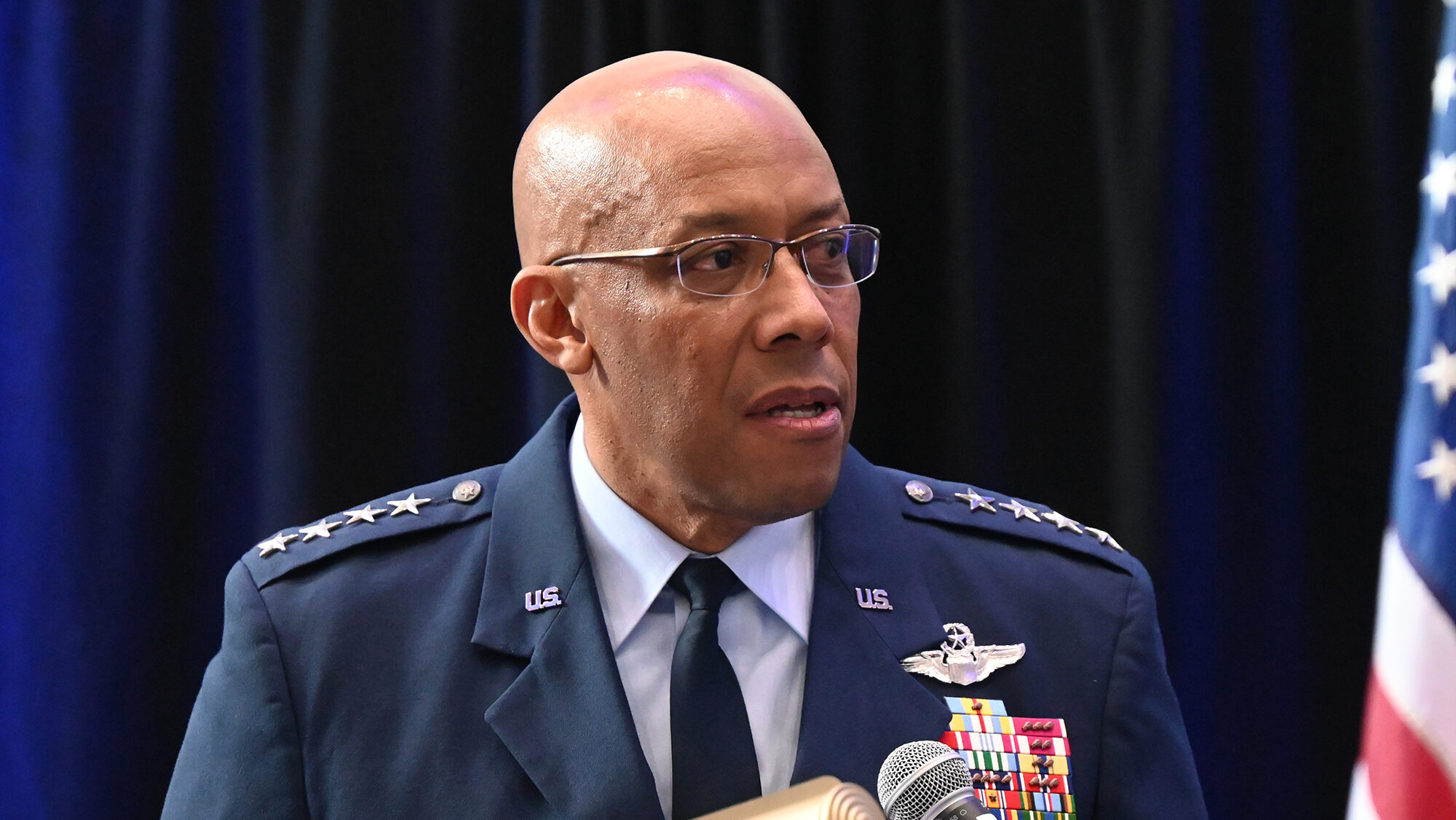
Sudden Departure of Gen. CQ Brown
General CQ Brown, the chairman of the Joint Chiefs of Staff, has been unceremoniously removed from his position nearly two and a half years before the end of his expected term. President Donald Trump made the announcement via a social media post, thanking Brown for his service over four decades, describing him as a “fine gentleman and outstanding leader,” and wishing him well for the future. The timing and manner of the announcement raised questions regarding the circumstances of his departure and what it means for the military leadership.
Leadership Transition and Uncertainty
The announcement left ambiguity regarding the immediate command structure of the military. It is unclear if Brown’s removal took effect immediately, and whether Vice Chairman Adm. Christopher Grady is now serving as the acting chairman. Additionally, Defense Secretary Pete Hegseth stated he is seeking nominations to replace Chief of Naval Operations Adm. Lisa Franchetti and Air Force Vice Chief of Staff Gen. James Slife, though it remains unclear if these leaders have also been removed from their roles.
Political Context and Rationale Behind the Changes
The move comes amid a broader initiative by Trump and Hegseth to reshape military leadership, targeting what they describe as „woke” generals who support diversity initiatives and those linked to the withdrawal from Afghanistan. Although Brown was not involved in the Biden administration’s handling of the Afghanistan withdrawal, he has been criticized by Trump supporters who label him as part of a problematic military culture.
Hegseth, in recent statements, emphasized a desire to prioritize warfighting capabilities over diversity and inclusion efforts. His remarks point to a significant shift in military leadership philosophy, which underscores the current administration’s focus on preparedness and combat effectiveness.
Background on Gen. CQ Brown
Gen. CQ Brown’s military career spans over 40 years, marked by significant achievements, including his role as the Air Force’s 22nd Chief of Staff—making him the first Black officer to hold that position. He was sworn in as the 21st chairman of the Joint Chiefs of Staff in October 2021, positioning him as a key military advisor during a turbulent time in U.S. history, including the aftermath of the George Floyd incident when he publicly acknowledged issues of racial inequality.
Despite his previous alignment with the Biden administration, Brown had maintained a professional relationship with Hegseth, with the two seen together early in Hegseth’s tenure.
Lt. Gen. John Caine Nominated as Successor
In a surprising turn, Trump has nominated Lt. Gen. John D. Caine, a retired three-star Air Force officer, to replace Brown. Caine, who retired in 2024, has reportedly made a favorable impression on Trump over the years. The nature of Trump’s remarks about Caine suggests a strong personal endorsement, though there are concerns about the implications of political favoritism in military appointments.
Potential Controversies
Caine’s previous comments, including a claim that he could defeat ISIS within four weeks, along with an anecdote about wearing a MAGA hat, have raised eyebrows. Such behavior, if accurate, could further exacerbate concerns regarding the politicization of the military. Caine’s induction would likely require being recalled to active duty and undergoing Senate confirmation.
Conclusion
The abrupt removal of Gen. CQ Brown marks a notable pivot in military leadership under the Trump administration, reflecting a commitment to reshaping the military’s strategic priorities. As Lt. Gen. John Caine steps into the spotlight as Brown’s potential successor, questions around leadership philosophy, the role of politics in military appointments, and the broader implications for military culture will continue to unfold. The situation underscores the evolving dynamics within U.S. military leadership as the landscape shifts toward an administration that emphasizes different operational priorities.