It appears the Middle East has inched back from the brink of a larger conflict following a significant exchange of fire between the Israeli military and Lebanese Hezbollah on Sunday. However, experts warn that clashes are likely to continue as they have in the past.
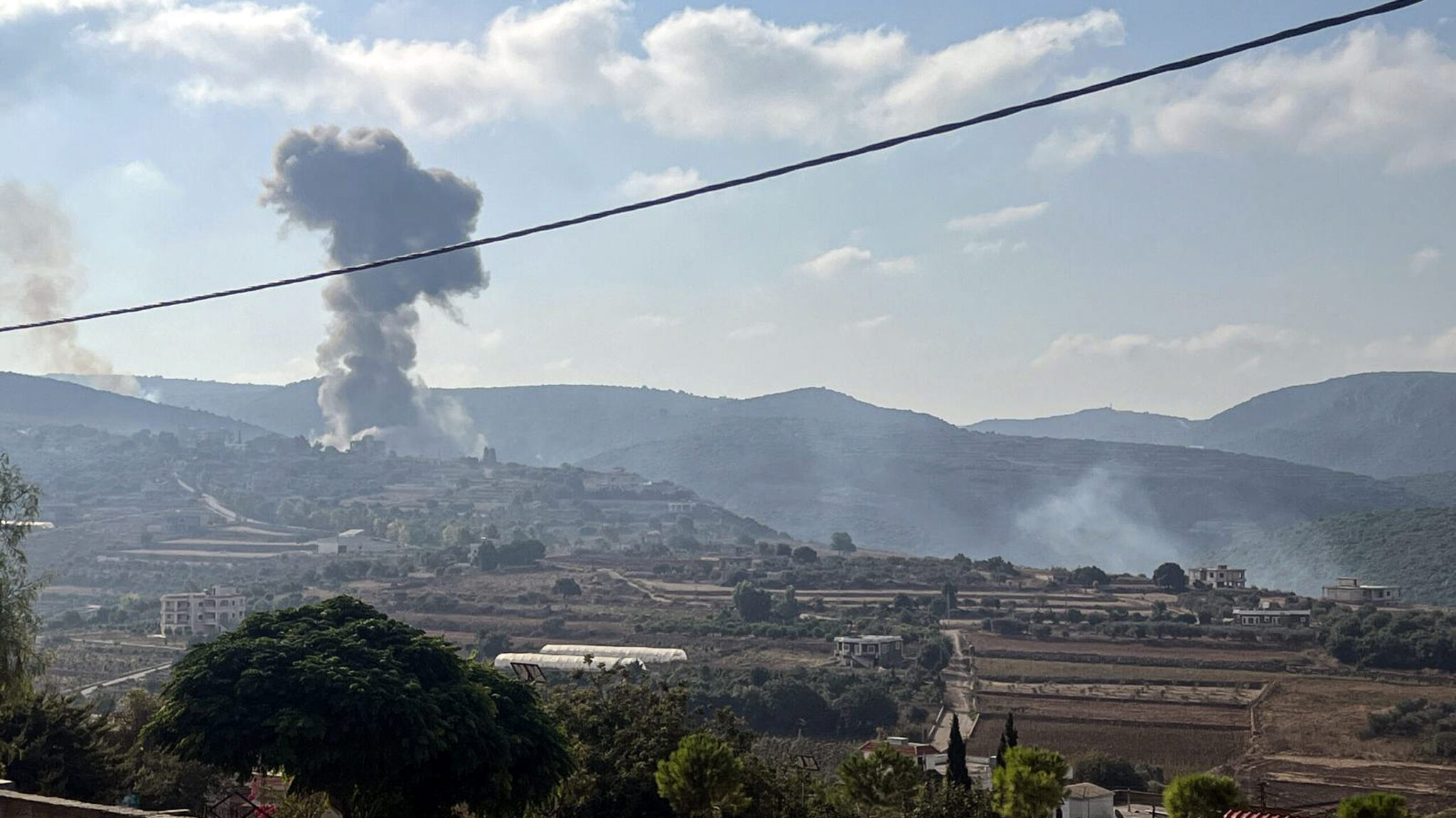
In the past 24 hours, Israel launched a series of strikes on what it identified as Hezbollah targets, ahead of a wave of attacks from Hezbollah, which claimed to target Israeli military installations using scores of missiles and drones. This Hezbollah response was long anticipated after Israel’s killing of a senior group member, Fuad Shukr, in Beirut one month ago.
Hezbollah Secretary General Hassan Nasrallah stated in a speech that the primary target of the attack was the Glilot military base, with the secondary target being the Ein Shemer air defense base. “We targeted the Glilot military intelligence base near Tel Aviv, around 110 kilometers from Lebanon’s border,” he stated, describing the operation as “Operation Arbaeen Day.” He claimed that the Glilot base houses Unit 8200, known for intelligence gathering and espionage, comparable to the US National Security Agency.
Nasrallah asserted that a substantial number of drones successfully reached the intended targets. However, no statements or images of the attacks on these military locations were released, and the Israeli military denied any damage at its bases.
Just an hour before the Hezbollah assault, Israel conducted what it termed preemptive strikes on approximately 40 launching sites in Lebanon, claiming significant success. In this instance, Nasrallah also stated that no launcher was hit before the assault was completed. Reports indicate that three individuals were killed in Israel’s strikes, while one Israeli soldier died as a result of Hezbollah’s counterattack.
Analysts suggest that both parties’ claims of operational success indicate that the exchange served more as a political demonstration than a substantial military engagement. “The retaliation served a political purpose rather than an operational one: no major damage was inflicted on Israel. Hezbollah insisted it targeted military sites to prevent further escalation from Israel,” explained Jean Loup Samaan, a senior research fellow at the Middle East Institute. He noted the challenges in gauging how much the Israeli strikes may have diminished Hezbollah’s planned firepower.
Samaan cautioned that if Hezbollah’s response was primarily for appearances, it could risk being perceived unfavorably on social media, potentially leading to further escalatory actions.
Retired Lebanese Armed Forces Gen. Maroun Hitti expressed the view that Hezbollah felt it had done what was necessary and expected the conflict to return to its previous low-intensity status. He emphasized that Israel’s desired end state includes ensuring the safety of northern inhabitants, which cannot occur without the full implementation of UN resolutions 1701 and 1559.
Retired Generals Wehbe Katicha and Khalil Helou concurred that Hezbollah’s strike was intended to prevent an all-out war. “Hezbollah doesn’t want to escalate. That’s why they didn’t launch any of the long-range missiles in the arsenal,” Katicha remarked.
Despite the current relative calm, both Israel and Hezbollah have left the door open for future aggression. Israeli Prime Minister Benjamin Netanyahu echoed this sentiment, stating that Israel’s recent strikes were “not the final word,” indicating continued efforts to reshape the situation in the north.
A significant question looms: What will Iran’s response be? Allegations suggest that around the same time Israel killed Shukr, a senior Hamas leader was eliminated in Tehran. Iran has vowed retaliation but has not acted as of yet.
“The big unknown is Iran: is Tehran satisfied or not, given the killing of Haniyeh in Tehran last month?” Samaan pondered. “They may be contemplating another wave of attacks, possibly from another front,” whether from Syria, Iraq, or through proxies like the Houthis in Yemen.