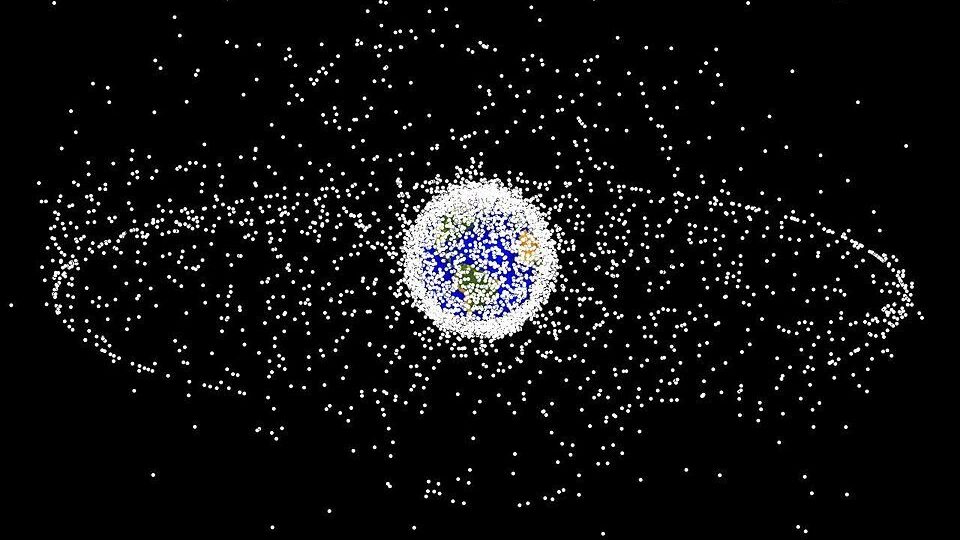
As the number of satellites in Low Earth Orbit (LEO) continues to surge, concerns about overcrowding and the resulting implications for satellite operations are escalating. A new study by MITRE seeks to address these challenges by establishing a framework to determine when the volume of space traffic in LEO could overwhelm the orbital environment, making it difficult for satellites to function due to interference and collision risks.
The study, titled “Integrating Orbital Carrying Capacity into International Policy Constructs: Leveraging Best Practices from Aviation’s Risk-Based Norms,” proposes adapting the international air traffic control system’s approach to manage space traffic and prevent collisions, according to Kevin Toner, vice president of MITRE’s Center for Government Effectiveness and Modernization.
During discussions at the Advanced Maui Optical and Space Surveillance Technologies (AMOS) conference, Toner shared insights into the significance of the findings, particularly how integrating these lessons into military training can improve overall effectiveness.
As the number of satellites in LEO—located roughly 300 to 2,000 kilometers above Earth—continues to grow, the concept of “carrying capacity” in the orbital regime has gained attention. LEO has limited capacity for satellites without significantly increasing the risks of potentially deadly on-orbit collisions, which contribute to the creation of additional space debris.
Concerns surrounding LEO crowding and equitable access for developing nations emerged prominently during a recent meeting of the Science and Technical Subcommittee of the UN Committee on the Peaceful Uses of Outer Space (COPUOS). The proliferation of mega-constellations, which include thousands of satellites launched by both commercial firms and national militaries, is a primary source of concern.
For example, SpaceX has deployed roughly 6,000 Starlink satellites in LEO and plans to expand its network to over 40,000. Additionally, the company is launching militarized versions of Starlink, known as Starshield, for the National Reconnaissance Office (NRO) and has drawn interest from the Space Force.
Amazon’s Kuiper Project launched the first two satellites of a planned 3,000-satellite constellation in 2023. OneWeb has successfully placed 630 of its intended 648 satellites in orbit. Meanwhile, China’s state-owned Shanghai Spacecom Satellite Technology (SSST) recently launched 18 satellites as part of the Thousand Sails program, which aims to include around 15,000 satellites.
The Space Force’s Space Development Agency is also moving forward with plans to deploy up to 500 satellites in LEO for its Transport Layer of data relay satellites, alongside an additional 100 for missile warning and tracking purposes.
MITRE’s study suggests that managing LEO effectively involves breaking down the issue into specific altitude bands while considering not just the total number of satellites but also the timing of congestion events. “There are many definitions of carrying capacity. One key point our paper makes is that aspects like time matter. At what times and altitudes does carrying capacity vary?” Toner explained.
To clarify these concepts, the study compares LEO traffic management to air traffic control classifications. The most congested air corridors are likened to Class A airspace, which is constantly in use. Class B parallels regions where aircraft converge, such as around airports, while Class C represents less populated air traffic lanes.
In space terminology, the orbital zone between 700-900 kilometers is already recognized as a crowded danger zone, comparable to Class A air corridors. The Earth’s poles, where many LEO satellites transition, can be equated to Class B, whereas higher orbits above 1,000 kilometers resemble Class C due to their relative emptiness.
The ultimate aim of MITRE’s framework is to facilitate international collaboration and establish standardized policies, ensuring the safety and sustainability of space activities. The study lays the groundwork for developing globally harmonized regulations that address the growing complexities of space traffic management.