


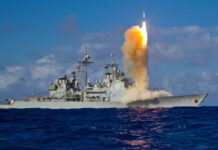













The Navy has announced its decision to extend the operational lives of 12 Arleigh Burke-class destroyers, allowing an anticipated additional 48 years of service for these vessels from 2028 to 2035, as stated by Secretary Carlos Del Toro.
„By extending the service of these highly capable, well-maintained destroyers, we are enhancing our fleet’s strength as new warships are constructed,” Del Toro said. „This reflects their lasting role in global power projection, demonstrated recently in the Red Sea, and their proven capability to protect against missile and drone threats, safeguarding our allies, partners, and friends.”
The vessels involved in this announcement are among the oldest in the fleet, with extensions ranging from three years for the USS Barry (DDG-52) to three years for USS The Sullivans (DDG-68). Earlier this year, the Navy also decided to extend the life of the first ship in the class, the USS Arleigh Burke (DDG-51).
The ships and their respective extensions are as follows:
- USS Barry (DDG-52) – three years (FY28 to FY31)
- USS John Paul Jones (DDG-53) – five years (FY28 to FY33)
- USS Curtis Wilbur (DDG-54) – five years (FY29 to FY34)
- USS Stout (DDG-55) – five years (FY29 to FY34)
- USS John S. McCain (DDG-56) – five years (FY29 to FY34)
- USS Laboon (DDG-58) – five years (FY30 to FY35)
- USS Paul Hamilton (DDG-60) – five years (FY30 to FY35)
- USS Stethem (DDG-63) – one year (FY30 to FY31)
- USS Carney (DDG-64) – one year (FY31 to FY32)
- USS Gonzalez (DDG-66) – five years (FY31 to FY36)
- USS Cole (DDG-67) – five years (FY31 to FY36)
- USS The Sullivans (DDG-68) – three years (FY32 to FY35)
While the statement did not convey specific costs associated with these service life extensions, a Navy spokesman later revealed to Breaking Defense that the total estimated cost could reach approximately $1.3 billion under the FY26 future years defense program, amounting to $6 billion over 15 years, with an average expense of around $139.6 million per ship annually.
„Given today’s budget constraints, the Navy must prioritize investments to ensure a robust and ready fleet,” remarked Chief of Naval Operations Adm. Lisa Franchetti. „We are actively pursuing the right strategies to maintain and expand our battle force inventory, ensuring our readiness to support U.S. global interests in times of peace and decisive victory in conflict.”
The decision to extend the lives of these destroyers reflects a strategic approach to sustain the fleet amidst fluctuating numbers. Following previous pressures from lawmakers during the Trump administration to achieve a fleet size of 355 ships, Navy leadership has shifted its focus since 2021, emphasizing the need for increased fleet capacity without fixating on a specific number. Franchetti has reiterated the necessity for a larger fleet, while recognizing that extending the service lives of vessels may lead to higher maintenance costs and potential delays based on the ships’ material condition.