Norway is poised to advance one of its key land warfare acquisition goals by selecting a new long-range precision fires system, with a decision anticipated in the summer of 2025 and an expected entry into service by 2027 or 2028, according to Maj. Gen. Lars Lervik, Chief of Staff of the Norwegian Army.
In an interview with Breaking Defense, Lervik noted that Norway is currently evaluating proposals from various defense industry competitors who have been asked to provide details on pricing, timelines, capabilities, and delivery schedules. He explained, “We are assessing different options,” indicating that the selection process may involve either a Foreign Military Sales (FMS) case from the U.S. or acquisitions from other manufacturers, with hopes to finalize a decision by summer next year.
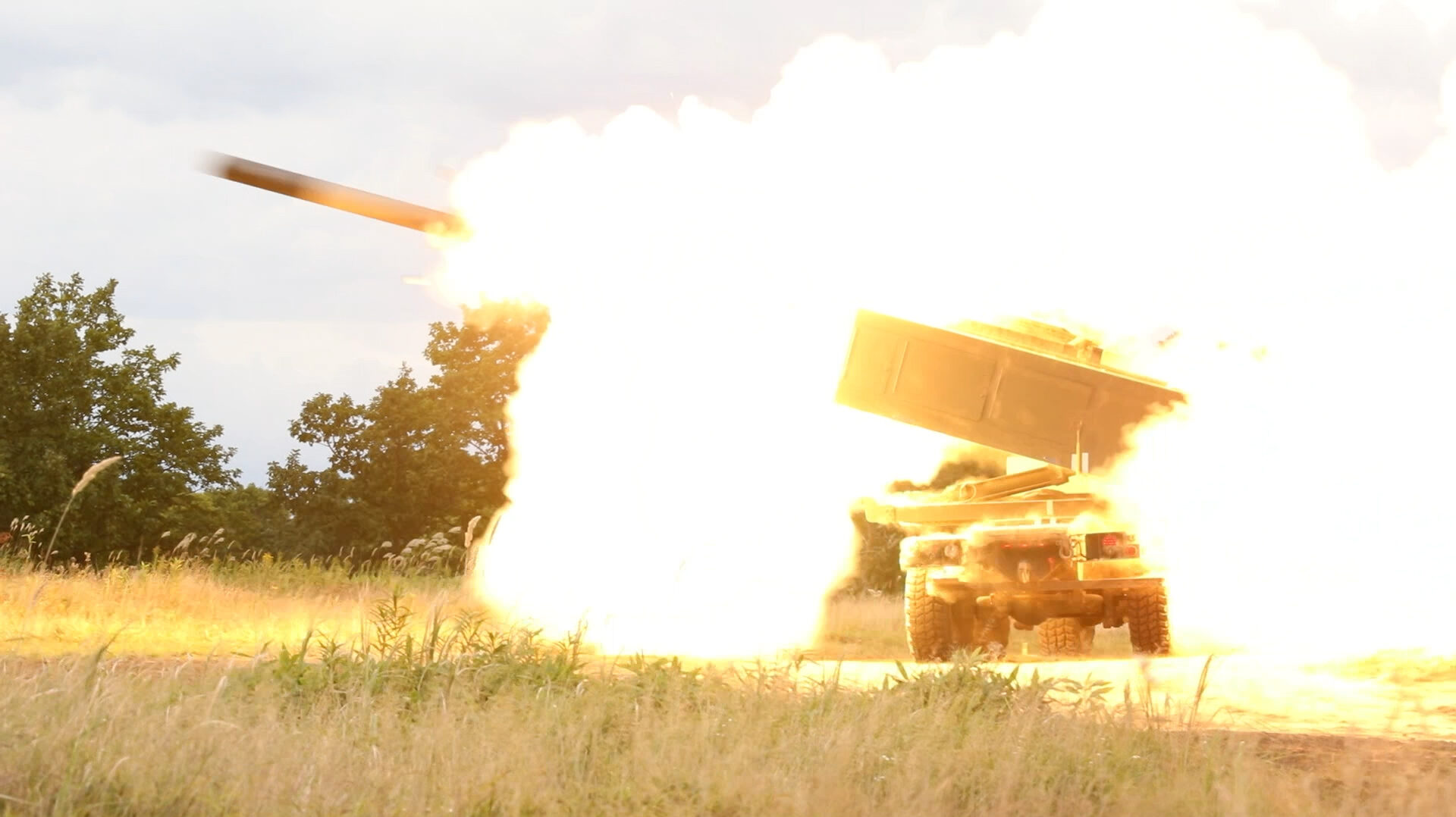
In August, the U.S. State Department approved the potential sale of 16 Lockheed Martin M142 High Mobility Artillery Rocket Systems (HIMARS) and supporting equipment to Norway, valued at around $580 million. However, this approval does not finalize the sale, as South Korea’s Hanwha Aerospace is competing with its K239 Chunmoo Multiple Launch Rocket System (MLRS).
Lervik indicated that if the selection process concludes successfully, the operational deployment of the long-range fires system could occur as early as 2027 or 2028, contingent upon „realistic production times.” Norway is actively soliciting technical information under its Long Range Precision Fire System (LRPF) program, which requests details regarding guidance performance, munitions communications, warhead types, maximum range, flight time, and testing procedures. The solicitation specifically seeks a self-propelled LRPF capable of launching missiles and guided rockets with ranges exceeding 300 kilometers (186 miles) and that integrates effectively with Norwegian Command, Control, Communication, and Computers (C4I) systems.
Earlier this year, Norway announced a significant boost in defense spending, pledging NOK 1.6 trillion ($150 billion) through 2036 as part of a new long-term defense strategy. This plan includes the development of a new long-range ground-based air defense (GBAD) system and a transformation of the Norwegian Army from one brigade to three.
Despite this increased emphasis on defense, Lervik acknowledged that a substantial portion of the budget is likely to be allocated to the Royal Norwegian Navy. Nonetheless, he expressed confidence that the country’s parliament correctly followed the military guidance of Gen. Eirik Kristoffersen, Chief of Defence of Norway, in approving these spending and defense strategies. “Our aim is to maintain a balanced armed force, which, while still relatively small, is strategically well-rounded,” Lervik stated. “It’s crucial not to lean too heavily in one direction, and that is the balance we are achieving.”
Lervik also commented that the overall strategic landscape in the High North has remained stable, with Russia continuing to concentrate on its conflict in Ukraine. He conveyed optimism about Europe’s ammunition shortages, citing investments by the Norwegian government in Nammo, the country’s principal ammunition producer. “I agree with my partners that we need to replenish our stocks—not only what has been supplied to Ukraine but also to ensure adequate national reserves,” he concluded.