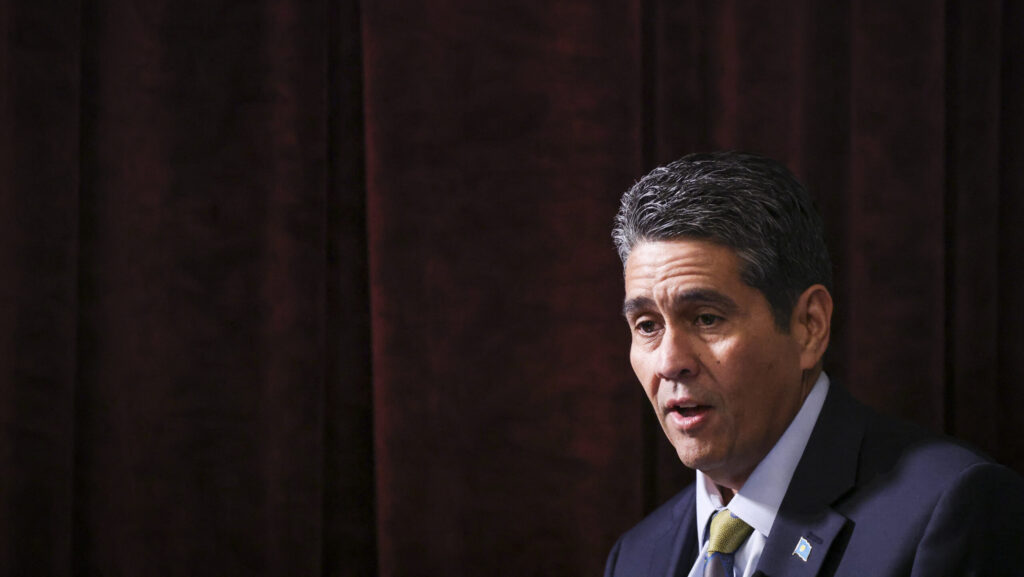
The president of Palau, a critical component of the Second Island Chain, raised concerns last week, stating that his island is „already at war with China” and faces a „constant threat” from Beijing. Analysts suggest that Washington should capitalize on these comments and offer assistance.
Seeking Strength Through Partnership
Speaking in Hawaii before the Pacific Island Forum, President Surangel Whipps Jr. emphasized that „the best way to combat this is through partnership with like-minded nations who believe peace comes through strength and presence is deterrence.”
China’s Growing Influence in the Pacific
This statement comes at a time when China is expanding its influence among Pacific Island leaders, notably in the Solomon Islands, the host of this year’s Pacific Island Forum. Beijing successfully pressured the Solomons to exclude Taiwan, as well as the US and Japan, from the meeting. However, Palau, which maintains relations with Taiwan, will host next year’s forum, and members have declared that Taiwan and other development partners should be included in the next annual meeting.
Palau: A Frontline Against Coercive Tactics
Mihai Sora, a regional analyst with the Lowy Institute, pointed out that Palau has been „on the front line of China’s coercive tactics in the Pacific for years now,” with President Whipps repeatedly highlighting how China has pressured him to switch Palau’s recognition away from Taiwan.
Weaponized Dependence and Economic Pressure
China has reportedly „weaponized Palau’s dependence on Chinese tourists – a dependence specifically manufactured by China itself – to put economic pressure on the country.” Additionally, Chinese-linked transnational criminal syndicates are becoming increasingly active in Palau, and Chinese developers are acquiring land near strategically important US sites.
Call for Increased US Presence
President Whipps’ frustration with the Chinese government has led him to the „rational conclusion that a greater US military presence in Palau is critical to Palau’s own national security.”
Trust in the Region Under Threat
Bethany Allen, head of the Australian Strategic Policy Institute’s Chinese analysis, noted that potential travel bans and consulate closures by the US in the region „undermine trust in the region just as China is presenting greater challenges than ever before.”
Urging Closer Engagement
Allen suggests that „Australia, the US and other like-minded countries” should respond to Palau’s call for closer engagement and demonstrate their reliability as partners who respect the needs of Pacific Island states.
Australia and PNG Strengthen Ties
Adding to the potential resistance against China’s influence, Papua New Guinea and Australia plan to sign a defense treaty during the celebration of PNG’s 50 years of independence.
Integrated Forces and a New Chapter
Papua New Guinea is emerging as Australia’s closest security partner in the Pacific Islands region, apart from New Zealand. The new treaty „appears to have some groundbreaking provisions with respect to mutual security obligations, and a new level of defense force integration between Australia and PNG,” marking a new chapter for Papua New Guinea’s foreign and defense policy. PNG has agreed to „totally integrated forces” with Australia.
Vanuatu’s Hesitation and Strategic Imperatives
While the treaty between Australia and PNG is a positive sign, Vanuatu declined to sign a $500 AUD million agreement with Australia, reportedly due to Chinese interference. However, negotiations are expected to continue, as Vanuatu’s security partnerships have always been contentious. The security imperatives for Vanuatu and the strategic imperative for Australia to stabilize the regional balance of power remain strong.