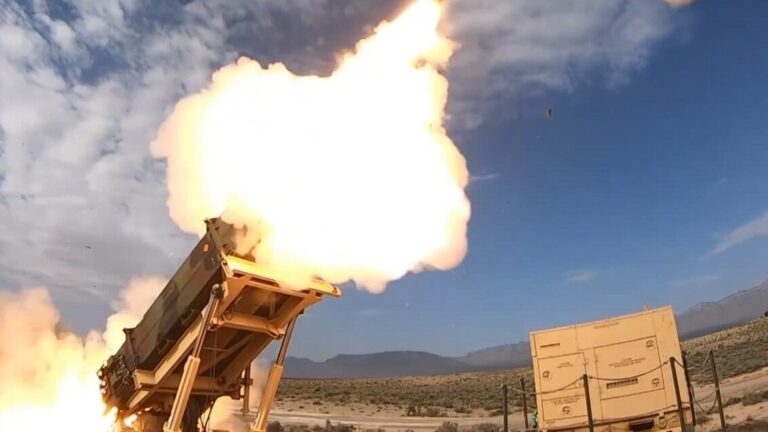
In a strategic move aimed at fundamentally shifting long-term defense dynamics, the Pentagon is currently analyzing options for licensing the production of Patriot interceptors directly in Ukraine. While American officials warn that it is premature to provide a definitive date for when the first missiles will roll off Ukrainian assembly lines, the evaluation process is already well underway.
Green Light from the White House: A Historic License Amidst Conflict
The decision follows the recent announcement by President Donald Trump at the NATO summit, confirming that the United States will grant Ukraine permission to manufacture these critical systems. The approach is pragmatic and direct: providing indigenous production capacity to reduce reliance on external stockpiles.
To this end, the Pentagon is evaluating several courses of action, including mixes of domestic and international sourcing, the locations of future factories, and, essentially, which missile variant will be produced. Dialogue between the U.S. Army, security cooperation agencies, and industry stakeholders has intensified to transform this political objective into an industrial reality.
The Technical Challenge: Certifying an Industrial Base Under Siege
The greatest barrier to this project is not political will, but technological complexity. The „hard part” lies in qualifying and certifying Ukraine’s local supply chain. Manufacturing a PAC-3 interceptor requires an extremely specialized level of engineering and components that must adhere to rigorous reliability standards.
U.S. officials emphasize that developing a new chain of suppliers takes time, especially under wartime conditions. There are also discussions regarding the possibility of licensing a less expensive version of the PAC-3 missile, though this entails additional engineering challenges to ensure performance remains at the required standards despite using more accessible components.
Strategic Partnerships: Industry Giants Enter the Fray
President Volodymyr Zelenskyy has already confirmed talks with leaders from Lockheed Martin and RTX (Raytheon) to explore opportunities for technology exchange and joint production. Lockheed Martin, the manufacturer of the PAC-3 interceptor, and Raytheon are collaborating with Ukrainian teams to identify specific co-production solutions.
Although the process is in its early stages, the direct involvement of defense industry leaders suggests a serious commitment to increasing Kyiv’s capacity to protect its airspace through its own resources. However, the ultimate endurance test will be the ability to secure these production lines and ensure the flow of parts within a highly volatile operational environment.