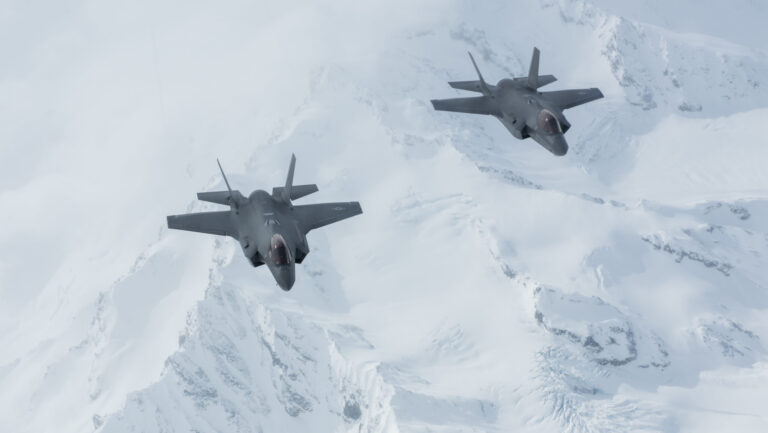
The Pentagon and Lockheed Martin are discussing a potential multiyear agreement for the F-35 that could cover both aircraft production and sustainment. If completed, the deal could be worth tens of billions of dollars and run for as long as a decade, according to sources cited by Breaking Defense.
The talks come as the Trump administration seeks to expand long-term contracting for key military equipment, including munitions. The Pentagon has considered a multiyear F-35 procurement contract for years.
Matt Milas, president of Honeywell Aerospace’s defense division—a major supplier to the program—said the proposal would cover production as well as support for the aircraft in service. But a source familiar with the negotiations voiced doubts. Multiyear contracts have worked for munitions, the source said, but may be harder to apply to aircraft buys, particularly while some F-35 upgrades are still in development.
Spare parts and sustainment at the center
A major element of the proposal could be bulk purchases of spare parts. Milas said increased component deliveries might begin around the aircraft’s 21st production lot, expected in roughly three years. Greater parts availability is seen as a key way to improve the fleet’s mission-capable rates.
Supporters of multiyear agreements argue that they give industry greater predictability, encourage long-term investment and can lower costs through economies of scale. Milas said the main benefit for the F-35 would likely come from sustainment and parts availability, since production is expected to remain at 156 aircraft a year.
It remains unclear whether production and sustainment would be covered by one agreement or separate contracts, or whether both would run for the same length of time.
Lockheed Martin said it supports a multiyear approach, arguing that it would provide greater stability for the industrial base and enable predictable production, cost efficiencies and continued modernization. The F-35 Joint Program Office and the Pentagon declined to comment on the negotiations.
A sustainment deal, but not necessarily a PBL?
Lockheed has previously advocated for a five-year performance-based logistics contract, or PBL. Under that model, payments are linked to outcomes such as equipment availability or readiness. The effort stalled after Congress required the Pentagon to certify that a PBL agreement would either reduce maintenance costs or improve readiness.
Dina Halvorsen, Lockheed’s vice president of F-35 global sustainment, said the company is discussing a multiyear performance-based contract, though she would not necessarily call it a PBL. A source familiar with the talks described the proposal as “PBL by another name” and questioned whether Lockheed could demonstrate long-term savings.
Congressional approval remains uncertain
The fiscal 2027 defense authorization bills under consideration in Congress include provisions that could allow multiyear F-35 procurement. The House version adds requirements: the defense secretary would have to certify that the contract includes initial spare parts and alternate mission equipment for every aircraft, and that it delivers cost savings of at least 5%.
Neither the House nor Senate version explicitly authorizes a multiyear sustainment agreement. Congress will need to reconcile the two bills before passing a final version.
The F-35 program is projected to continue into the 2080s, with sustainment accounting for a substantial share of its nearly $2 trillion lifecycle cost. Improving aircraft availability remains a priority. Government watchdog reports have cited limited depot capacity, spare-parts shortages and military maintainers’ insufficient access to technical data as obstacles to readiness.
More than 1,000 F-35s have been delivered. In the past two years, however, many newly delivered aircraft have been held for training while officials work to clear a new upgrade for combat use.