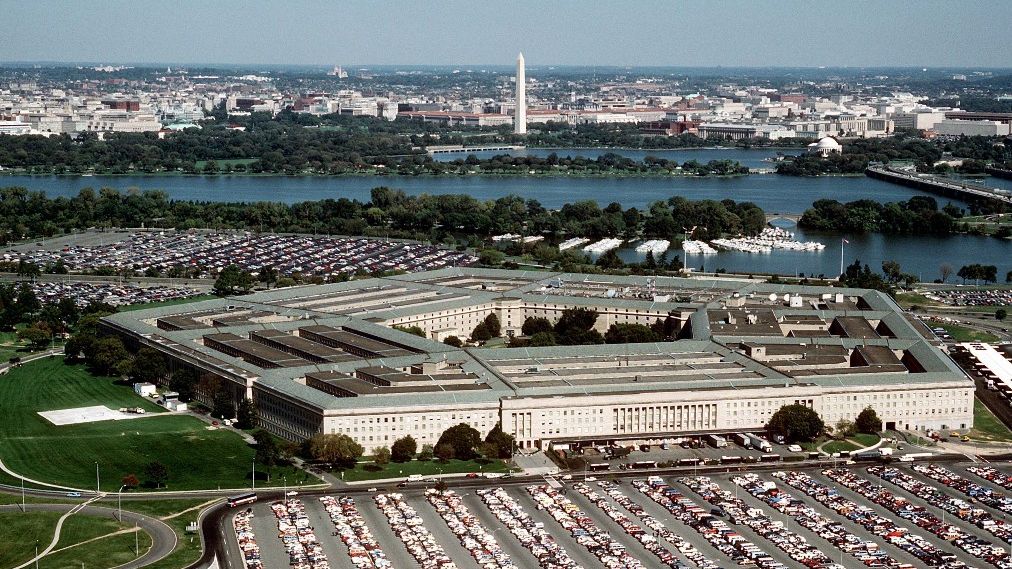
The Pentagon is putting the final touches on a monumental defense spending request for fiscal year 2027, eyeing a figure of at least $1.5 trillion. This colossal sum, one of the largest in history, sets the stage for an intense political battle on Capitol Hill as the Trump administration refines the mechanisms for seeking these massive funds.
Final Touches on a Monumental Proposal
Jules Hurst, performing the duties of the Pentagon’s comptroller, confirmed that the department is in the „final stages” of cementing the budget. This ambitious financial package is designed to bolster U.S. military dominance across various domains. „The budget’s going to procure many more aircraft during the FYDP [Future Years Defense Program], more ships, tens of thousands of critical munitions,” Hurst stated. He added that it would ensure continued U.S. „dominance in space” and facilitate „big investments needed in drone dominance.” A key point highlighted by the official is that the FY27 budget will remain „intact,” with any potential supplemental requests—for unforeseen military operations, for instance—to be presented separately.
The Elusive Deadline: Capitol Hill Awaits
While the executive branch is mandated to deliver its annual budget request to Congress in early February, deadlines are frequently missed. For example, the FY26 request didn’t reach Capitol Hill until June. Representative Rob Wittman, who chairs the House Armed Services Committee’s tactical air and land subcommittee, suggested that the current budget, initially rumored for a mid-March release, might be made public „maybe late April, early May.” Hurst, however, expressed uncertainty regarding this timeline, indicating it could be delivered „faster than that.”
The $1.5 Trillion Question Mark: Base or Beyond?
Regardless of the submission date, both Hurst and Wittman anticipate the Trump administration will request at least $1.5 trillion for the Department of Defense. A significant unknown remains whether this figure will be solely allocated to the base budget, or if the total will be reached by including a forthcoming supplemental request for military operations, specifically citing Iran. „We’re providing options of leadership, they need to decide if that’s additive or part of the $1.5 [trillion],” Hurst clarified. This decision will have substantial implications for transparency and the allocation of funds, as well as for Congress’s ability to exert budgetary control.
A Democratic Dissent: Fiscal Realities vs. Military Ambition
From his vantage point as the top-ranking Democrat on the House Armed Services Committee, Washington Rep. Adam Smith questioned the realism of a $1.5 trillion defense topline. Given the U.S.’s massive national debt and the Republican reluctance to raise taxes, Smith asserted, „I don’t see a $1.5 trillion budget coming through this Congress.” He warned that such an endeavor could „set us up for some pretty big failures down the road,” suggesting the nation cannot afford such ambitions without a major fiscal restructuring. Smith emphasized the Pentagon’s need to make tough choices between more affordable—and potentially expendable—systems like drones, and „exquisite platforms” such as fighter jets, submarines, and warships. He cited the hypothetical example of a „$22 billion battleship,” personally doubting its construction.