The Pentagon’s Rapid Defense Experimentation Reserve (RDER) has successfully transitioned at least seven technology projects to the military services, encompassing a range of innovations from high-altitude balloons to underwater communications. This includes five projects that were not previously linked to the high-speed acquisition initiative.
Heidi Shyu, the Pentagon’s Research and Development chief, had earlier confirmed two programs in an interview with Breaking Defense. However, new details provided by program officials regarding five additional projects underscore RDER’s strong emphasis on surveillance and communications—essential components for the joint force. Three of these projects focus on enhancements to communications, sensors, and other technical capabilities on platforms developed by other programs, including unmanned speedboats, fourth-generation fighter jets, and the MQ-9 Reaper drone. Additionally, four projects are geared towards developing new systems such as surveillance balloons and underwater communications.
These advanced yet low-profile projects create crucial connections, especially as the military aims to integrate its diverse forces into the emerging global battle network known as CJADC2. Unfortunately, these niche capabilities are often overshadowed in service budgets by larger, high-profile weapon systems like stealth aircraft or manned vessels. Notably, one of the projects— a sensor-fusion system called the Maritime Targeting Cell— was a top priority on the Navy/Marine Corps Unfunded Priorities list until RDER intervened.
“We’re doing things because the services are not,” Shyu explained to Breaking Defense during a recent interview, defending RDER against its critics.
RDER adopts a broad approach to identify potential projects, subsequently narrowing them down through a rigorous multi-stage process of field tests and high-level reviews. The initial evaluation reviewed over 200 proposed projects, ultimately selecting 32 for further investigation—less than one in six. Of these, 23 received funding for field-testing, and only nine demonstrated sufficient technical maturity and military utility to „transition” from RDER to the armed services for additional development and production. Notably, five of these nine projects are already funded in the services’ budget proposals for 2025.
RDER is not halting its efforts there. Another 11 of the most promising projects from the first round are currently under consideration by Pentagon leaders. Meanwhile, a second round has commenced with 51 selected projects and 25 funded for field testing, according to Shyu’s office. Future rounds are expected to follow in overlapping two-year cycles, with new RDER rounds starting even as previous ones conclude.
Projects Transitioned from RDER
Of the nine technologies that have successfully transitioned from RDER to the armed services thus far, two remain too classified for public discussion, according to Shyu. However, details about the other seven have been disclosed:
- High-Altitude Balloons (HAB): Similar to those employed by Chinese espionage agencies over the US, these balloons are designed to carry surveillance equipment and communications relays to high altitudes, avoiding conventional anti-aircraft defenses. Shyu noted, „None of the services wanted to develop this capability, so it’s a gap. But once we developed and tested it, both the Air Force and the Army said, ‘Hey, we want this.’”
- Family of Integrated Targeting Cells (FITC): This project is integral to the Marine Corps’ modernization initiative, Force Design 2030. It seeks to consolidate distinct operational functions—namely „operations, intelligence, and fires”—into a unified command center, enhancing coordination of long-range fire capabilities across services. Deputy Secretary Kathleen Hicks has recently praised FITC, stating it had been „accelerated by five years.”
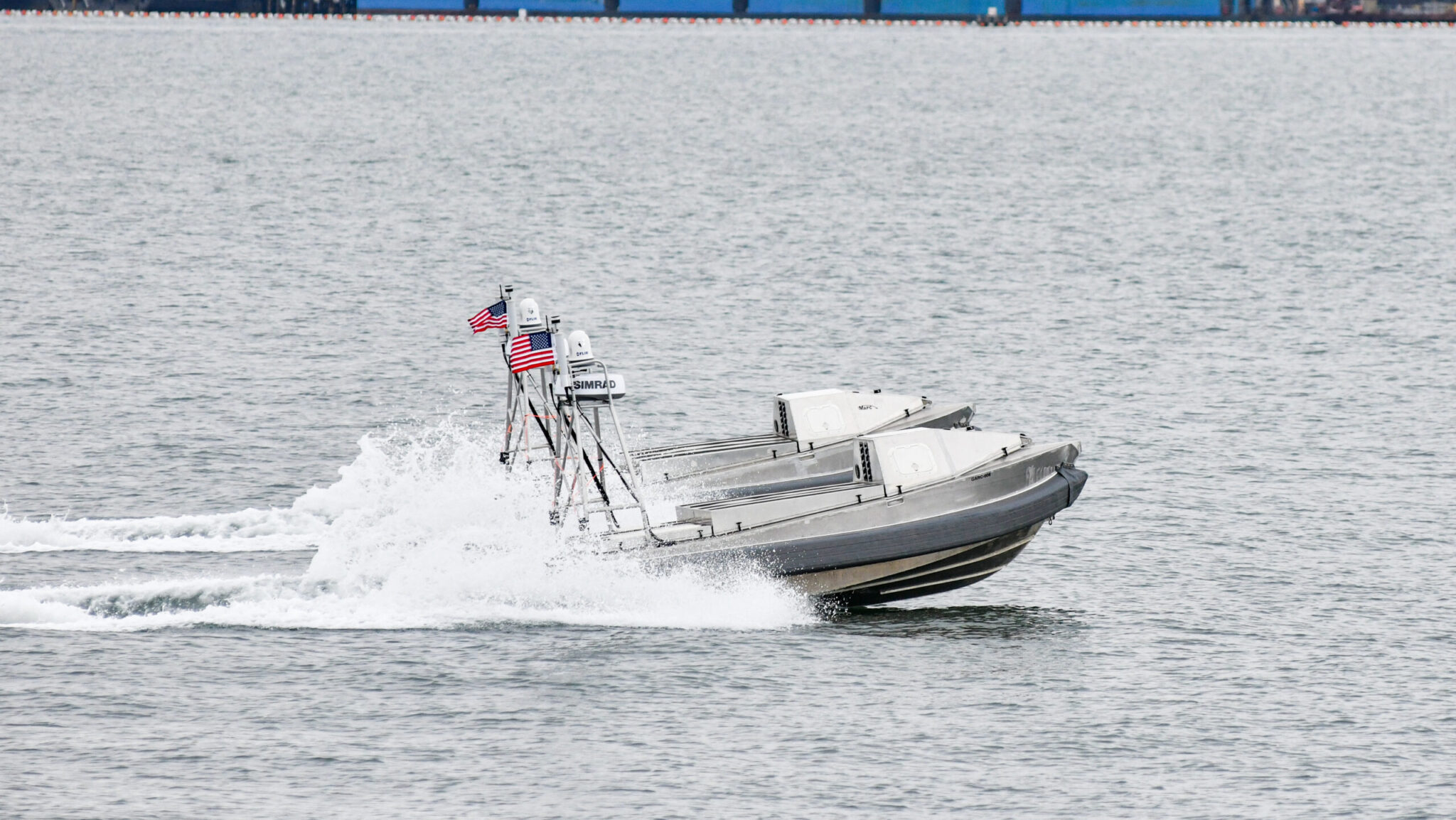
- Global Autonomous Reconnaissance Craft (GARC): A small unmanned speedboat approximately 16 feet long, GARC is already operational with a Navy Unmanned Surface Vessel Squadron in Coronado, California. Shyu’s office describes GARC as a “low-cost, attritable platform” adaptable for various missions, including intelligence, electronic warfare, and communications. RDER played a role in securing GARC’s funding from the DoD initiative known as APFIT (Accelerate the Procurement and Fielding of Innovative Technologies), which expedited initial unit production by at least two years.
- MQ-9 Enhancements: These upgrades for the widely deployed Reaper drone focus on enhancing communications and sensing capabilities to meet specific needs of the United States Marine Corps. Shyu’s staff indicated that RDER provided funding for the development of prototypes, integration, and experimentation, accelerating capability fielding by approximately two years.
- Global Thunder: Not related to the nuclear exercise by the same name, this project aims to enhance communications resilience for fourth-generation fighter jets, particularly those such as the Air Force’s F-15 and F-16 and the Navy/Marine Corps F-18.
- Octopus: This Navy initiative focuses on underwater communications; details regarding its specific applications (whether for Navy divers, submarines, or unmanned underwater vehicles) remain unclear.
- Maritime Targeting Cell – Afloat: This project aims to improve communications resilience and hasten the fielding of Marine Corps initiatives for the fusion of national, theater, and tactical sensors.
The details surrounding MTC exemplify the critical gaps RDER aims to address. In March 2023, the then-Chief of Naval Operations, Adm. Mike Gilday, submitted his unfunded priorities to Congress, highlighting a $45.3 million request for MTC, which is relatively modest in Pentagon terms but essential for modernization efforts.
MTC, developed by Northrop Grumman, serves as a high-tech fusion node that integrates data from satellites and various sensors for Marine Corps forces. It supports key modernization initiatives, including the Marines’ Force Design 2030, the Navy’s Project Overmatch, and the all-service CJADC2, which intends to interconnect „every sensor [and] every shooter” in the US military to create a coordinated battle network, particularly vital in the West Pacific.
While such projects are theoretically top priorities, in practice, they often struggle to secure funding amid larger budget demands for prominent weapon systems. Fortunately for the Marines and the MTC program, RDER’s congressional funding was finally approved in 2023, two years after the initiative was originally proposed.
“Remember I came here in ’21,” Shyu stated to reporters at the NDIA Emerging Technologies conference. “We proposed all of this in ’21, got the budget in ’23… But we plan everything out ahead of time, we worked very closely with combatant commanders and the Joint Staff, [so we can] sprint it.”
“The stuff we’re developing will provide resilient communications in a highly contested fight—and other capabilities I can’t talk about,” she added with a laugh.