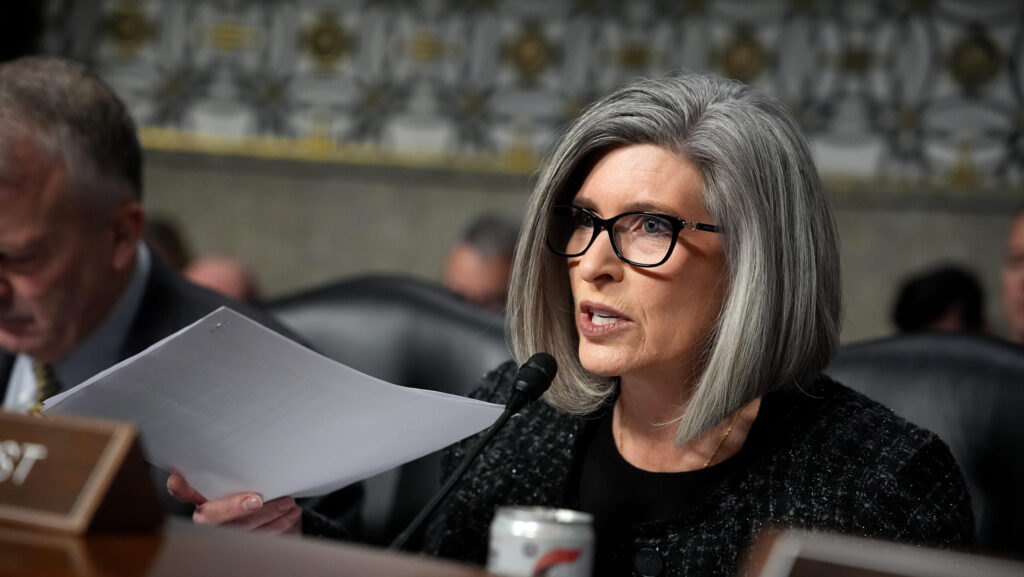
The Small Business Innovation Research program, a vital source of seed money for defense tech startups, faces an uncertain future as Congress clashes over its effectiveness and direction.
While Washington focused on averting a government shutdown, a crucial program for supporting small defense businesses, the Small Business Innovation Research (SBIR) program, quietly lapsed at the end of September.
A Lifeline Adrift
Launched in 1982 and administered by the Small Business Administration, SBIR provides seed funding to small businesses for technology development, with the Defense Department (DoD) as its largest participant. Its funding lapse leaves contracts in limbo and new solicitations on hold, threatening innovation within the defense sector.
While proponents tout SBIR’s proven success, critics argue it needs reform to foster new entrants and ensure repeat awardees „graduate” from the program.
The Central Question: Is SBIR Fulfilling its Mandate?
Sen. Joni Ernst, chairwoman of the Senate Small Business and Entrepreneurship Committee, questioned whether SBIR is truly effective, stating in September that a disproportionate amount of funding goes to a small number of companies that aren’t producing tangible results.
The Pentagon has instructed companies that current contracts remain valid unless directed otherwise, but new solicitations are paused, and pending awards hinge on the availability of fiscal 2025 funding.
A Divided Industry and a Political Stalemate
The longer-term future of SBIR is uncertain due to disagreements within the industry and among its congressional supporters regarding potential exploitation of the program by some firms.
At the heart of the debate is the Investing in National Next-Generation Opportunities for Venture Acceleration and Technological Excellence (INNOVATE) Act, proposed by Ernst. This bill aims to curb foreign influence over US technology and redirect funds to a „Strategic Breakthrough” initiative, designed to help companies bridge the gap between technology development and production.
The $75 Million Cap: A Lightning Rod
The most contentious provision of the INNOVATE Act is a proposed $75 million cap on SBIR funds a company could win over its lifetime. Ernst and venture-backed startups argue this would force companies to seek commercial success and prevent „SBIR mills” – firms specializing in SBIR contracts but lacking broader defense program participation – from dominating funding.
Defenders of the program counter that such a cap would penalize companies with a history of successfully developing and producing technology for the DoD.
Jay Rozzi, vice president and principal engineer for Creare, expressed concern that an award cap would unfairly exclude experienced companies, stating, „Why can’t the market be open for everyone?”
A Legislative Deadlock
The House passed a clean, one-year extension for the SBIR/STTR programs in mid-September. However, the Senate has not voted on the measure, leading to the current funding lapse.
Sen. Ed Markey, the top Democrat on the Senate Small Business Committee, advocated for a clean extension of the program, defending the merit-based competition model. Ernst, however, opposed a clean extension and offered a substitute proposal with a 30-day extension and the $75 million lifetime cap in effect.
Both senators objected to each other’s proposals, leaving the SBIR program in limbo.
Uncertainty for Small Businesses
A Democratic spokeswoman for the Senate Small Business Committee said that Markey continues to support a one-year extension of the program, which would allow time for both parties to negotiate a longer extension. Otherwise, she said, the SBIR and STTR programs will end. A Republican congressional aide countered that the current situation is due to a political stalemate.
Eric Blatt, executive director of the Alliance for Commercial Technology in Government, said the industry group did not see that issue as its most important reform. Rather, he pointed to the new Strategic Breakthrough initiative meant to help firms transition technologies into production as the “breakthrough reform.”
A Need To Reform SBIR? At the same time, Blatt said that SBIR authorization needs to come with an updated commercialization benchmark that all firms must meet to receive funds.
A Niche for Specialized Technologies
Executives at firms who have repeatedly won SBIR contracts argue that their firms fill a particular niche in the program, as they are scoped to develop and produce low-volume, military-specific technologies for which there is no commercial market — opportunities that venture-backed startups for dual-use tech would not be interested in.
Executives at Physical Sciences Inc. and Creare noted that their companies fill a crucial niche in developing specialized technologies for which there is no commercial market, such as specialty battery technology for undersea applications and aircraft carrier landing cable repair systems.
Both also pointed out that their companies’ ratios of SBIR work to production contracts fluctuate over time.
The Impact on Startups
SBIR awardees expressed concern about the impact of a prolonged lapse in SBIR/STTR authorization. While some startups can weather the storm, the lapse delays future contracting opportunities vital for scaling.
One CEO from a small technology startup that recently won its first SBIR contract, said that the company’s other revenue streams would be enough to keep it going during the government shutdown and reauthorization pause. However, he described the situation as “frustrating,” noting that the lapse had delayed future contracting opportunities that are pivotal for startups seeking to scale.
When asked whether he would like to see Ernst continue to hold out against a clean-sheet reauthorization, the CEO acknowledged that there was no easy answer.
A Divided Path Forward
The SBIR program, a critical source of funding for small defense businesses, faces an uncertain future as lawmakers clash over its effectiveness and direction.