Warsaw Bolsters its F-16s with Advanced Electronic Warfare, Reconnaissance, and Ejection Systems
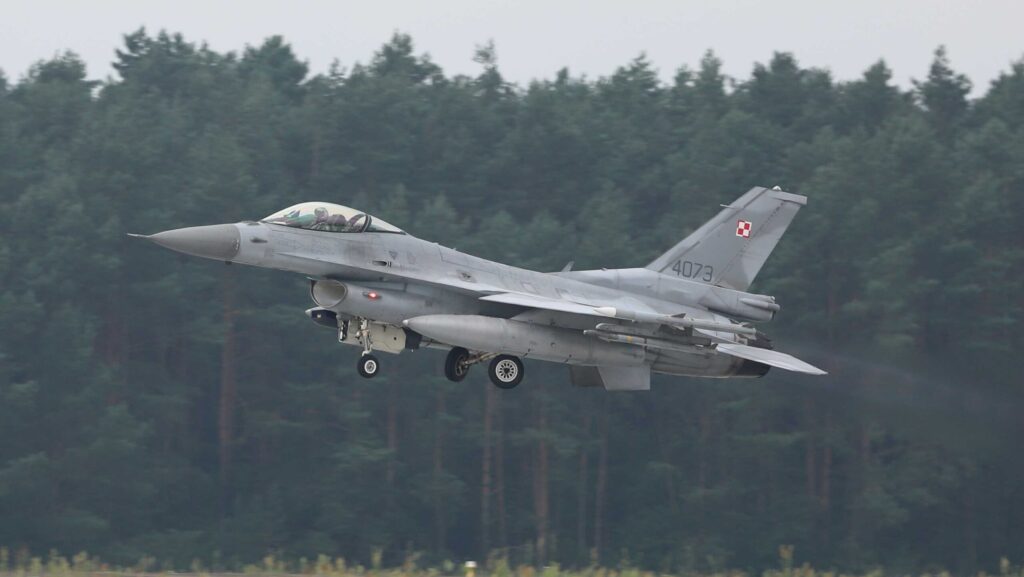
New details have emerged regarding the equipment that will be integrated into Poland’s F-16 Viper upgrade program. L3Harris Technologies, RTX, and Israeli firm Elbit are set to play key roles in modernizing the Lockheed Martin-made jets.
Earlier this month, the Polish Ministry of National Defence finalized a Letter of Offer and Acceptance (LOA) with the US government to upgrade its fleet of 48 F-16 Block 52+ multi-role combat aircraft to the advanced F-16 Viper configuration, also known as the F-16V.
Lockheed Martin will serve as the primary contractor for the modernization effort, valued at approximately $3.8 billion, partnering with local supplier Military Aviation Works No. 2 in Bydgoszcz to perform the upgrades within Poland.
L3Harris’ Viper Shield for Electronic Warfare
L3Harris announced that its electronic warfare Viper Shield system has been selected by Warsaw. This system will equip Poland with the same advanced EW capabilities available to other international allies operating the F-16 Block 70 variant.
According to the company’s website, „its advanced digital radar warning receiver technology integrates seamlessly with the aircraft’s new APG-83 active electronically scanned array radar [also included in Polish program] to deliver greater situational awareness, and the digital radio frequency memory-based jamming system provides enhanced capability against advanced threats.”
„We are honored Poland selected us to upgrade their F-16V multirole fighters,” said Ed Zoiss, L3Harris’ president of space and airborne systems. „Viper Shield is in production and will enable pilots to identify, locate, and counter rapidly evolving threats faster with enhanced success.”
Elbit’s PAWS-2 for Threat Detection
Polish F-16Vs will also receive the Elbit PAWS-2, a field-proven infrared passive airborne warning system capable of detecting a wide range of threats, including surface-to-air missiles, air-to-air missiles, and MANPADS.
RTX’s Mission Computer and Reconnaissance Pod
Another element of the modernization is the RTX-built Modular Mission Computer (MMC) 7000AH and MS-110 multispectral imagery reconnaissance pod. The MS-110 will replace the DB-110 reconnaissance pods currently in Polish service and will be compatible with both the modernized F-16 and the current F-16 OFP 6.5 version.
Enhanced Targeting and Reconnaissance Capabilities
In addition, Lockheed will provide an upgraded AN/AAQ-33 Sniper ATP to Digital Video Interface standard, enabling the F-16 fleet to utilize the Sniper ATP DVI with Two-Way Data Link capability. The Sniper and DB-110 pods were heavily used by Poland’s fleet between June 20216 and June 2018, when four Polish jets flew over 4,100 hours in Kuwait as part of Operation Inherent Resolve.
New-Generation Ejection Seat for Pilot Safety
Polish Vipers will also feature a new-generation ejection seat, the Martin-Baker US18E, based on the US16E that is installed in the Lockheed Martin F-35 aircraft, with a wider nude weight range from 103lbs to 245lbs.
Extending Service Life
According to a Lockheed Martin press release, Polish F-16 modernization includes „design modifications that will extend the aircraft’s service life to 12,000 flight hours.” However, the contract specifies that only the Canopy Sill Longeron stringers (supporting the canopy when closed) on 36 single-seat F-16C aircraft are being replaced, based on analysis of airframe structure data from the Aircraft Structural Integrity Program. A wider scope of Service Life Extension Program is deemed unnecessary, as other elements of the Polish F-16s’ airframe structure are considered to be in good condition.